
The Vision of the Empyrean and the River of Light
The Divine ComedyDante's final preparation for the Beatific Vision, including the transformation of the river of light into the celestial rose.
increasing Bearing strength in each event
 decreasing
Bearing strength in each eventdecreasingThe River of Light
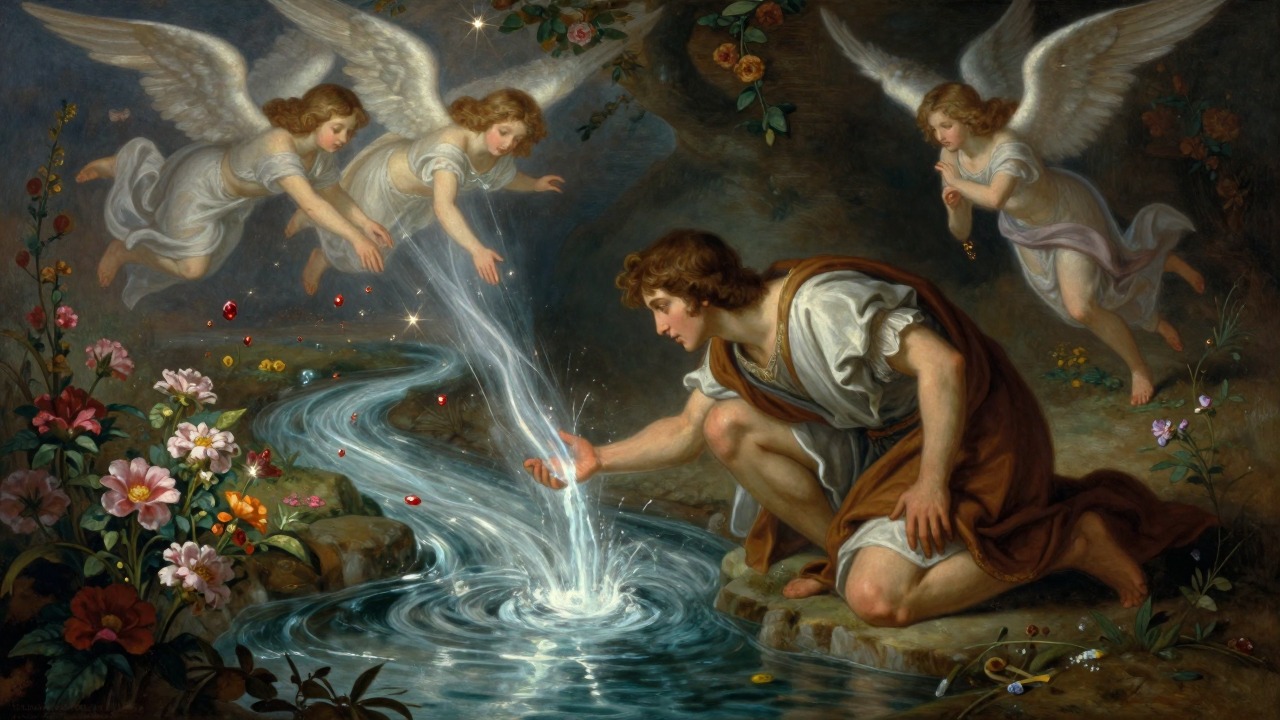
The Living Light
The Vision
Dante sees a river of light flowing between banks of flowers, with sparks (angels) diving in and out like rubies. The sight is overwhelming.
The Invitation
Beatrice tells Dante to drink from the river to understand its meaning. He stoops and drinks, and the river transforms into a circular light.
The White Rose
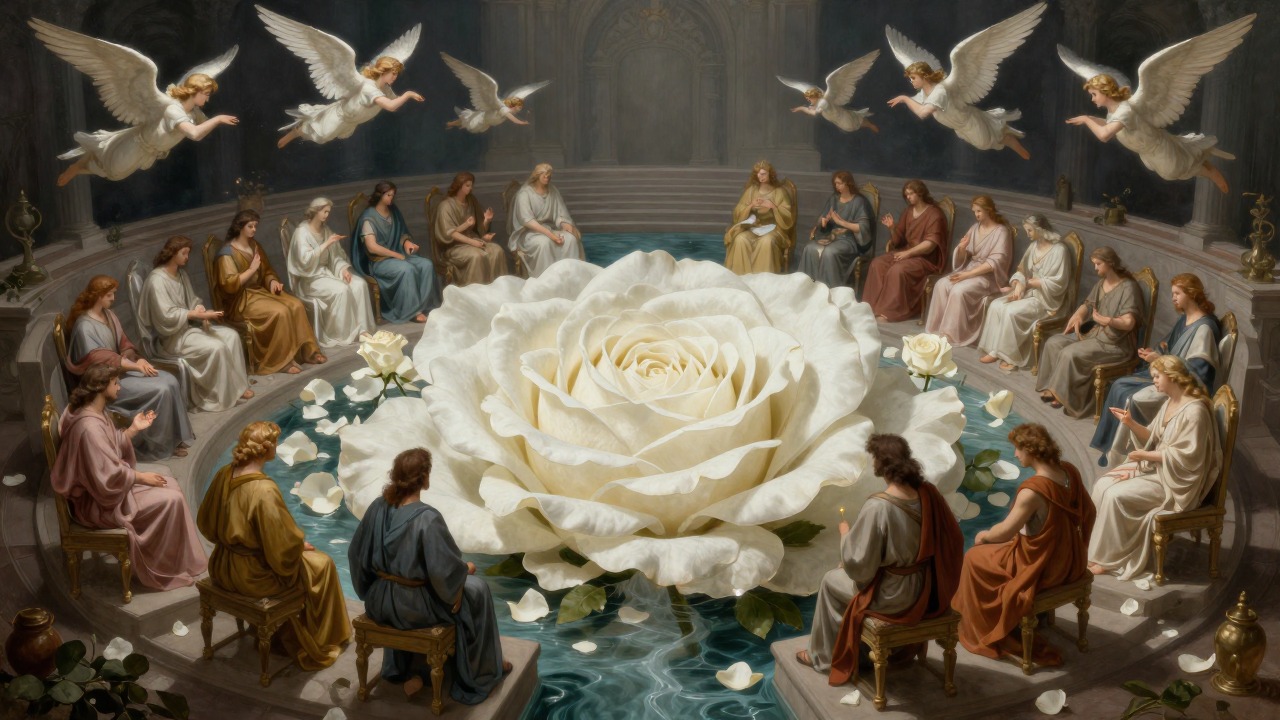
The Celestial Stadium
The Transformation
The river becomes a vast white rose, with the blessed seated in tiers. Angels fly between the petals, bringing peace and ardour.
The Structure
The rose is divided into two halves: those who believed in Christ before his coming and those after. The seats are arranged in a circular amphitheater.
The Throne of Henry VII
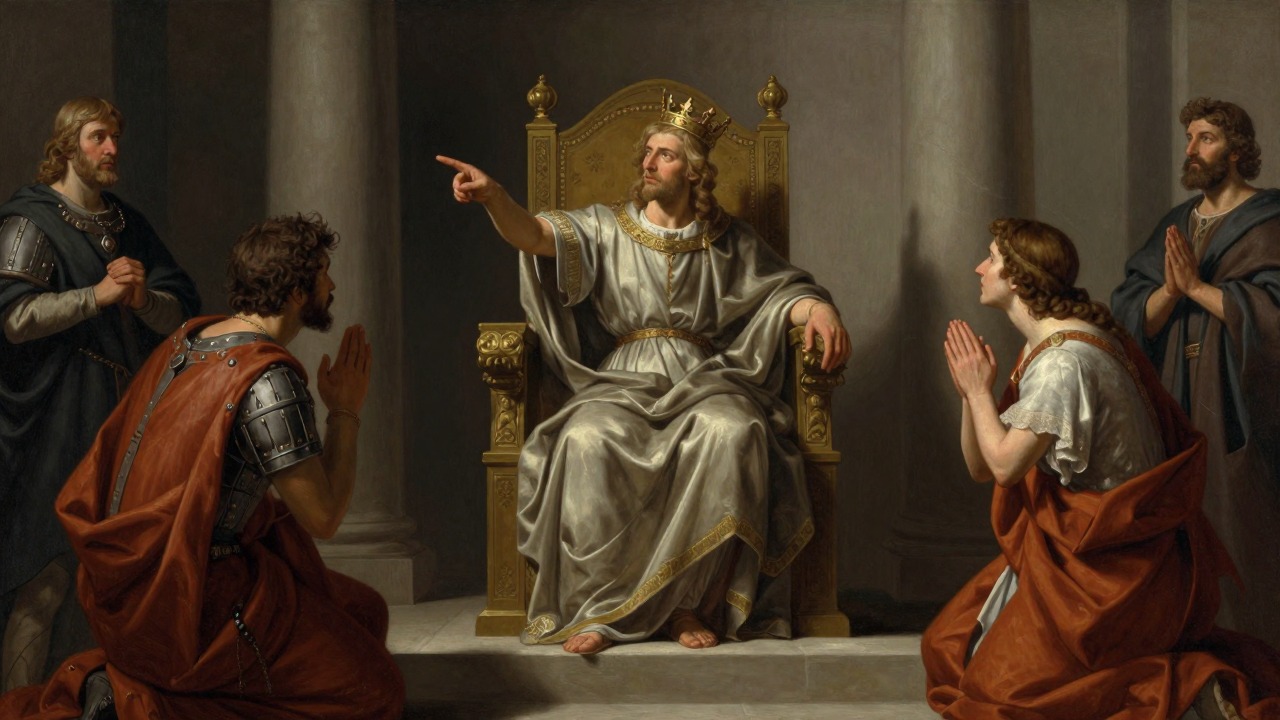
The Prophecy
The Empty Throne
Beatrice points out an empty throne with a crown, prepared for the Emperor Henry VII. He will come to reform Italy but will be opposed by the corrupt papacy.
The Lament
She laments the blindness of the Florentines and others who resist the emperor. Henry will be a victim of treachery.
The Departure of Beatrice
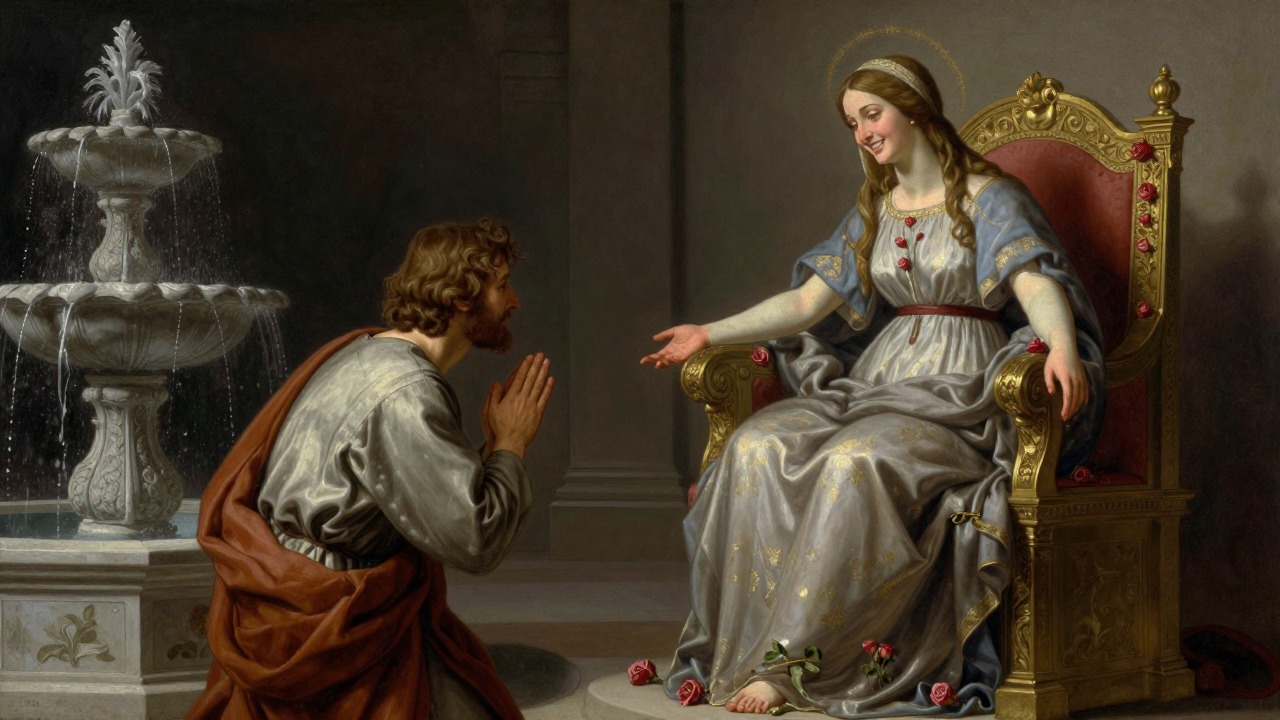
The Farewell
The Throne
Beatrice takes her seat in the rose, leaving Dante with St. Bernard. Dante prays to her, thanking her for his salvation.
The Smile
Beatrice smiles at him from afar, then turns to the eternal fountain. Her role as guide is complete.
The Prayer to the Virgin
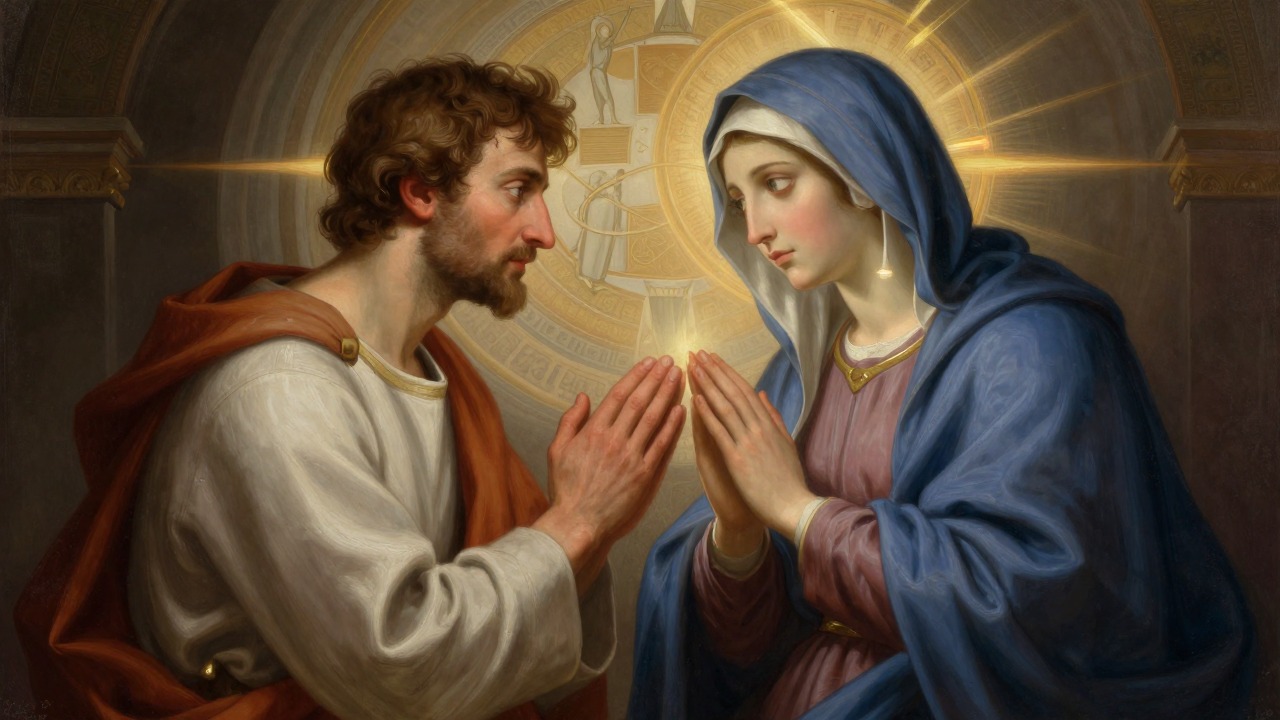
The Final Intercession
Bernard's Prayer
St. Bernard prays to the Virgin Mary, asking her to grant Dante the vision of God. He praises her as the source of hope and grace.
The Response
Mary's eyes show her favor, and she turns to the Eternal Light. Dante's sight is purified, and he sees the Trinity and the Incarnation.
In the Empyrean, after leaving the Primum Mobile
After drinking, in the Empyrean
In the Empyrean, during the vision of the rose
In the Empyrean, after showing the rose
At the end of the poem, in the Empyrean
