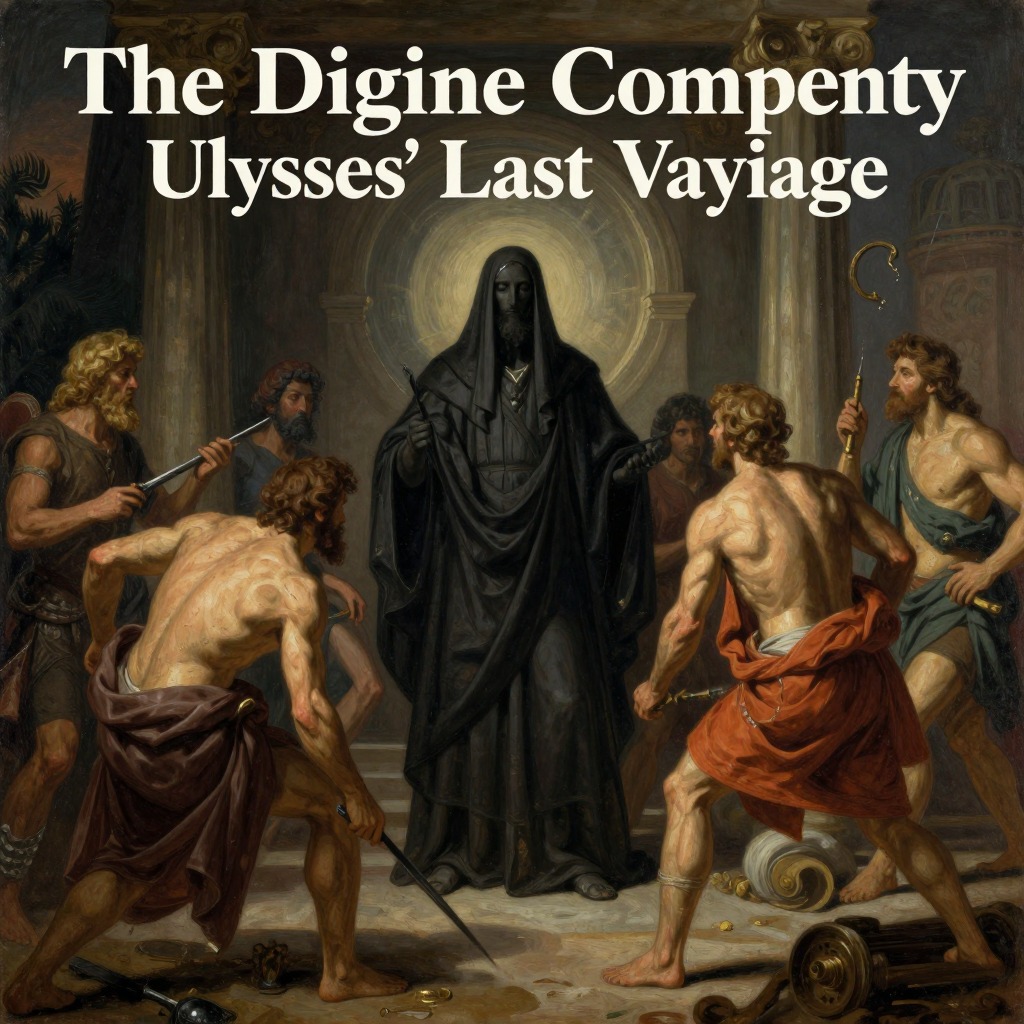
Consider ye the seed from which ye sprang
Consider ye the seed from which ye sprang is a pivotal line from Ulysses' speech in Canto XXVI of the Inferno, where the ancient Greek hero exhorts his aging crew to embark on a final, forbidden voyage beyond the Pillars of Hercules. The phrase crystallizes the poem's celebration of human intellect and the pursuit of knowledge, even as it dramatizes the peril of overreaching. It is one of the most quoted and debated passages in the Divine Comedy, embodying both the nobility and the tragic consequences of the quest for experience.
Context and Origin
The line appears in the eighth bolgia of Malebolge, where the fraudulent counselors are punished. Ulysses and Diomed are enclosed together in a single two-pronged flame, and at Virgil's request, Ulysses recounts his final journey. He describes how, after leaving Circe, neither love for his son, reverence for his aged father, nor the due affection for Penelope could overcome his desire "to be experienced of the world, and of the vice and virtue of mankind." With a single ship and a small company, he sailed past Spain and Morocco, reaching the narrow passage where Hercules set his landmarks to warn men not to venture further. There, Ulysses delivers his famous speech: "O brothers, who amid a hundred thousand perils have come unto the West, to this so inconsiderable vigil which is remaining of your senses still, be ye unwilling to deny the knowledge, following the sun, of the unpeopled world. Consider ye the seed from which ye sprang; ye were not made to live like unto brutes, but for pursuit of virtue and of knowledge."
Thematic Significance
The exhortation "Consider ye the seed from which ye sprang" functions as a humanist manifesto within the poem. It asserts that humanity's origin—its creation by God and its rational nature—imposes an obligation to strive for excellence. The phrase contrasts sharply with the bestial existence of the damned in Hell, who have abandoned reason for appetite. Ulysses' words echo the classical and Christian tradition that humans occupy a unique position between beasts and angels, and that their dignity lies in the exercise of intellect and moral choice. Yet the speech is also deeply ironic: Ulysses himself is condemned for fraudulent counsel, and his voyage ends in shipwreck. The same desire for knowledge that elevates him also leads to his damnation, illustrating the fine line between virtuous aspiration and sinful presumption.
Narrative Role and Evaluation
In the narrative, Ulysses' speech serves as a counterpoint to the other damned souls who merely lament their fate. It is a moment of tragic grandeur, where the sinner's own words reveal both his greatness and his flaw. The line "Consider ye the seed from which ye sprang" has been interpreted as Dante's own poetic credo, reflecting his commitment to the "sweet new style" and his belief in the transformative power of literature. It also prefigures the poem's ultimate vision of God, where the desire for knowledge is finally satisfied. The phrase has resonated through centuries of literary and philosophical discourse, often cited as a defining expression of Renaissance humanism and the Western intellectual tradition.