Skip to content
Readipedia
Open Readify

StoryFlow

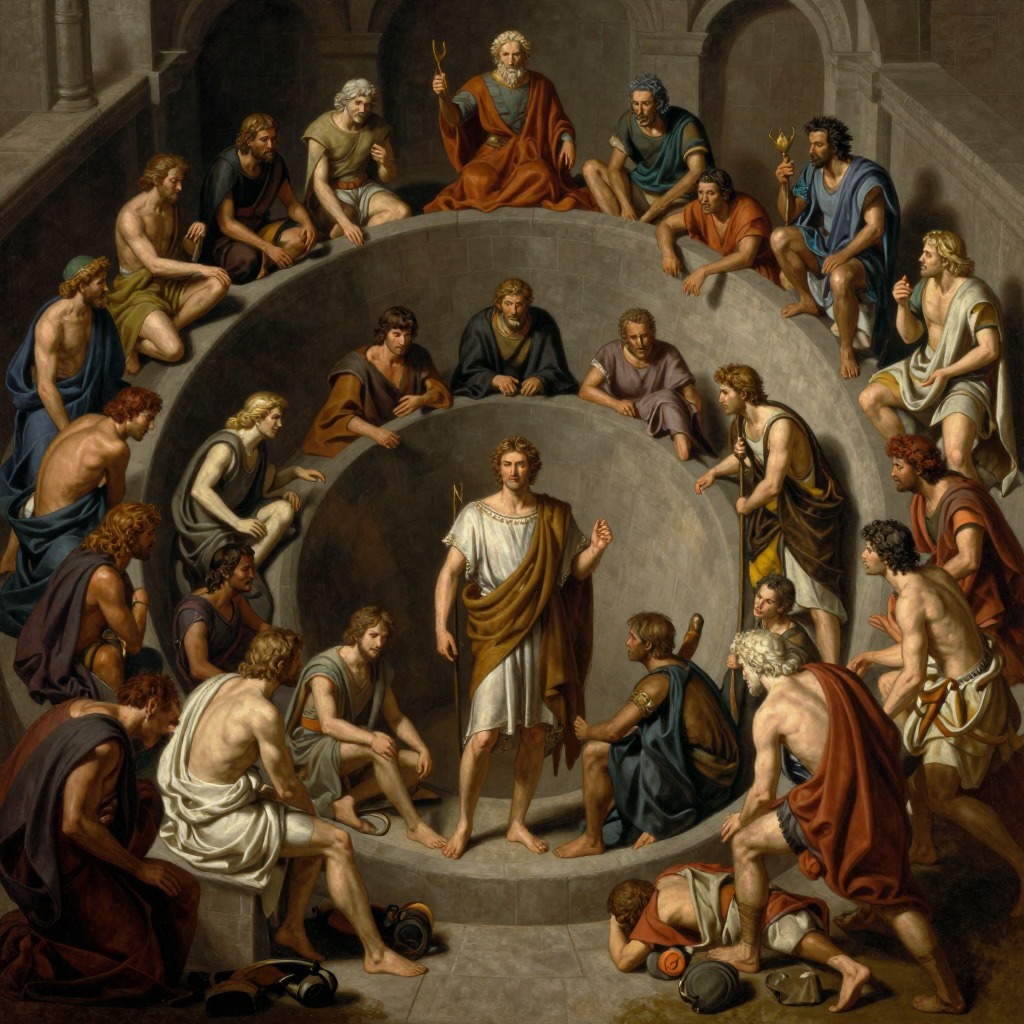
Dante's Journey through Hell from "The Divine Comedy". Dante descends through the nine circles of Hell, witnessing the punishments of the damned and learning the nature of sin.
Dante's Journey through Hell

Dante descends through the nine circles of Hell, witnessing the punishments of the damned and learning the nature of sin.

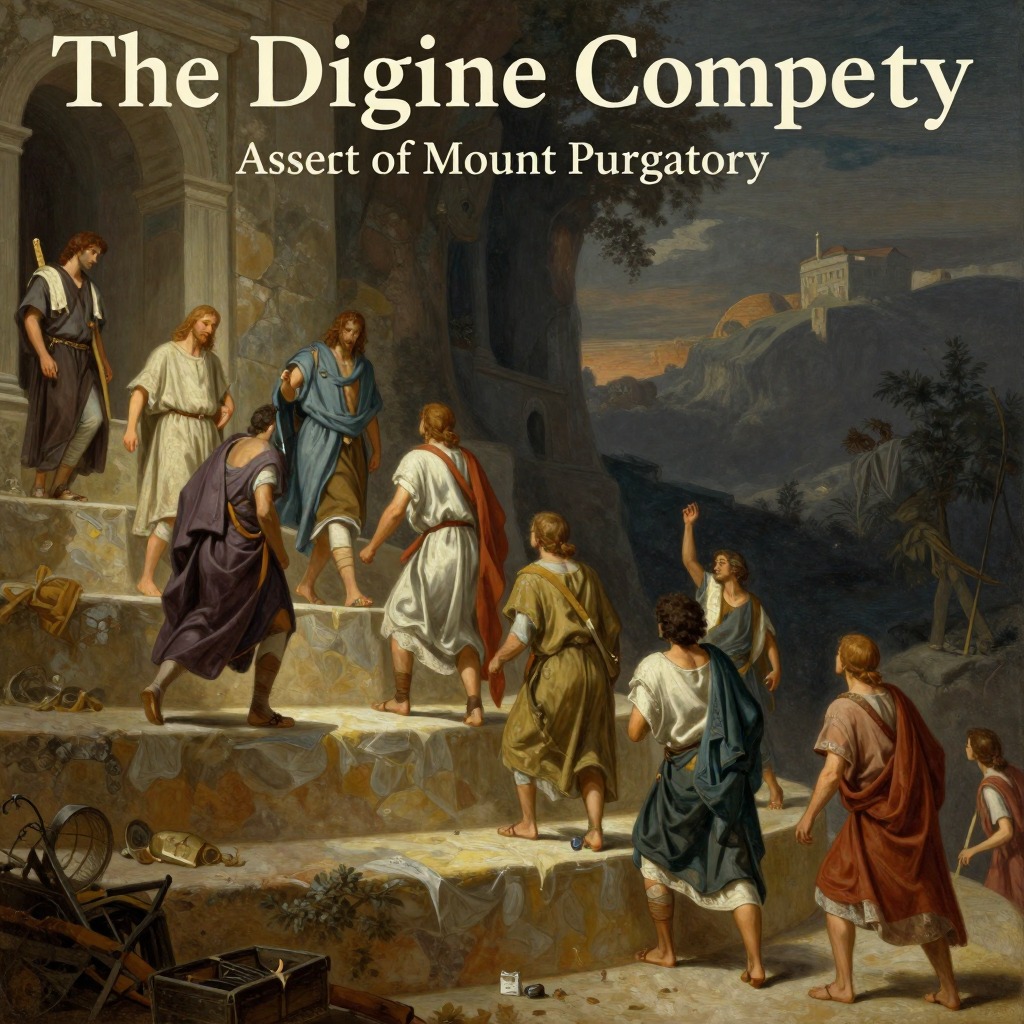
Dante's Ascent of Mount Purgatory from "The Divine Comedy". Dante climbs the seven terraces of Purgatory, purging the seven deadly sins and preparing for Paradise.
Dante's Ascent of Mount Purgatory

Dante climbs the seven terraces of Purgatory, purging the seven deadly sins and preparing for Paradise.

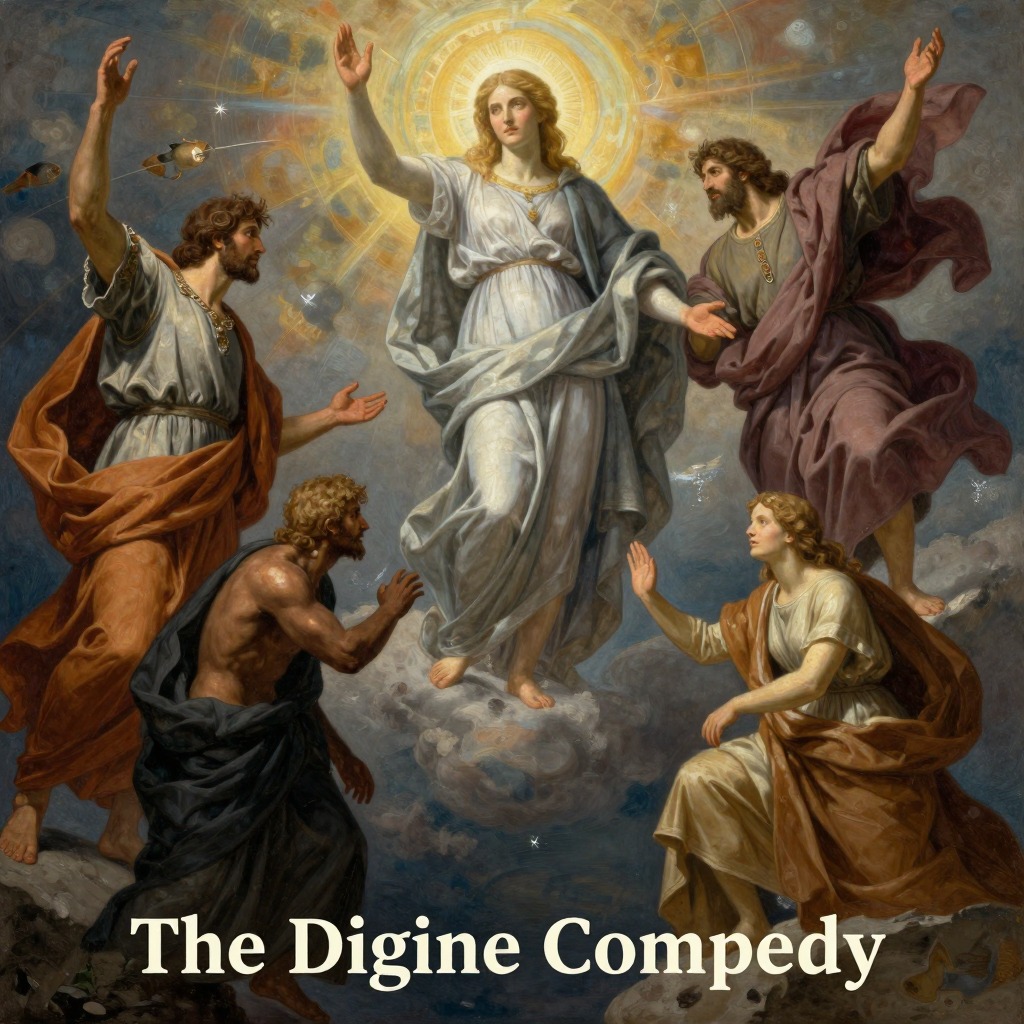
Dante's Journey through Paradise from "The Divine Comedy". Dante ascends through the nine heavens of Paradise, guided by Beatrice, and finally beholds the vision of God.
Dante's Journey through Paradise

Dante ascends through the nine heavens of Paradise, guided by Beatrice, and finally beholds the vision of God.

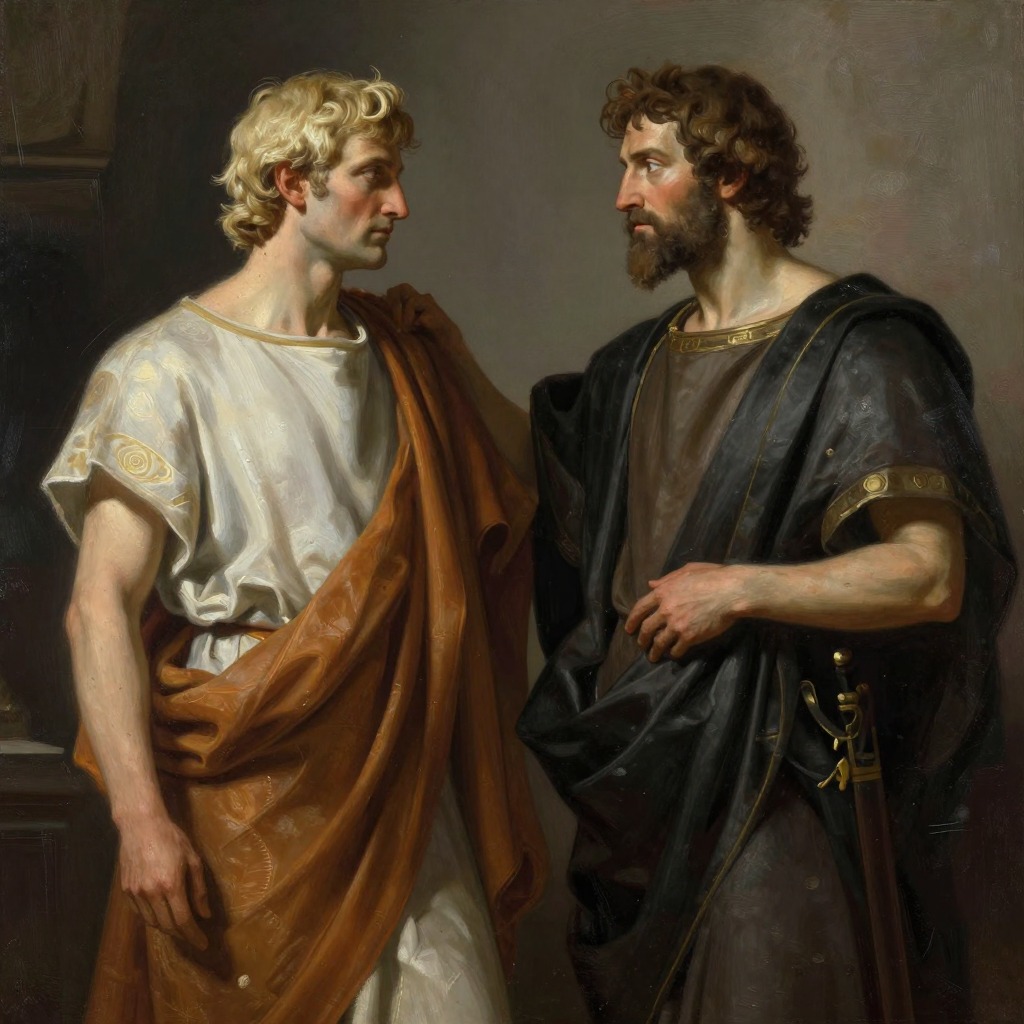
Dante and Virgil's Relationship from "The Divine Comedy". The evolving bond between Dante and his guide Virgil, from initial reverence to final farewell.

Dante and Virgil's Relationship

The evolving bond between Dante and his guide Virgil, from initial reverence to final farewell.
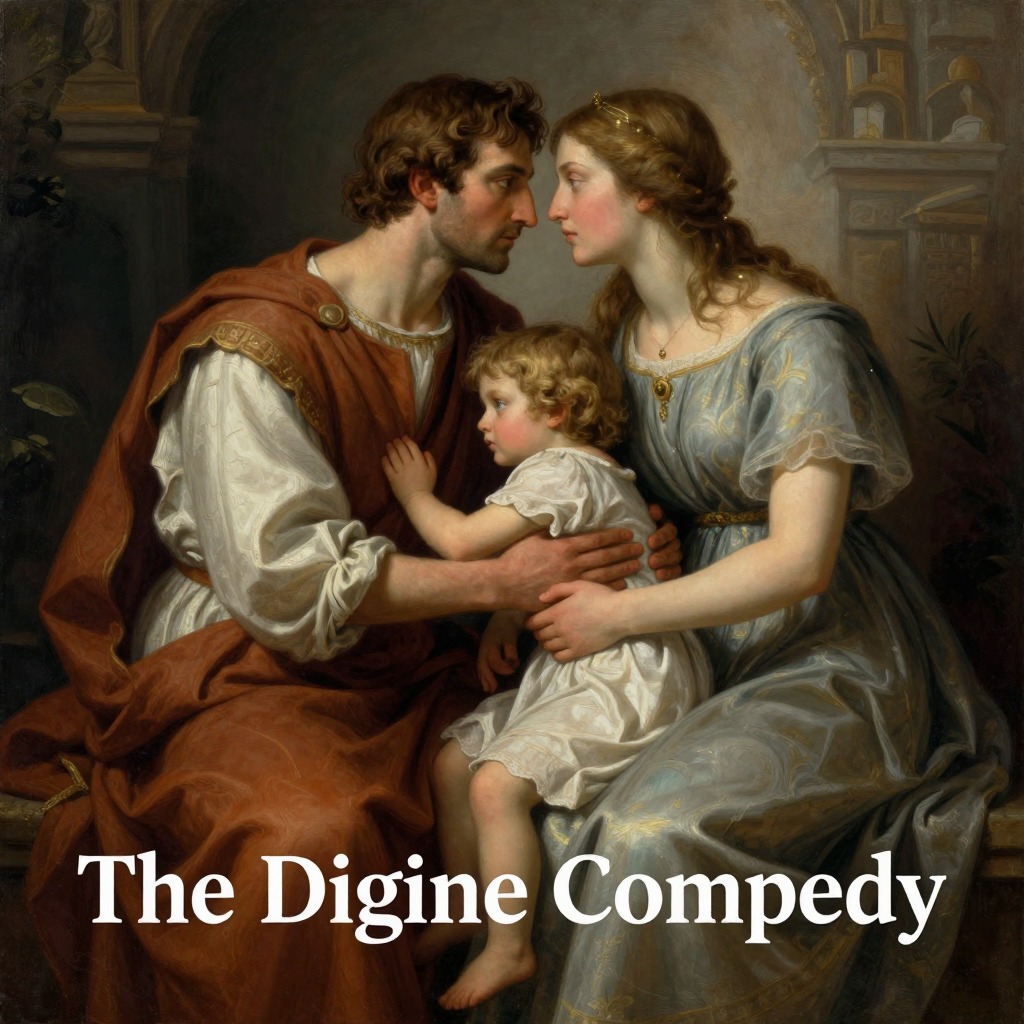
Dante and Beatrice's Spiritual Love from "The Divine Comedy". The story of Dante's love for Beatrice, from his childhood devotion to their reunion in Paradise.

Dante and Beatrice's Spiritual Love

The story of Dante's love for Beatrice, from his childhood devotion to their reunion in Paradise.
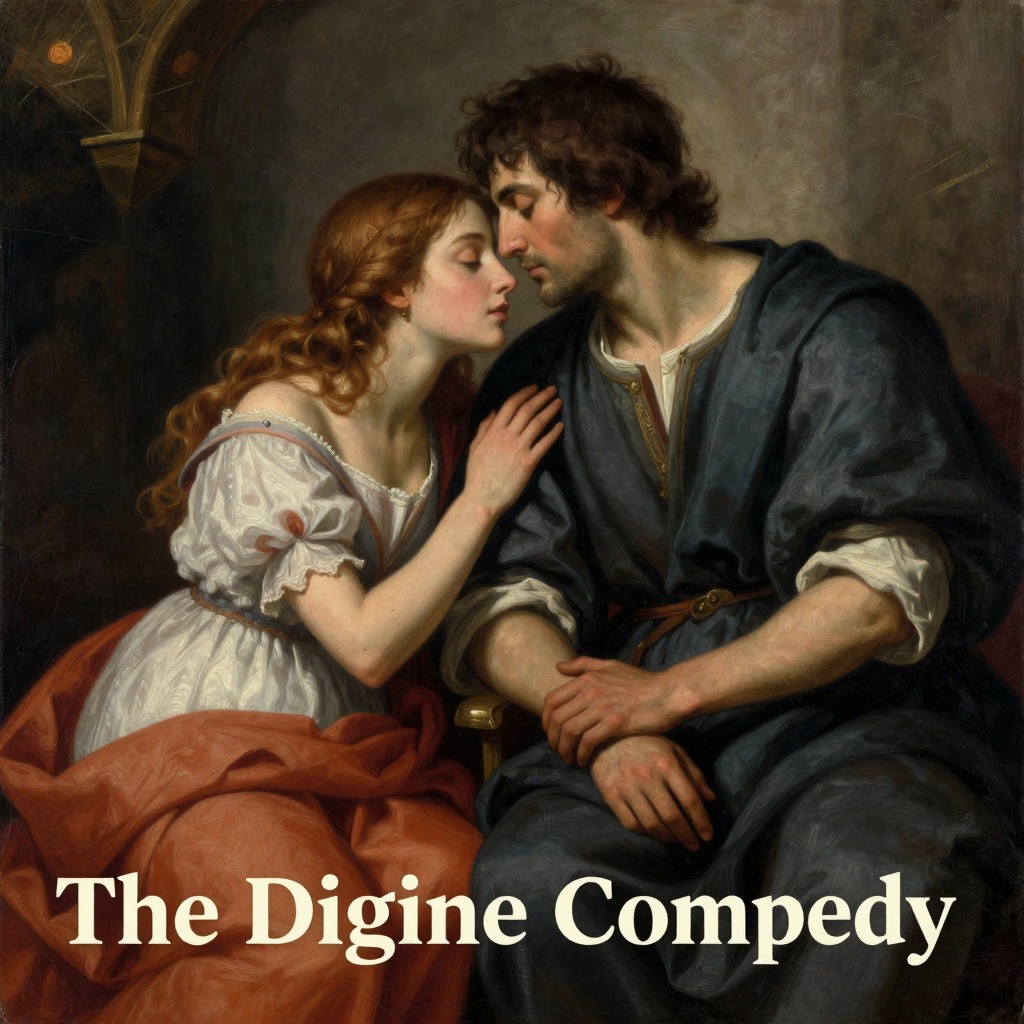
Paolo and Francesca's Tragic Love from "The Divine Comedy". The story of Francesca da Rimini and Paolo Malatesta, whose adulterous love led to their deaths and damnation.
Paolo and Francesca's Tragic Love

The story of Francesca da Rimini and Paolo Malatesta, whose adulterous love led to their deaths and damnation.

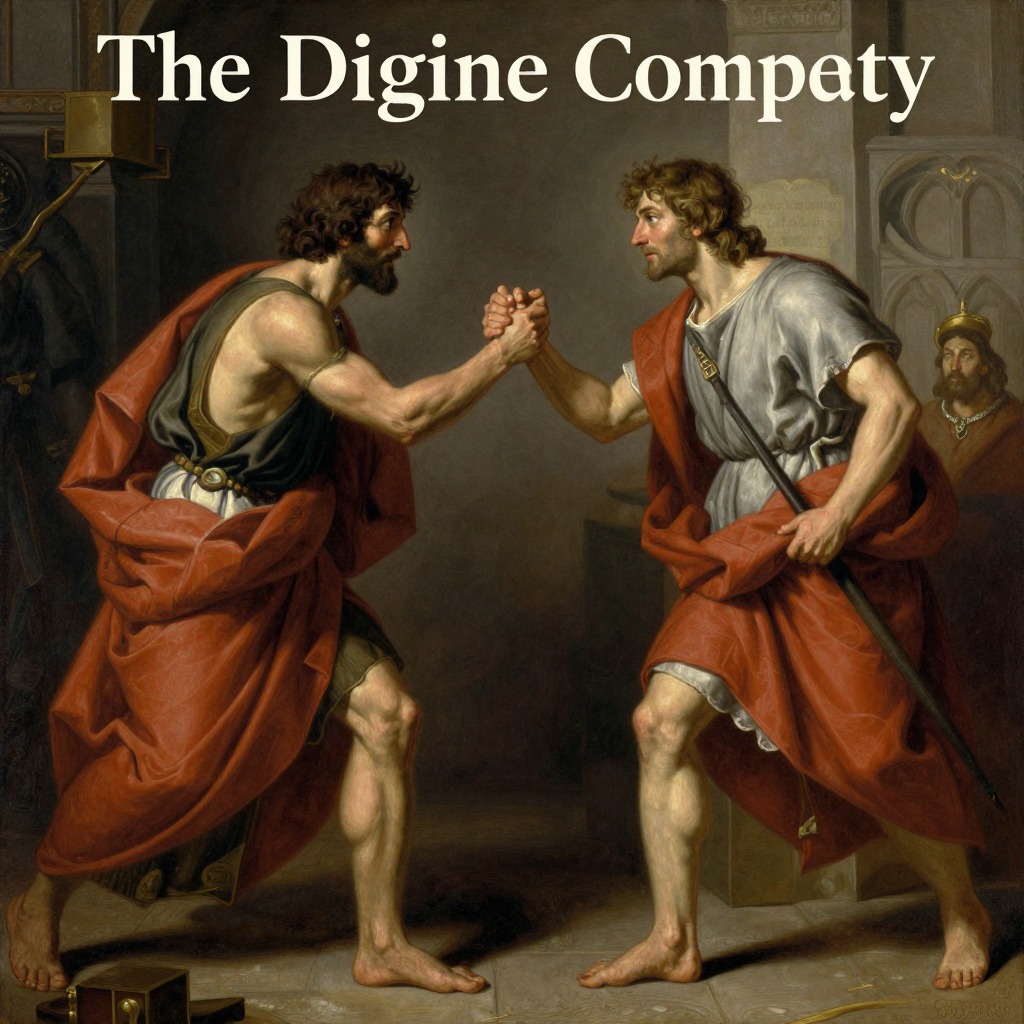
Farinata and Cavalcante's Family Feud from "The Divine Comedy". The encounter with Farinata degli Uberti and Cavalcante de' Cavalcanti in the circle of heretics, revealing political and personal conflicts.
Farinata and Cavalcante's Family Feud

The encounter with Farinata degli Uberti and Cavalcante de' Cavalcanti in the circle of heretics, revealing political and personal conflicts.

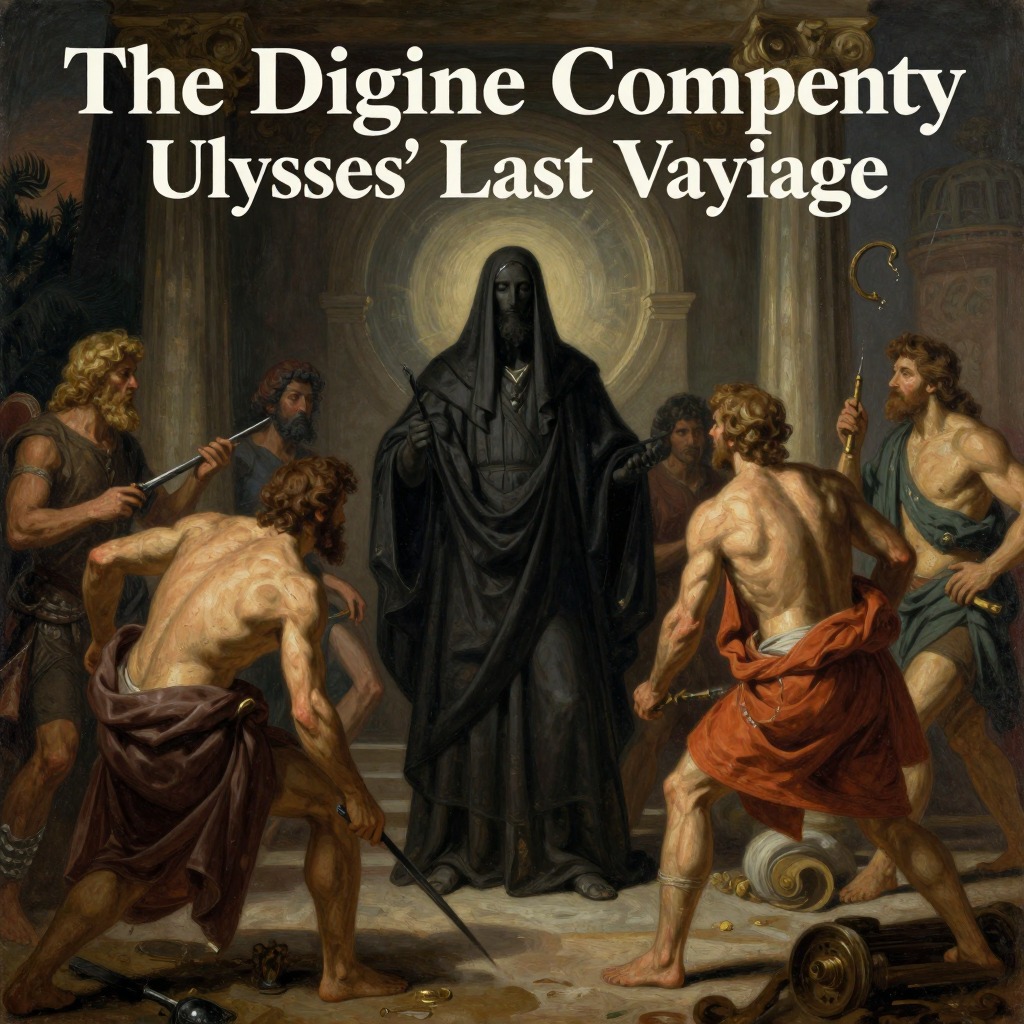
Ulysses' Last Voyage from "The Divine Comedy". The story of Ulysses' final journey beyond the Pillars of Hercules, as told by his shade in the eighth circle.
Ulysses' Last Voyage

The story of Ulysses' final journey beyond the Pillars of Hercules, as told by his shade in the eighth circle.

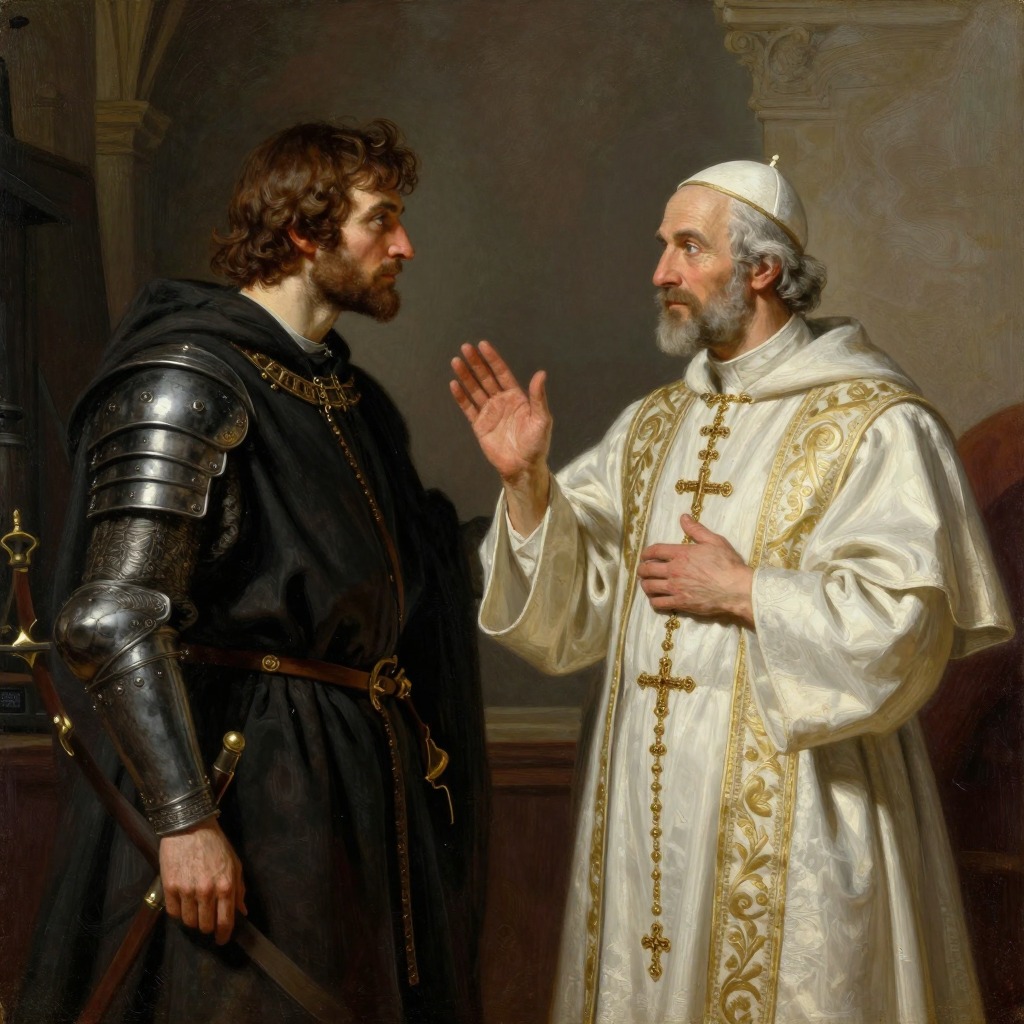
Guido da Montefeltro's Deception by Boniface VIII from "The Divine Comedy". The story of Guido da Montefeltro, a former warrior turned Franciscan, who was tricked by Pope Boniface VIII into giving fraudulent counsel.
Guido da Montefeltro's Deception by Boniface VIII

The story of Guido da Montefeltro, a former warrior turned Franciscan, who was tricked by Pope Boniface VIII into giving fraudulent counsel.

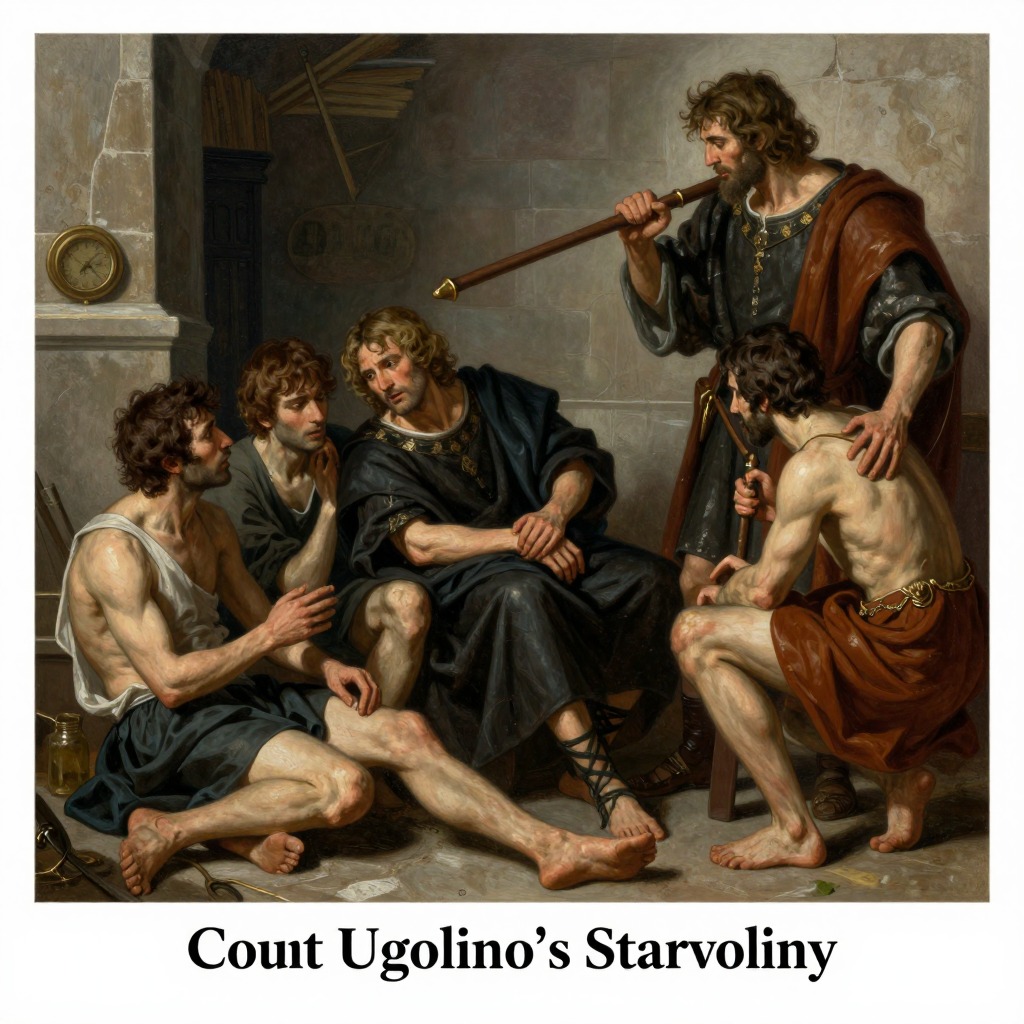
Count Ugolino's Starvation from "The Divine Comedy". The harrowing tale of Count Ugolino, who was imprisoned with his sons and starved to death by Archbishop Ruggieri.
Count Ugolino's Starvation

The harrowing tale of Count Ugolino, who was imprisoned with his sons and starved to death by Archbishop Ruggieri.

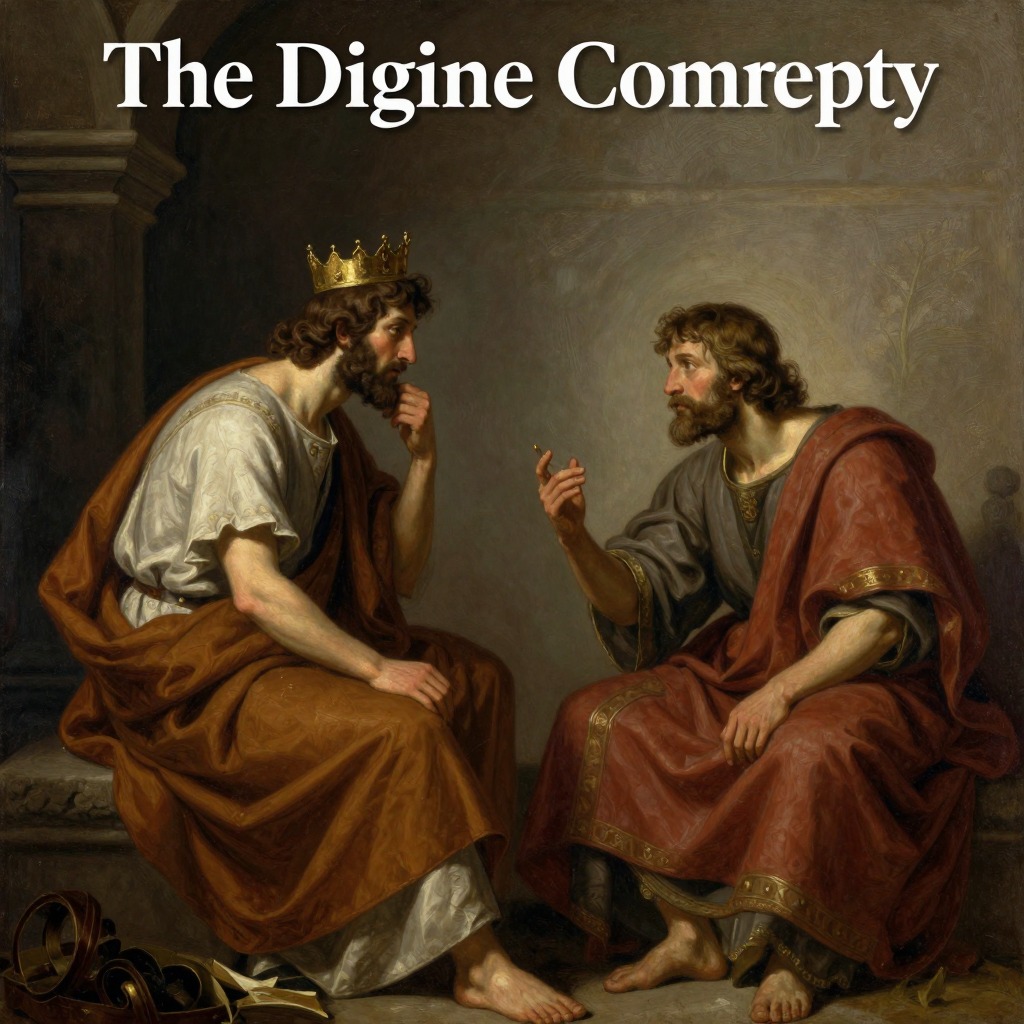
Manfredi's Repentance and Hope from "The Divine Comedy". The story of Manfredi, King of Sicily, who died excommunicated but repented at the last moment, now waiting in Ante-Purgatory.
Manfredi's Repentance and Hope

The story of Manfredi, King of Sicily, who died excommunicated but repented at the last moment, now waiting in Ante-Purgatory.

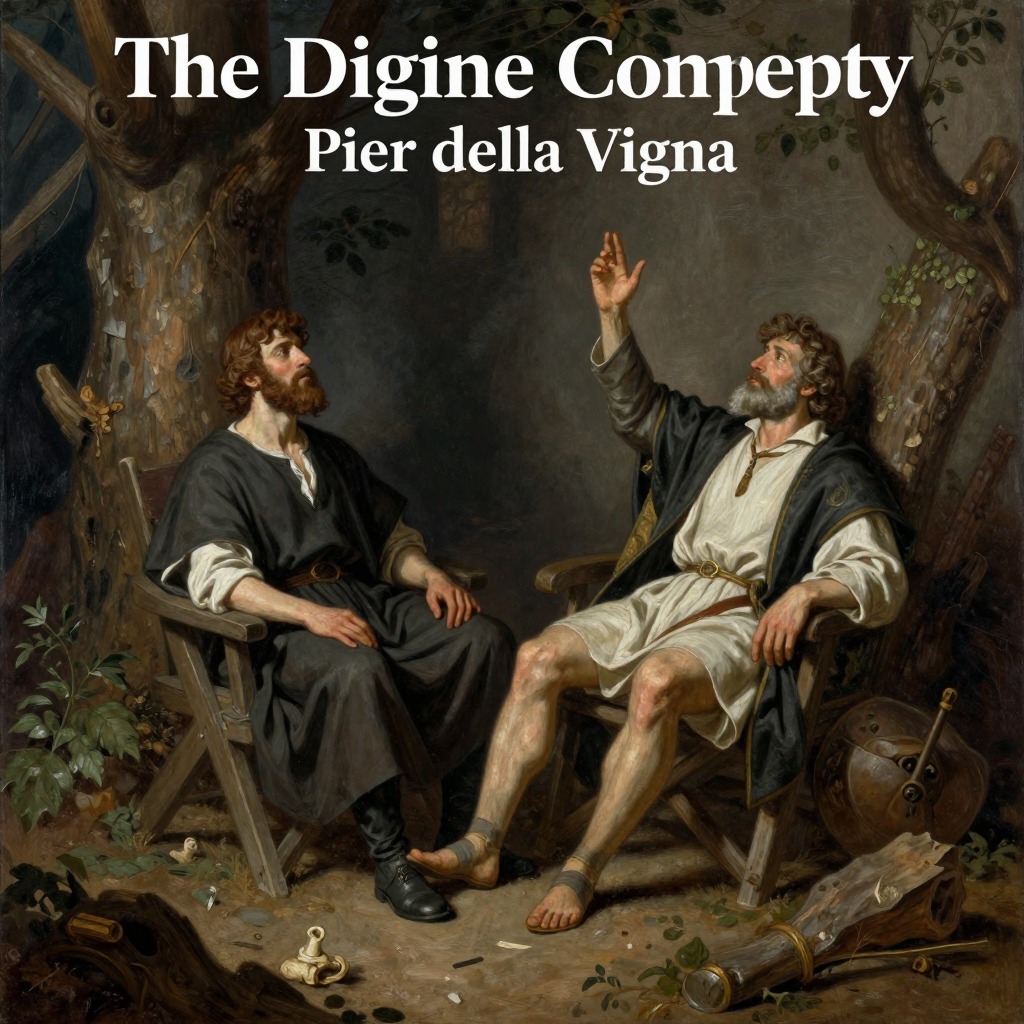
Pier della Vigna's Suicide from "The Divine Comedy". The story of Pier della Vigna, a loyal minister who committed suicide after being unjustly disgraced, now punished in the Wood of Suicides.
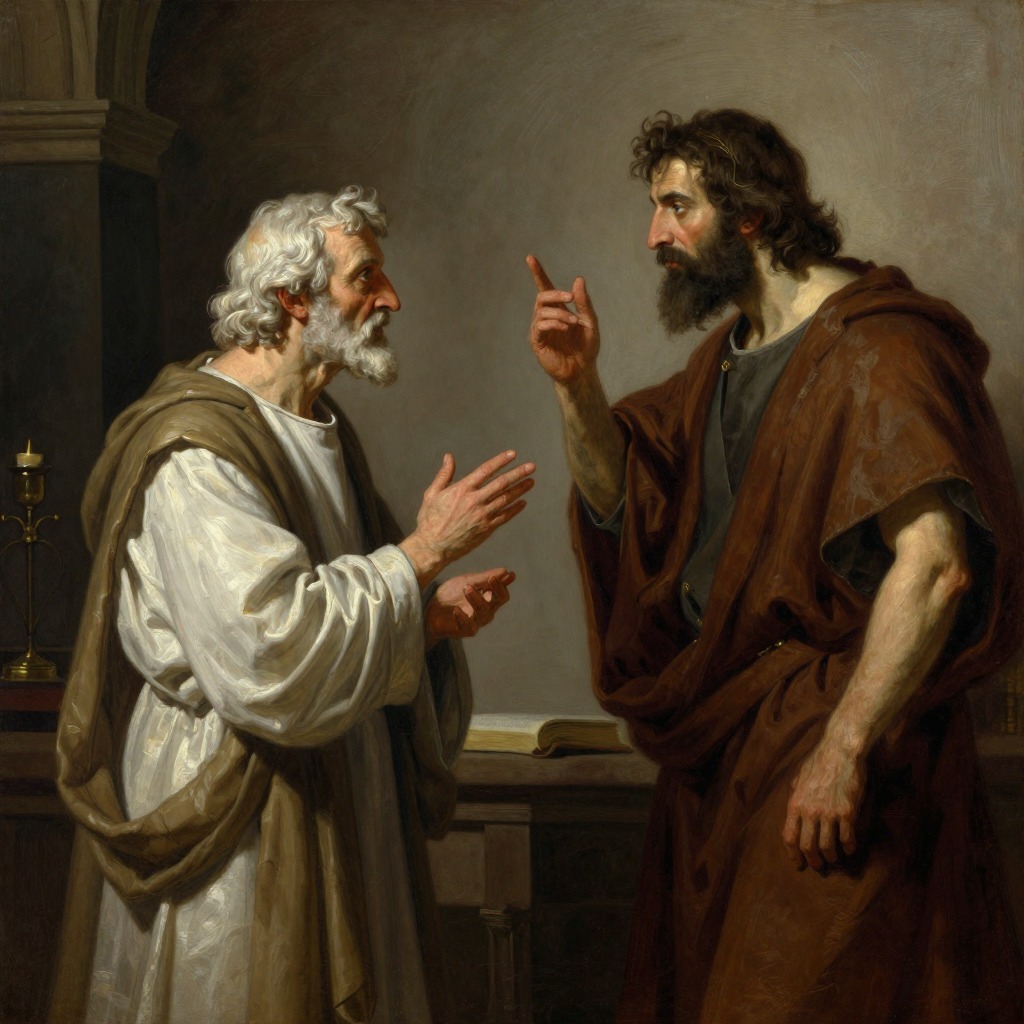
Pier della Vigna's Suicide

The story of Pier della Vigna, a loyal minister who committed suicide after being unjustly disgraced, now punished in the Wood of Suicides.

Brunetto Latini's Prophecy and Teaching from "The Divine Comedy". Dante's encounter with his former teacher Brunetto Latini in the circle of sodomites, who prophesies Dante's future and praises his work.
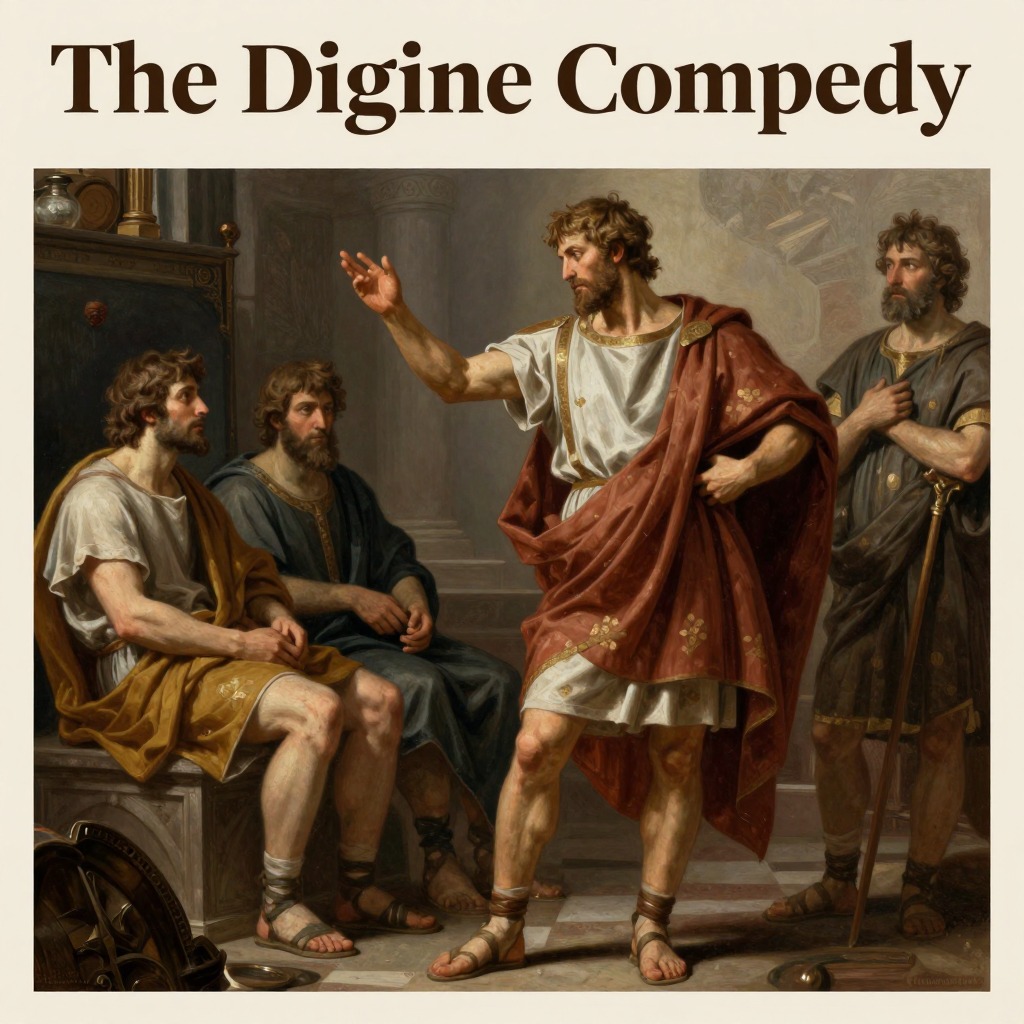
Brunetto Latini's Prophecy and Teaching

Dante's encounter with his former teacher Brunetto Latini in the circle of sodomites, who prophesies Dante's future and praises his work.

Statius's Conversion and Poetic Legacy from "The Divine Comedy". The story of the Roman poet Statius, who was secretly a Christian and whose poetry was inspired by Virgil.
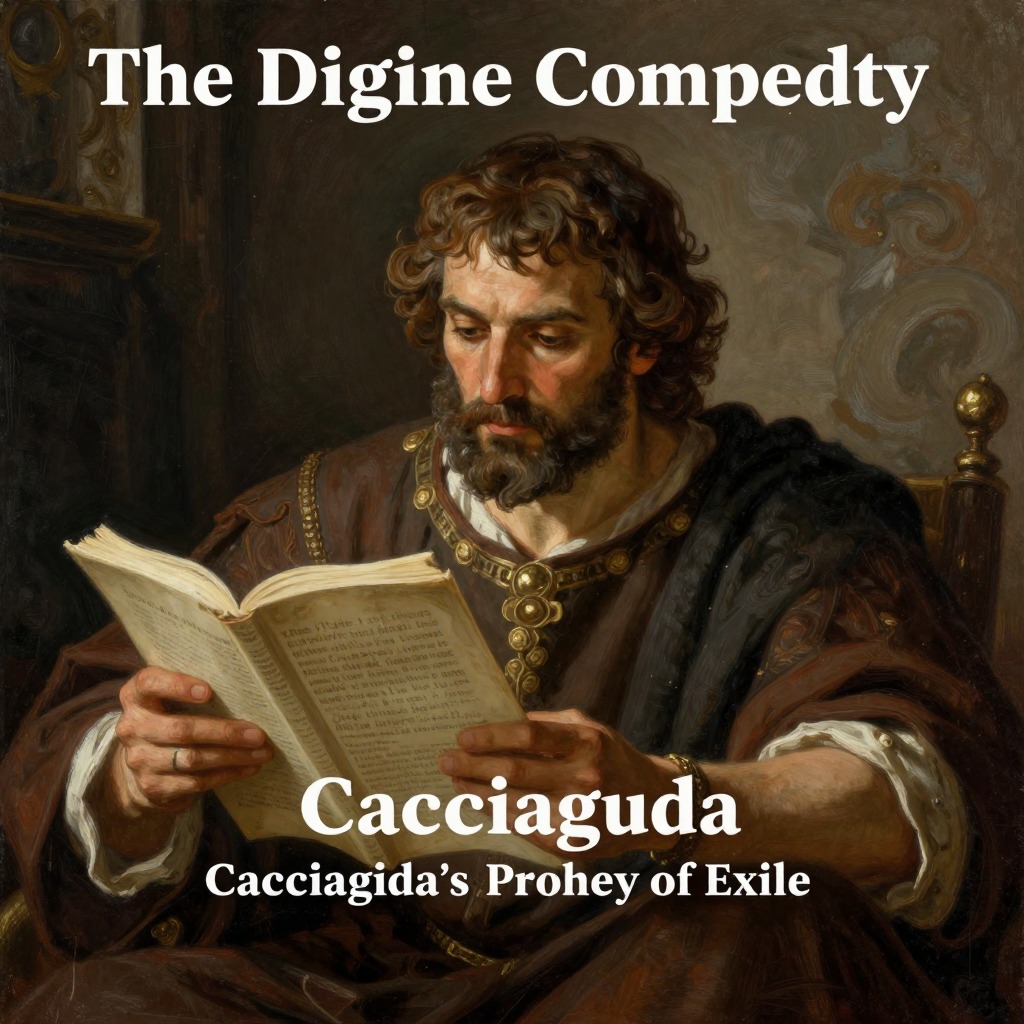
Statius's Conversion and Poetic Legacy

The story of the Roman poet Statius, who was secretly a Christian and whose poetry was inspired by Virgil.

Cacciaguida's Prophecy of Exile from "The Divine Comedy". Dante's ancestor Cacciaguida foretells his exile and encourages him to write his poem boldly.

Cacciaguida's Prophecy of Exile

Dante's ancestor Cacciaguida foretells his exile and encourages him to write his poem boldly.
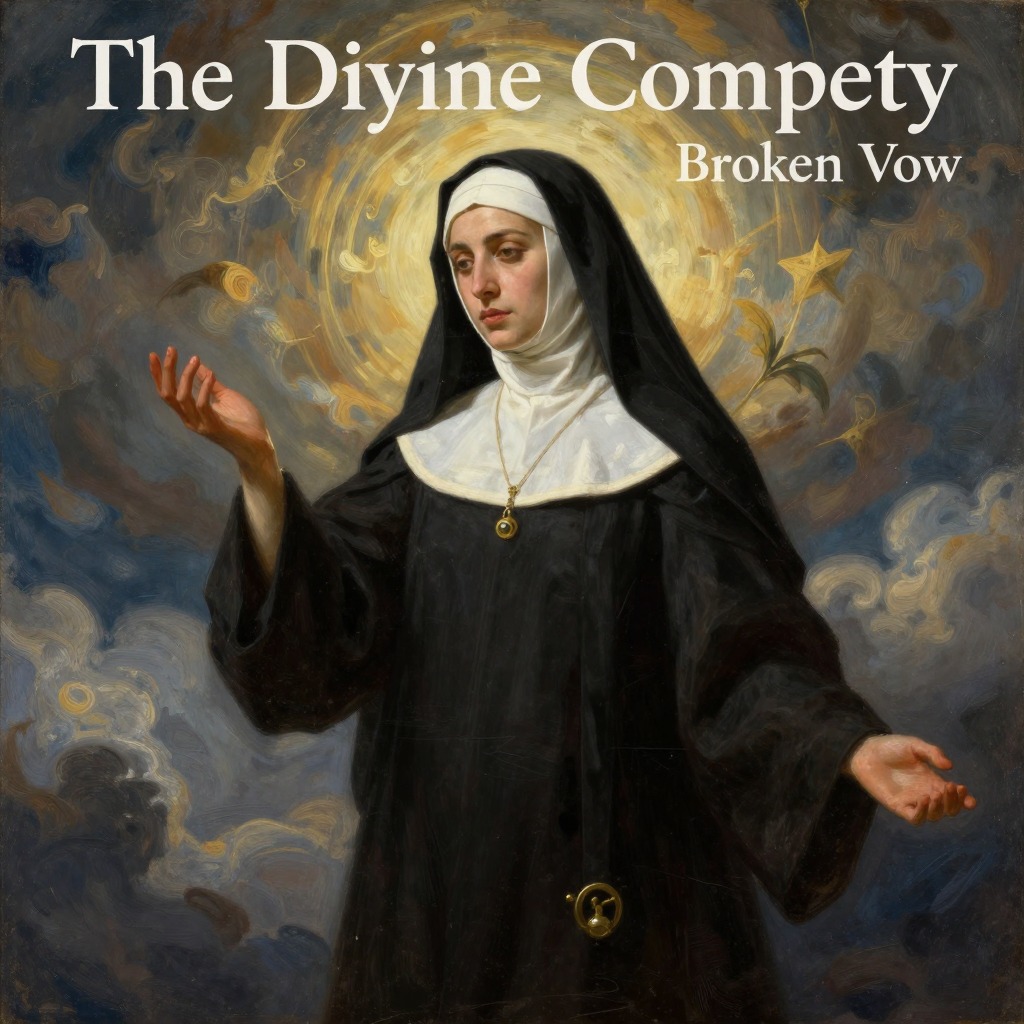
Piccarda Donati's Broken Vow from "The Divine Comedy". The story of Piccarda Donati, a nun who was forced to break her vows and now resides in the lowest heaven.
Piccarda Donati's Broken Vow

The story of Piccarda Donati, a nun who was forced to break her vows and now resides in the lowest heaven.

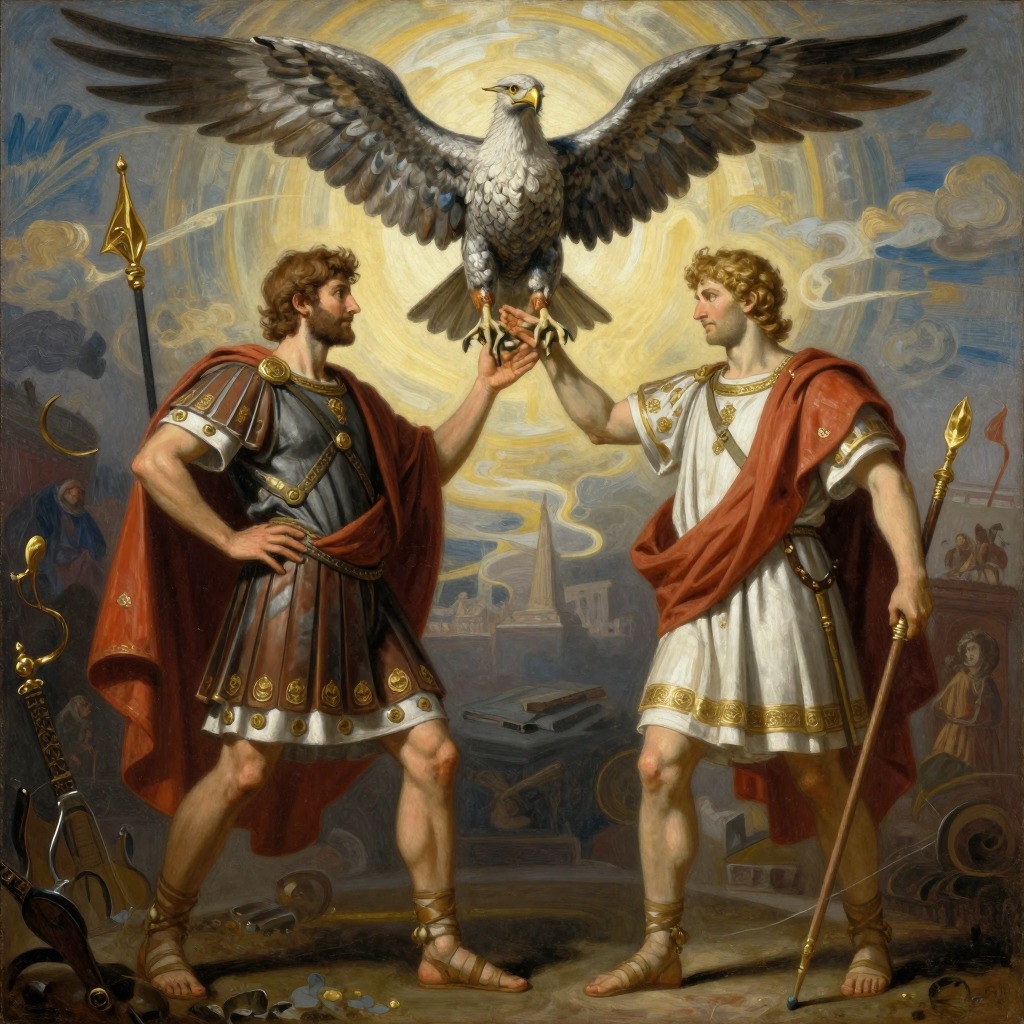
Justinian and the Roman Eagle from "The Divine Comedy". The history of the Roman Empire as recounted by Emperor Justinian in the Heaven of Mercury.

Justinian and the Roman Eagle

The history of the Roman Empire as recounted by Emperor Justinian in the Heaven of Mercury.
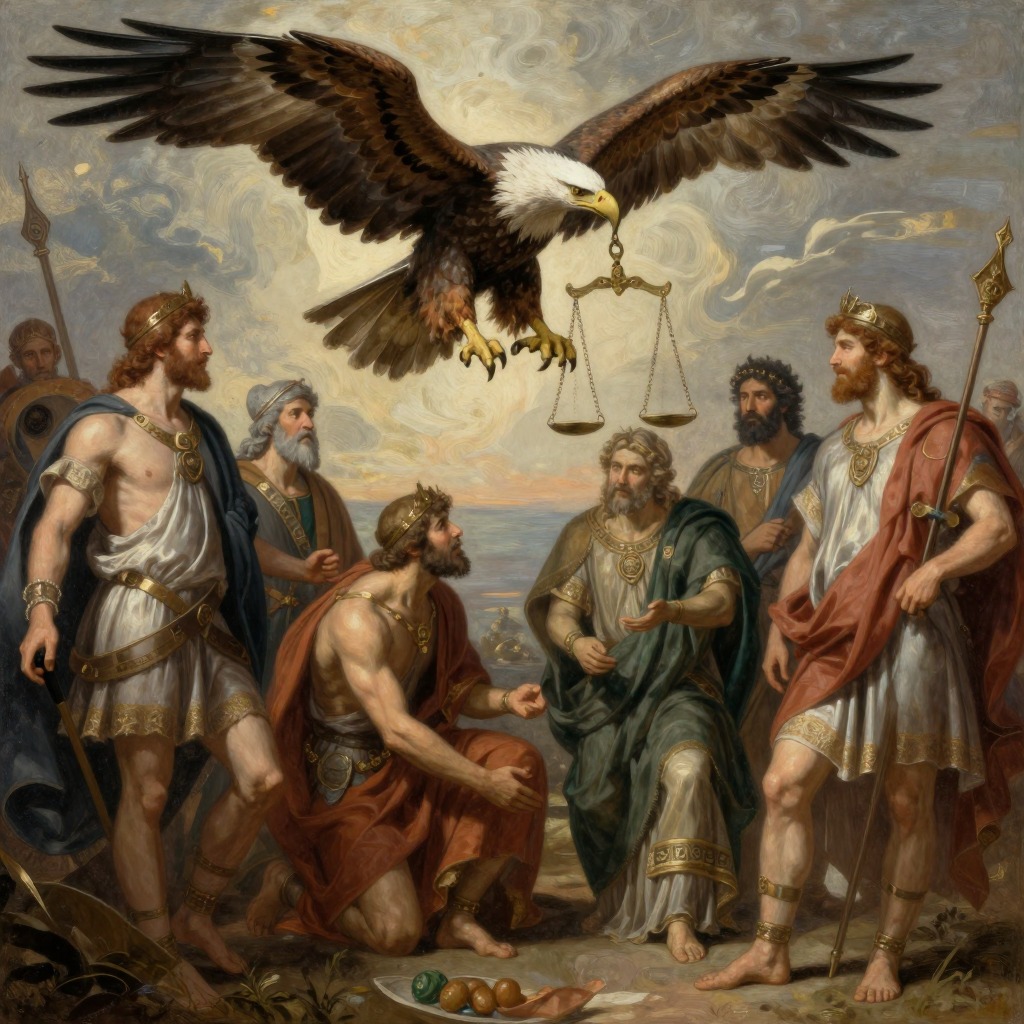
The Eagle of Justice and the Righteous Kings from "The Divine Comedy". The formation of the Eagle of Justice in Jupiter and its discourse on salvation and the righteous rulers.
The Eagle of Justice and the Righteous Kings

The formation of the Eagle of Justice in Jupiter and its discourse on salvation and the righteous rulers.

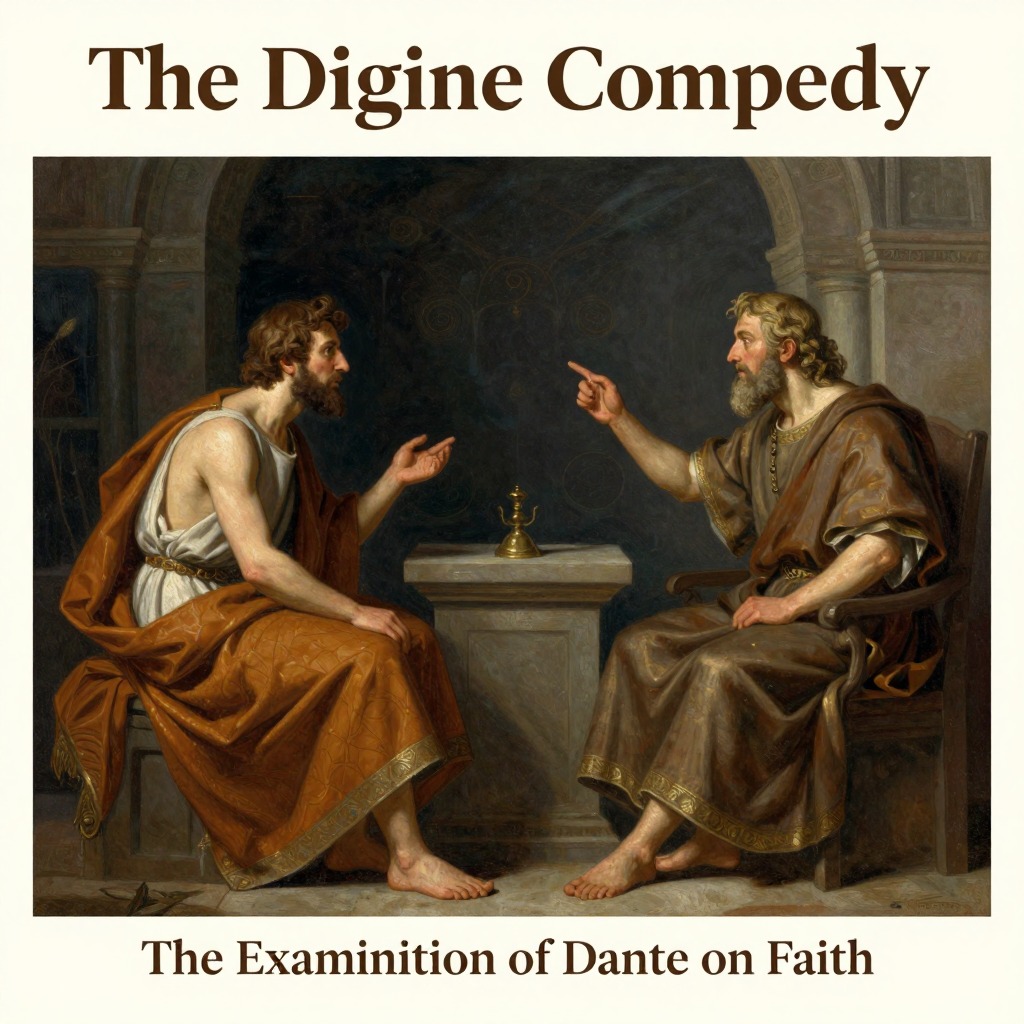
The Examination of Dante on Faith from "The Divine Comedy". Dante is examined by St. Peter on the virtue of faith in the Heaven of the Fixed Stars.

The Examination of Dante on Faith

Dante is examined by St. Peter on the virtue of faith in the Heaven of the Fixed Stars.
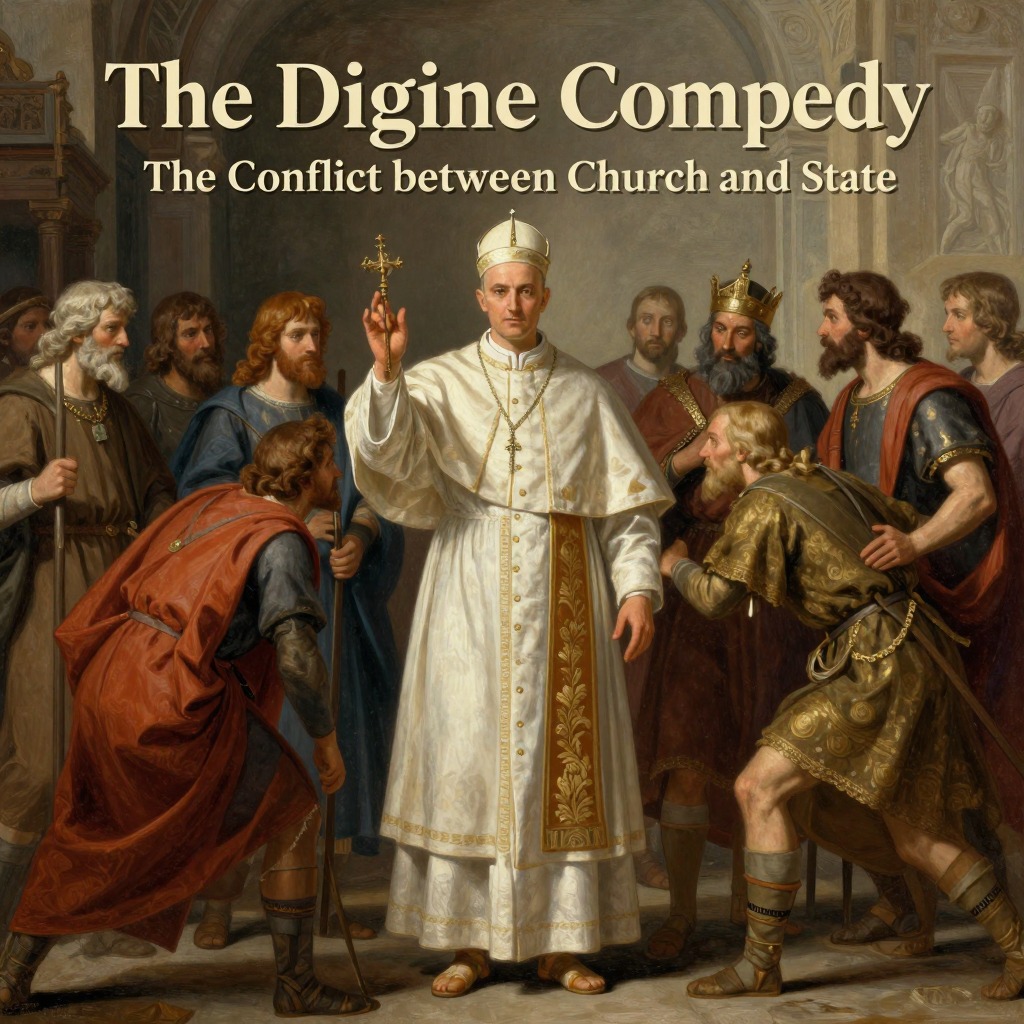
The Conflict between Church and State from "The Divine Comedy". The ongoing struggle between papal authority and imperial power, as critiqued throughout the Comedy.
The Conflict between Church and State

The ongoing struggle between papal authority and imperial power, as critiqued throughout the Comedy.

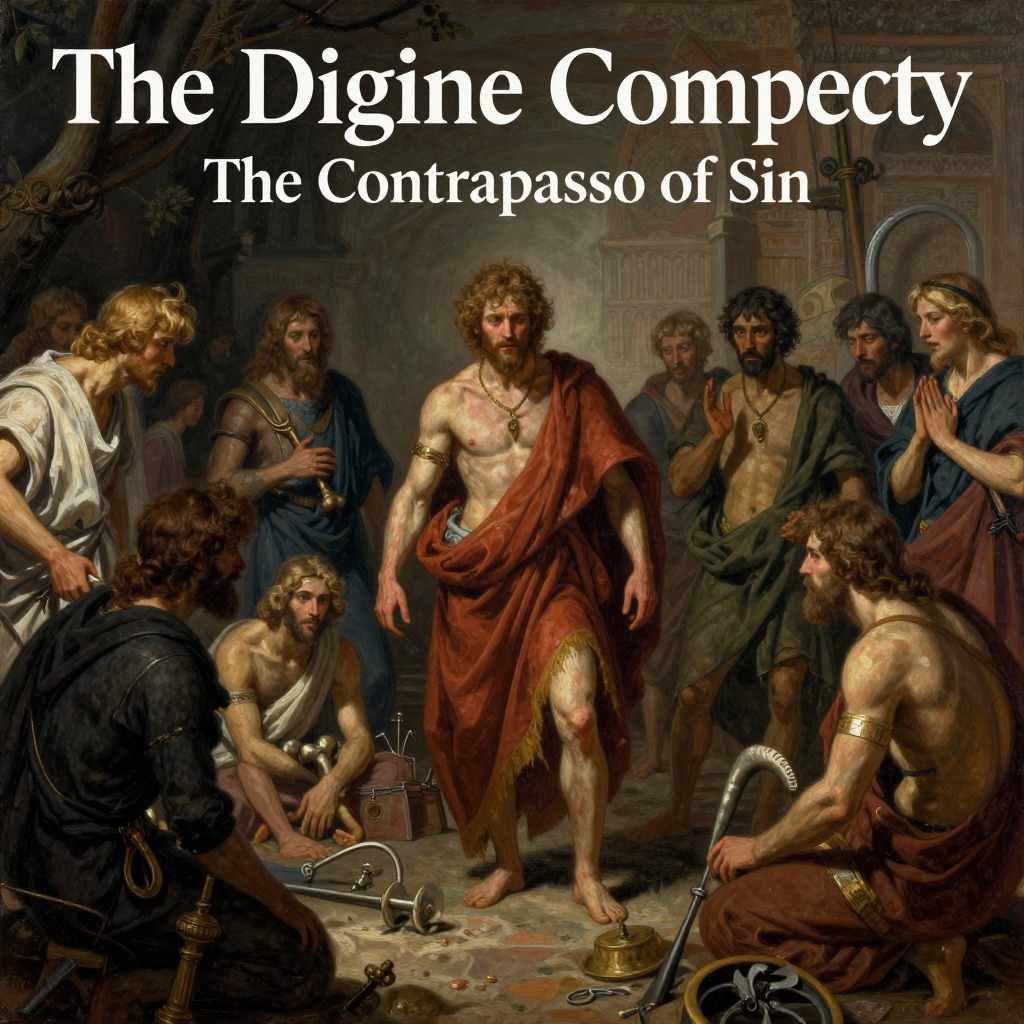
The Contrapasso of Sin from "The Divine Comedy". The principle of divine justice that punishes each sin with a fitting torment, illustrated throughout Hell.
The Contrapasso of Sin

The principle of divine justice that punishes each sin with a fitting torment, illustrated throughout Hell.

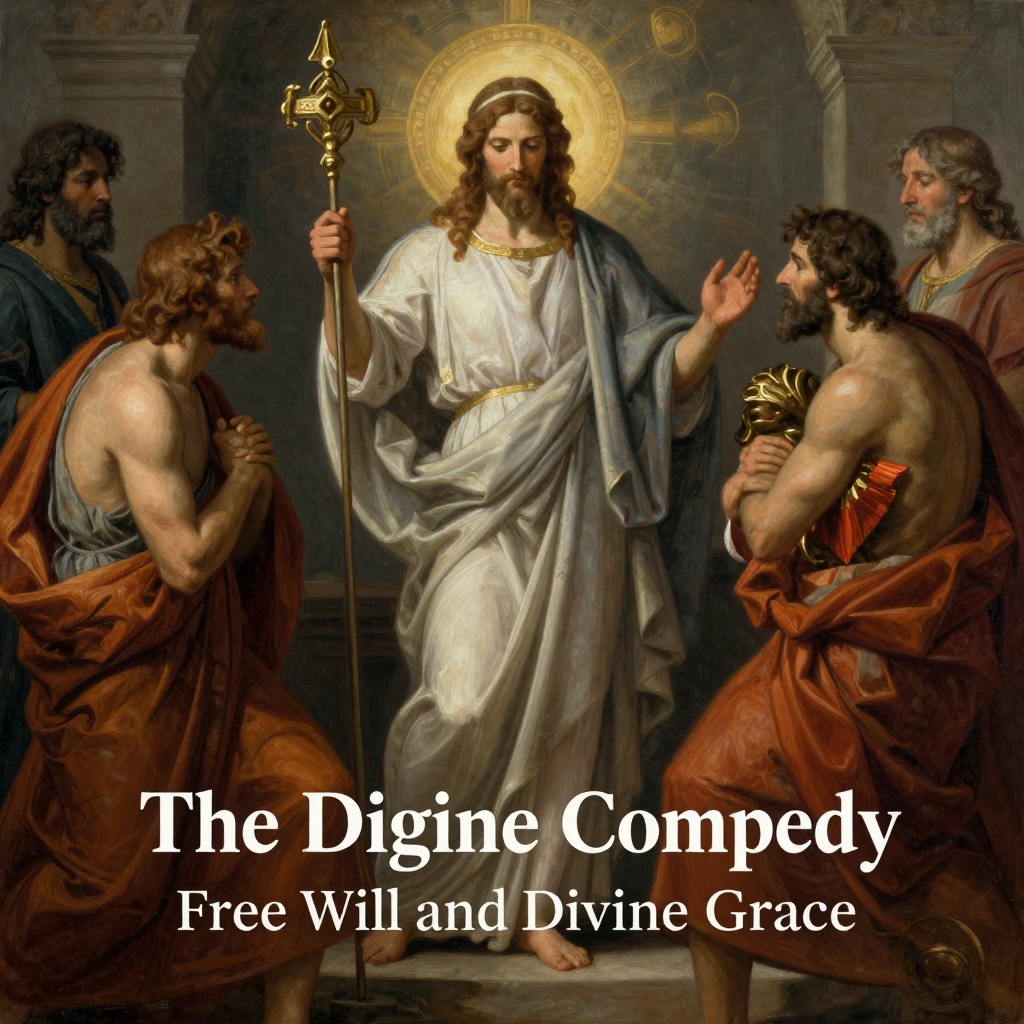
Free Will and Divine Grace from "The Divine Comedy". The interplay between human free will and God's grace, a central theological theme explored throughout the poem.
Free Will and Divine Grace

The interplay between human free will and God's grace, a central theological theme explored throughout the poem.

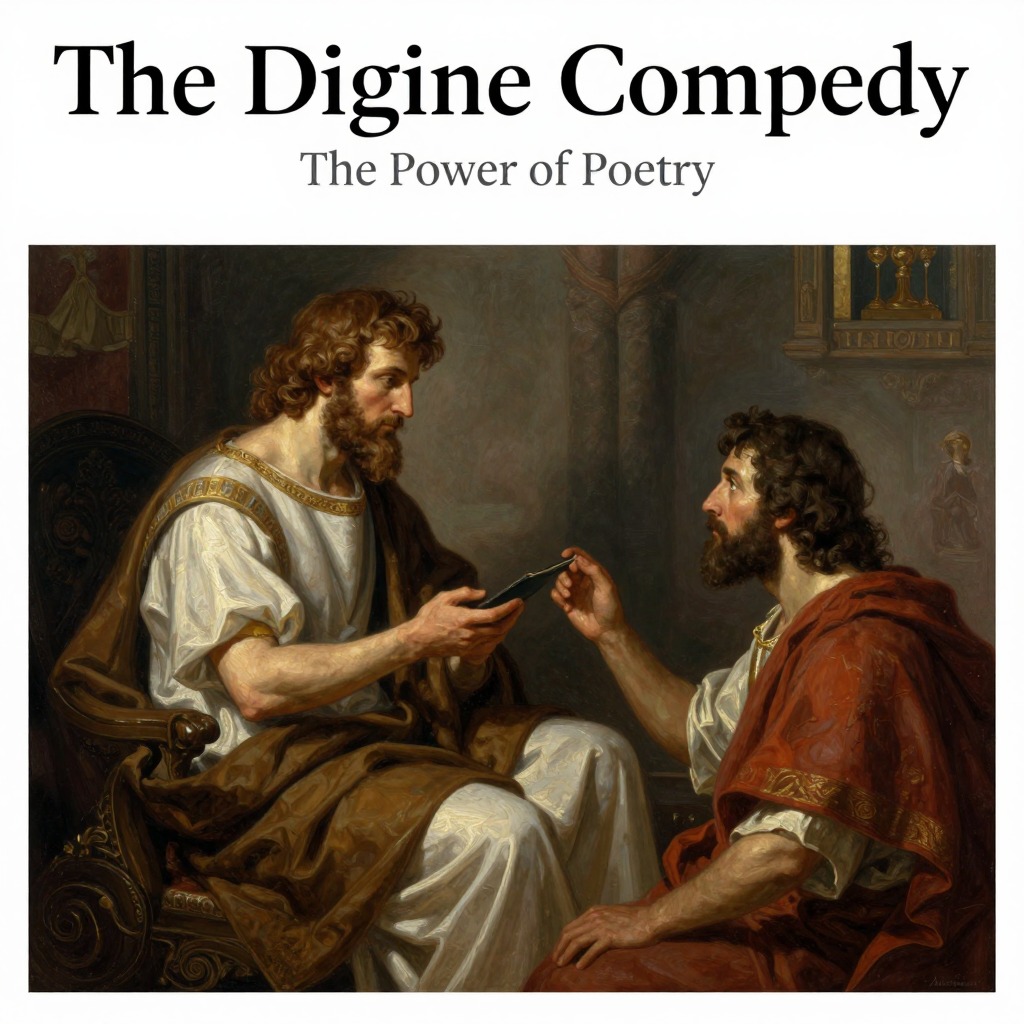
The Power of Poetry and Prophecy from "The Divine Comedy". Dante's reflection on the role of the poet as a divinely inspired prophet, a theme woven throughout the Comedy.
The Power of Poetry and Prophecy

Dante's reflection on the role of the poet as a divinely inspired prophet, a theme woven throughout the Comedy.

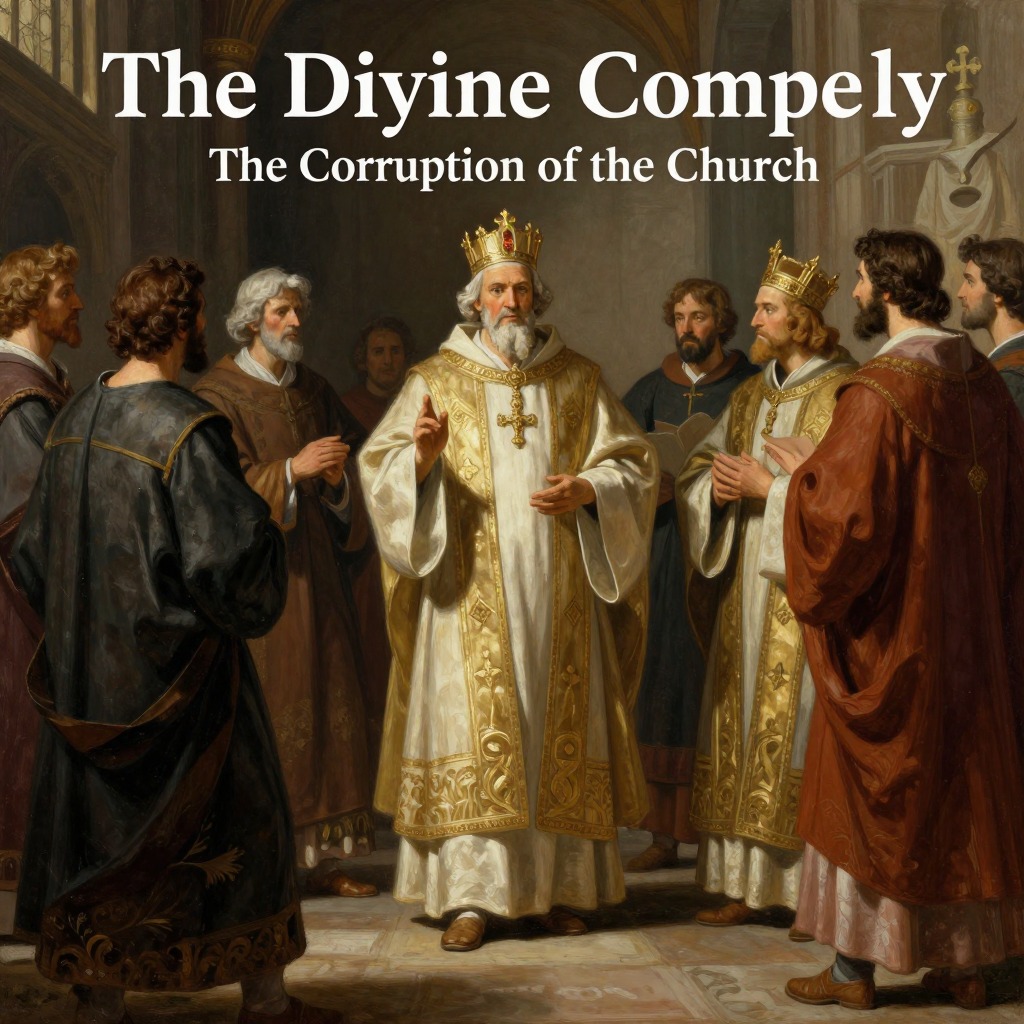
The Corruption of the Church from "The Divine Comedy". Dante's critique of the moral decay within the Church, from simony to the abuse of spiritual authority.
The Corruption of the Church

Dante's critique of the moral decay within the Church, from simony to the abuse of spiritual authority.

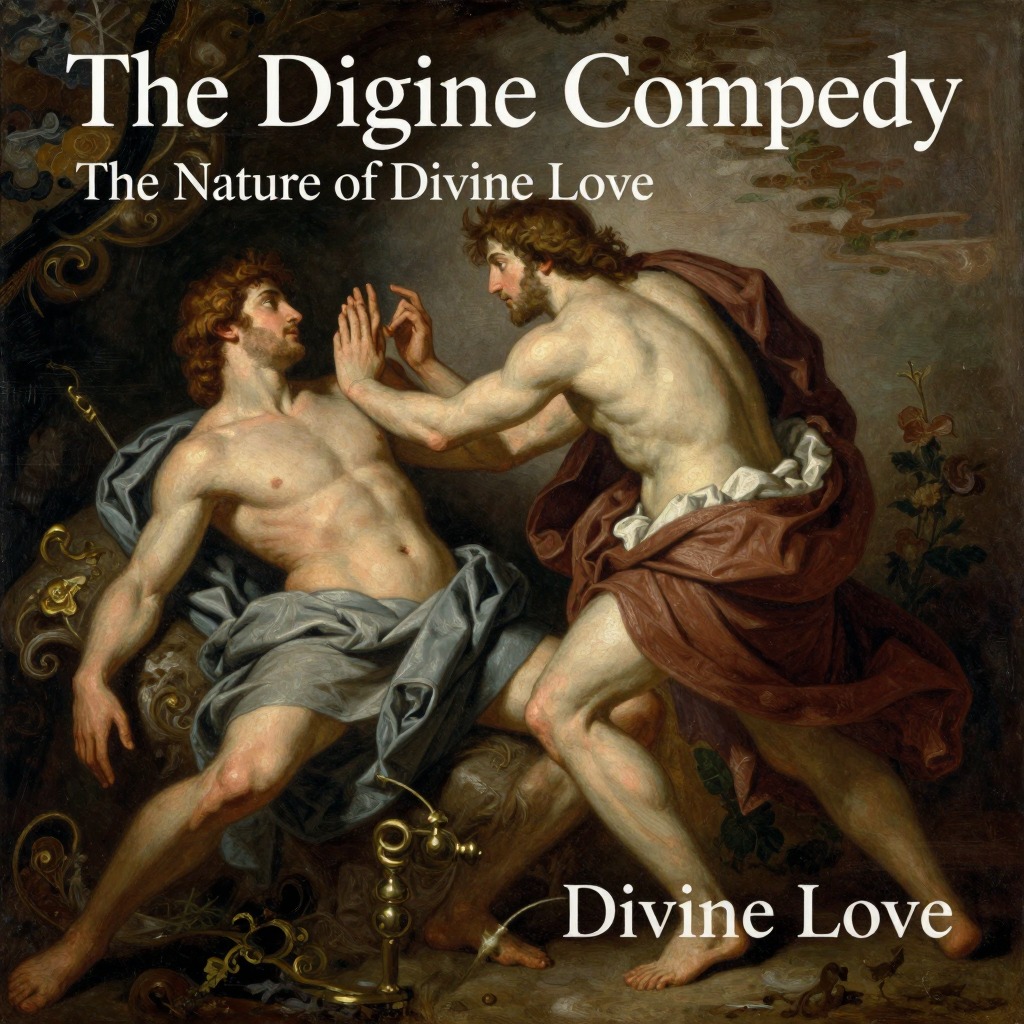
The Nature of Divine Love from "The Divine Comedy". The exploration of love as the fundamental force of the universe, from human passion to divine charity.
The Nature of Divine Love

The exploration of love as the fundamental force of the universe, from human passion to divine charity.

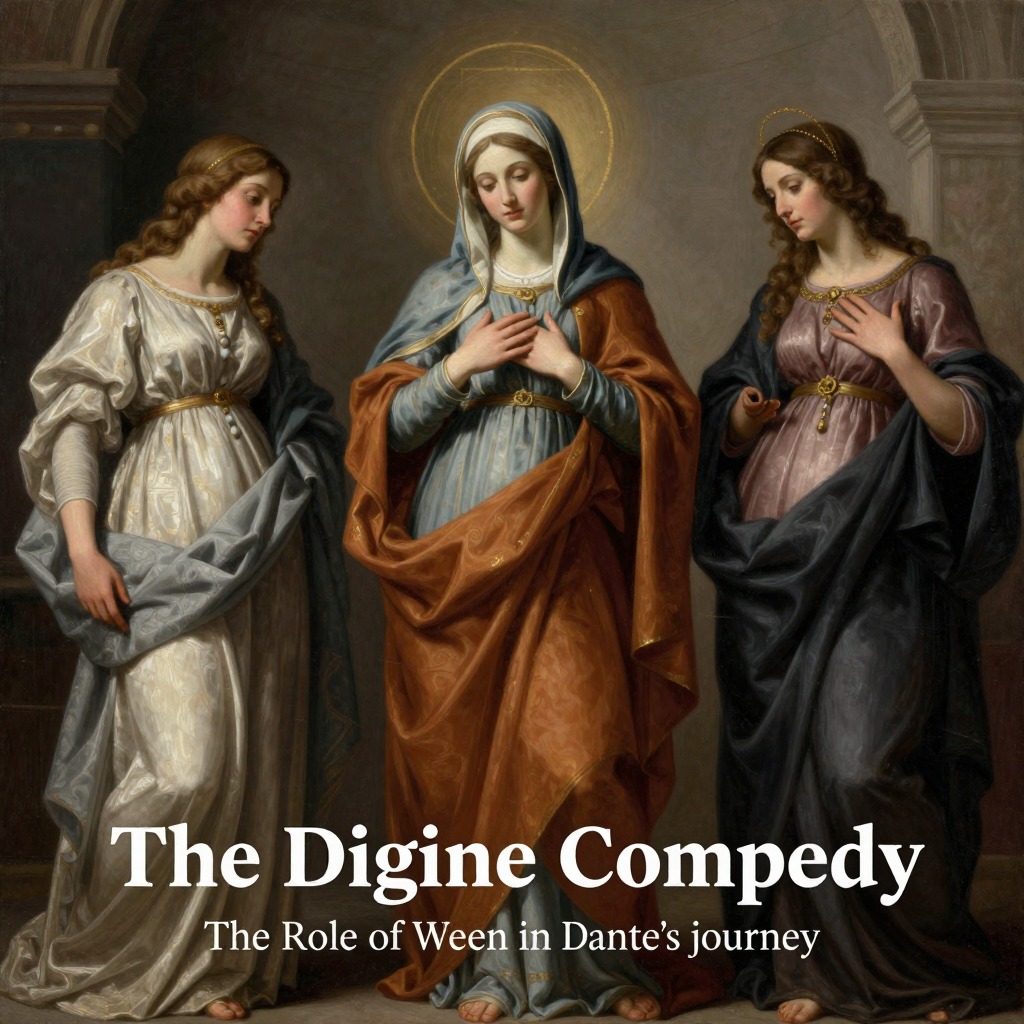
The Role of Women in Dante's Journey from "The Divine Comedy". The three heavenly ladies (Virgin Mary, Lucia, Beatrice) who initiate and guide Dante's salvation.

The Role of Women in Dante's Journey

The three heavenly ladies (Virgin Mary, Lucia, Beatrice) who initiate and guide Dante's salvation.
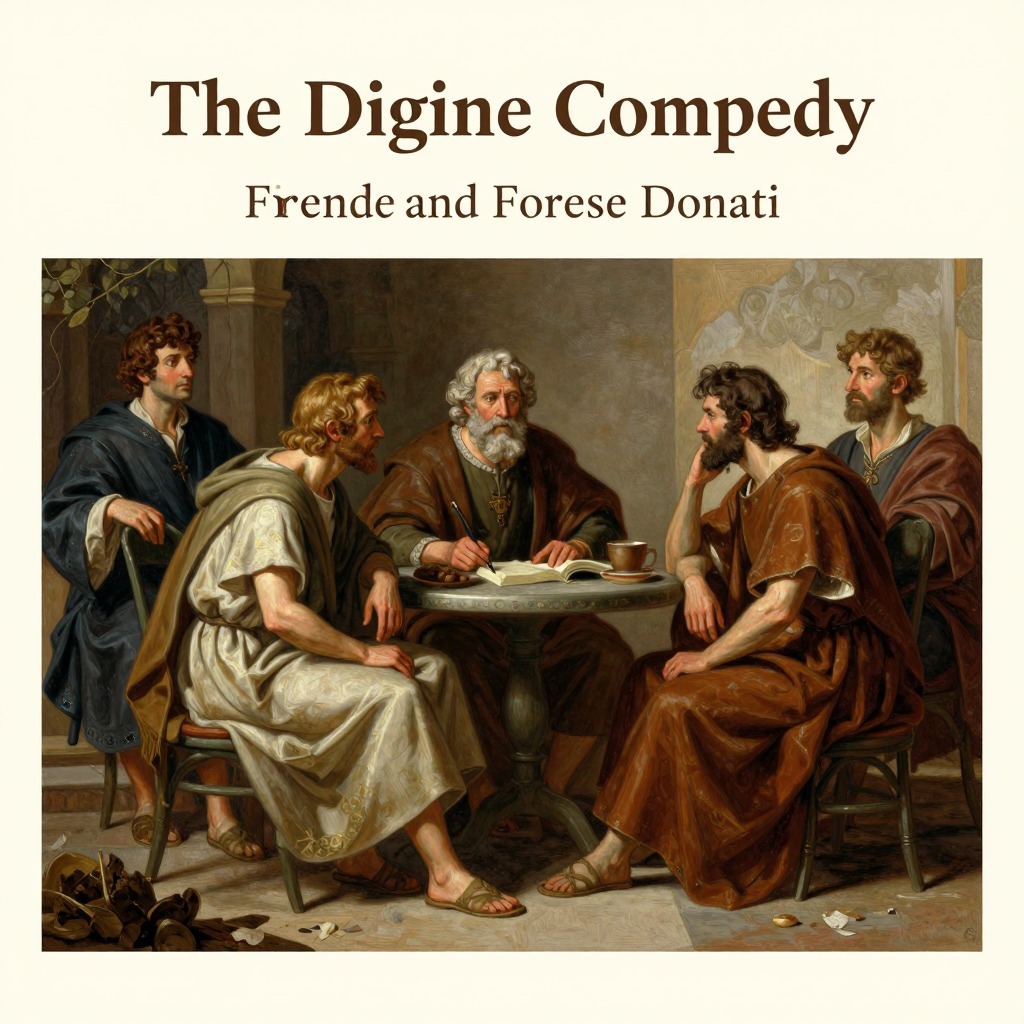
The Friendship between Dante and Forese Donati from "The Divine Comedy". Dante's reunion with his old friend Forese Donati on the terrace of gluttony, reflecting on their shared past and Florence's decay.
The Friendship between Dante and Forese Donati

Dante's reunion with his old friend Forese Donati on the terrace of gluttony, reflecting on their shared past and Florence's decay.

The Encounter with Casella and the Power of Music from "The Divine Comedy". Dante's meeting with his musician friend Casella on the shores of Purgatory, highlighting the soothing power of song.
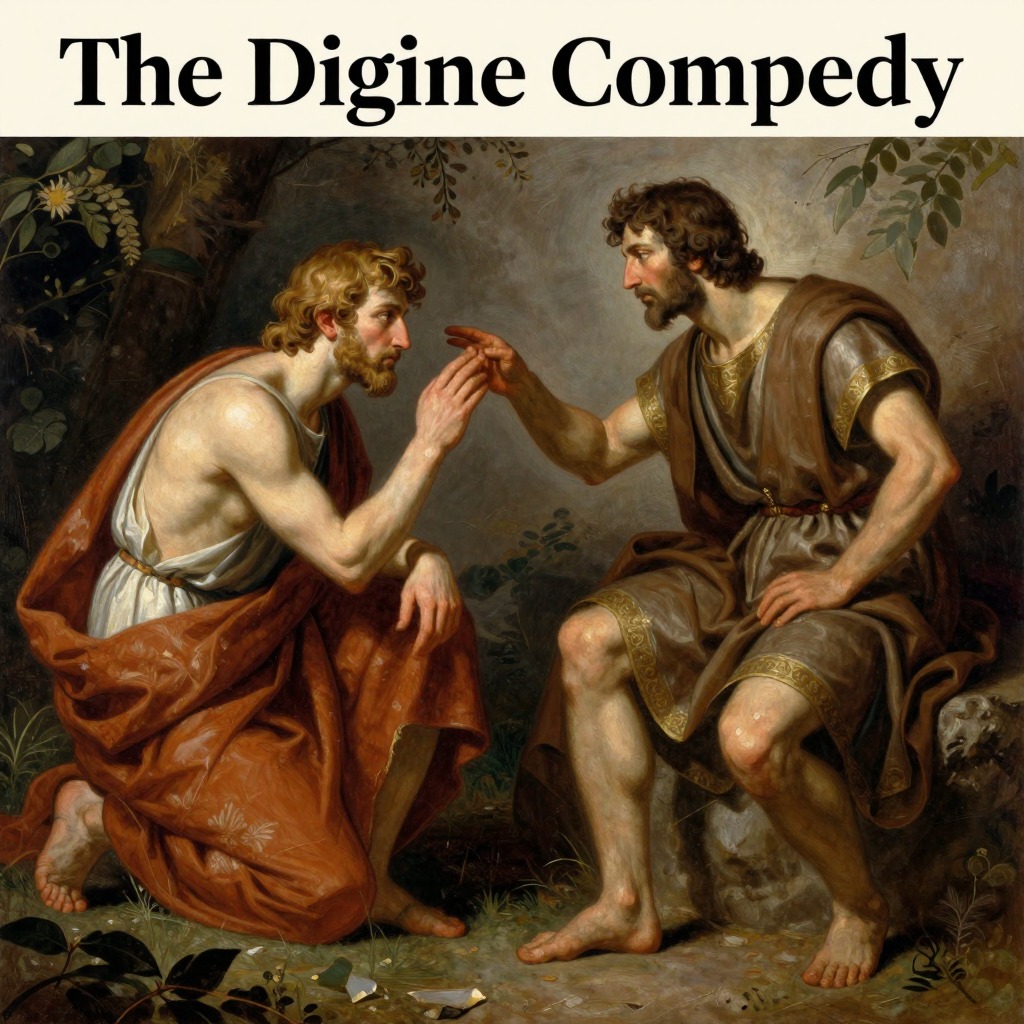
The Encounter with Casella and the Power of Music

Dante's meeting with his musician friend Casella on the shores of Purgatory, highlighting the soothing power of song.

The Meeting with Sordello and the Love of Country from "The Divine Comedy". Dante and Virgil meet the poet Sordello, whose love for his native Mantua sparks a lament for Italy's political divisions.
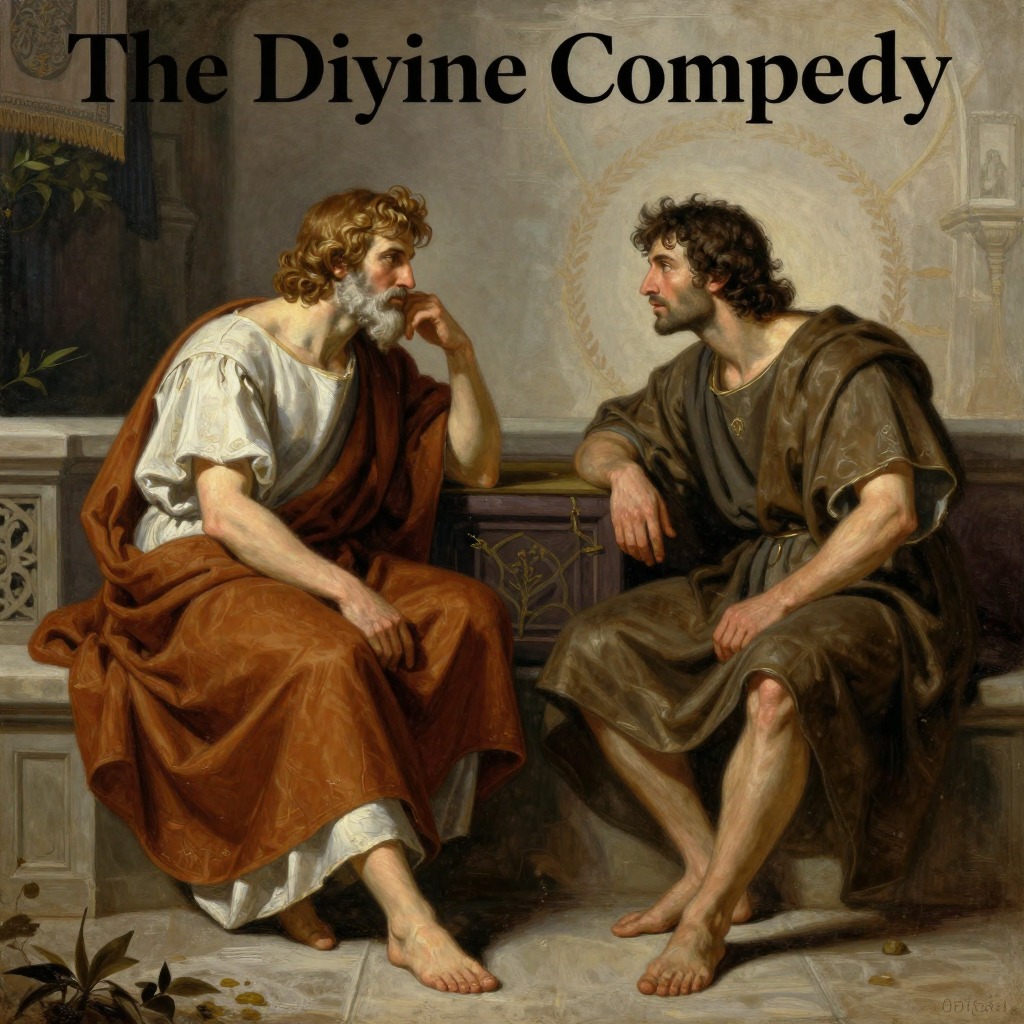
The Meeting with Sordello and the Love of Country

Dante and Virgil meet the poet Sordello, whose love for his native Mantua sparks a lament for Italy's political divisions.

The Encounter with Guido Guinizelli and Arnaldo Daniello from "The Divine Comedy". Dante meets the poet Guido Guinizelli, his 'father' in poetry, and the Provencal poet Arnaldo Daniello on the terrace of lust.
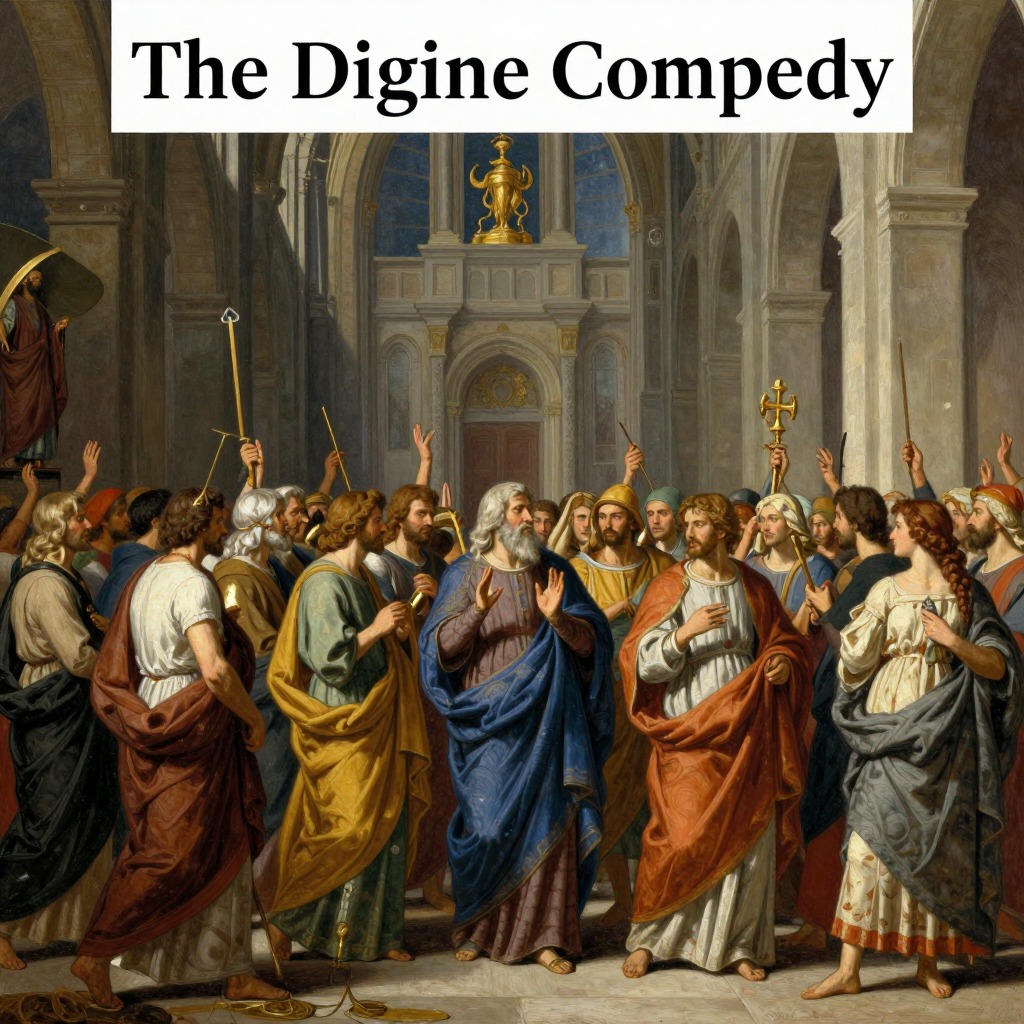
The Encounter with Guido Guinizelli and Arnaldo Daniello

Dante meets the poet Guido Guinizelli, his 'father' in poetry, and the Provencal poet Arnaldo Daniello on the terrace of lust.

The Allegorical Procession of the Church from "The Divine Comedy". The elaborate allegorical pageant in the Earthly Paradise representing the history and corruption of the Church.
The Allegorical Procession of the Church

The elaborate allegorical pageant in the Earthly Paradise representing the history and corruption of the Church.

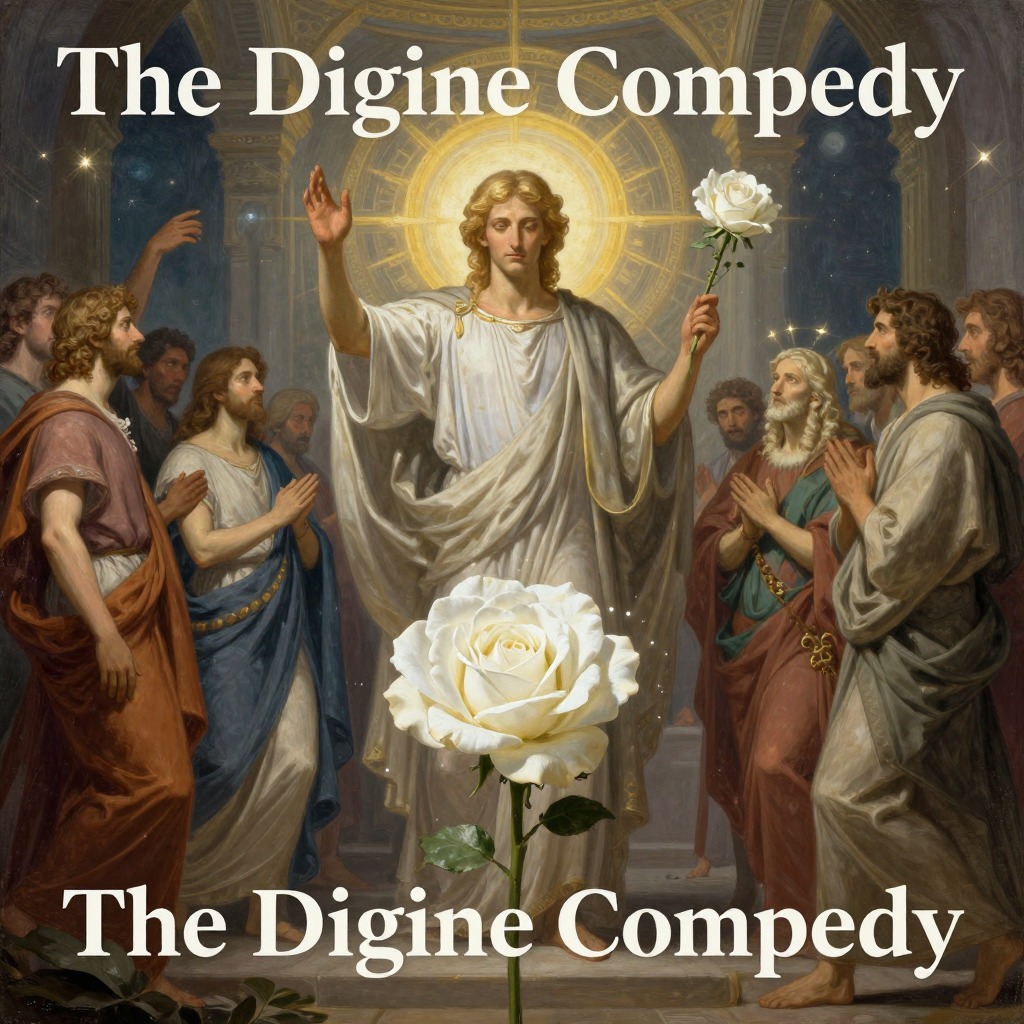
The Vision of the Empyrean and the White Rose from "The Divine Comedy". Dante's final vision of the celestial court, the White Rose of the blessed, and the glory of God.

The Vision of the Empyrean and the White Rose

Dante's final vision of the celestial court, the White Rose of the blessed, and the glory of God.
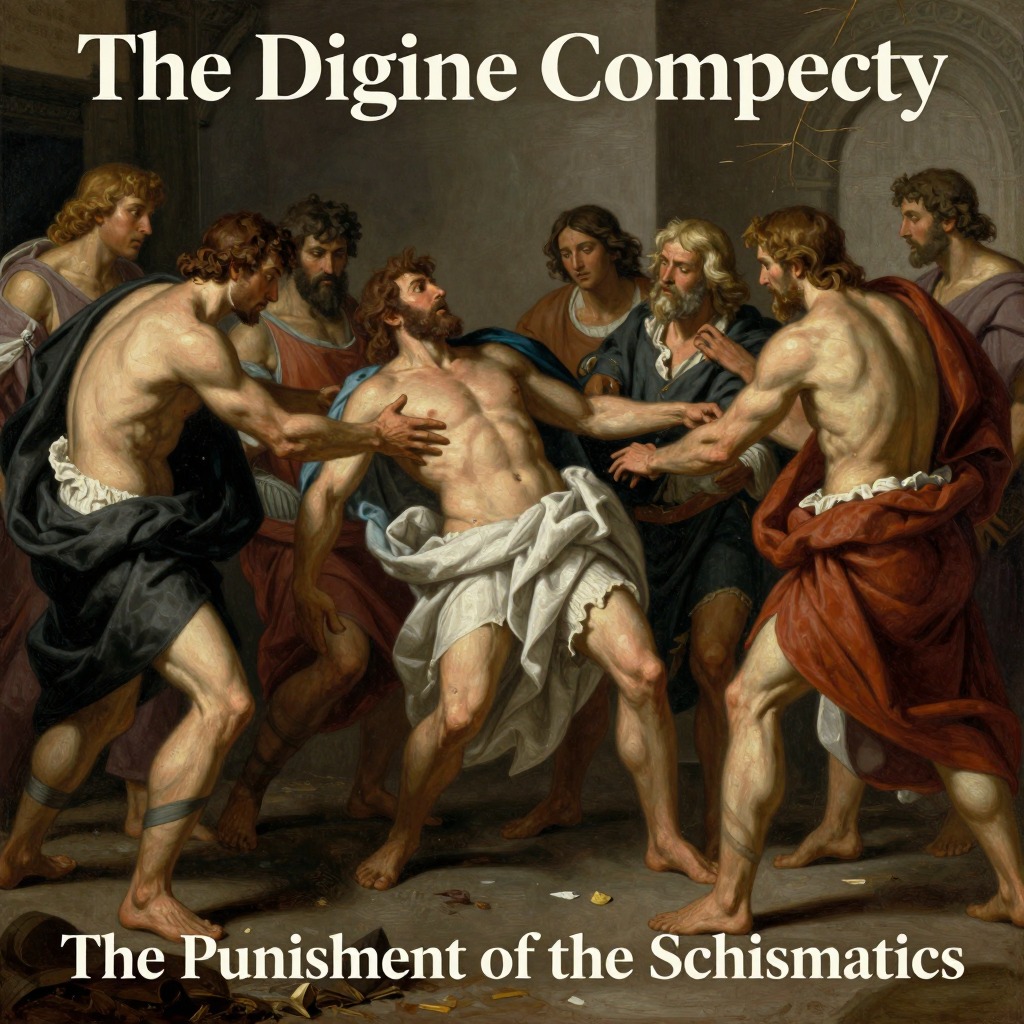
The Punishment of the Schismatics from "The Divine Comedy". The mutilation of those who caused division in the Church and society, as seen in the ninth bolgia.
The Punishment of the Schismatics

The mutilation of those who caused division in the Church and society, as seen in the ninth bolgia.

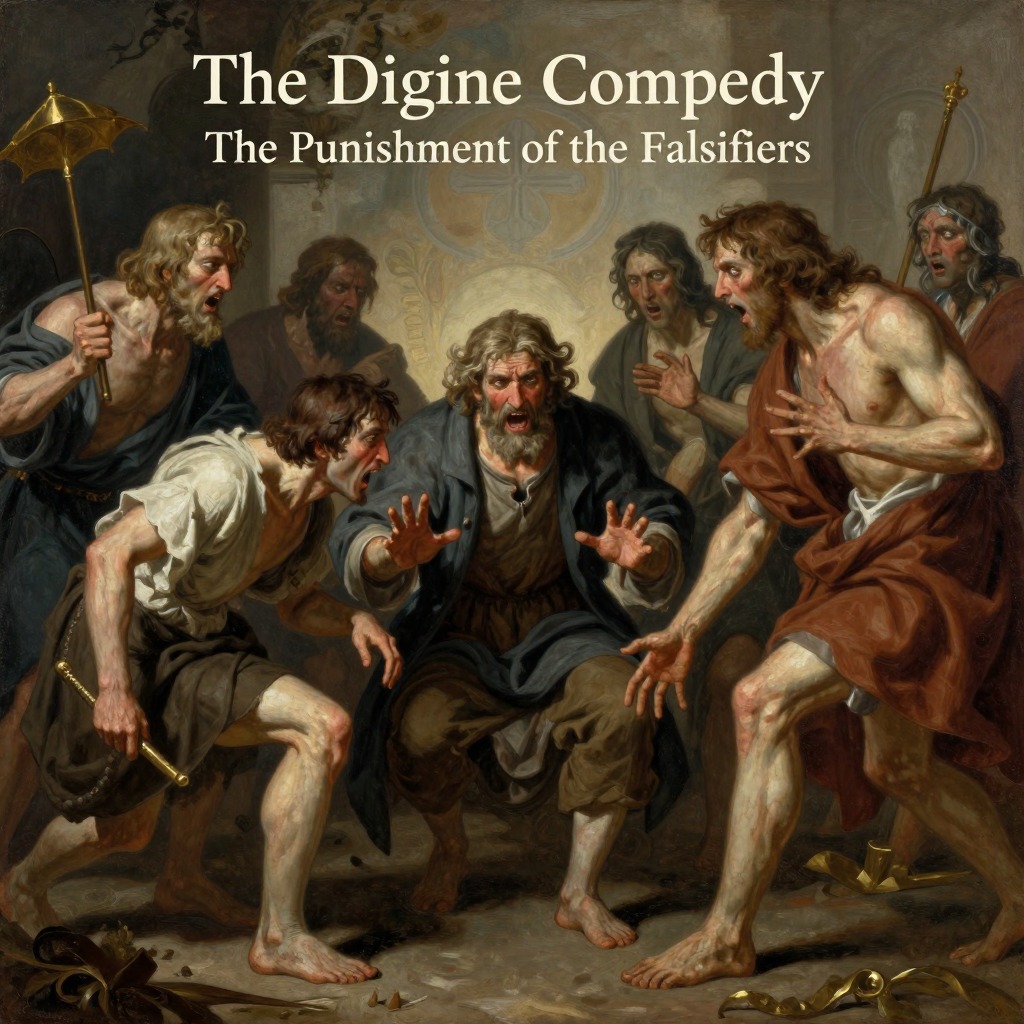
The Punishment of the Falsifiers from "The Divine Comedy". The grotesque torments of those who committed fraud through alchemy, impersonation, counterfeiting, and perjury.
The Punishment of the Falsifiers

The grotesque torments of those who committed fraud through alchemy, impersonation, counterfeiting, and perjury.

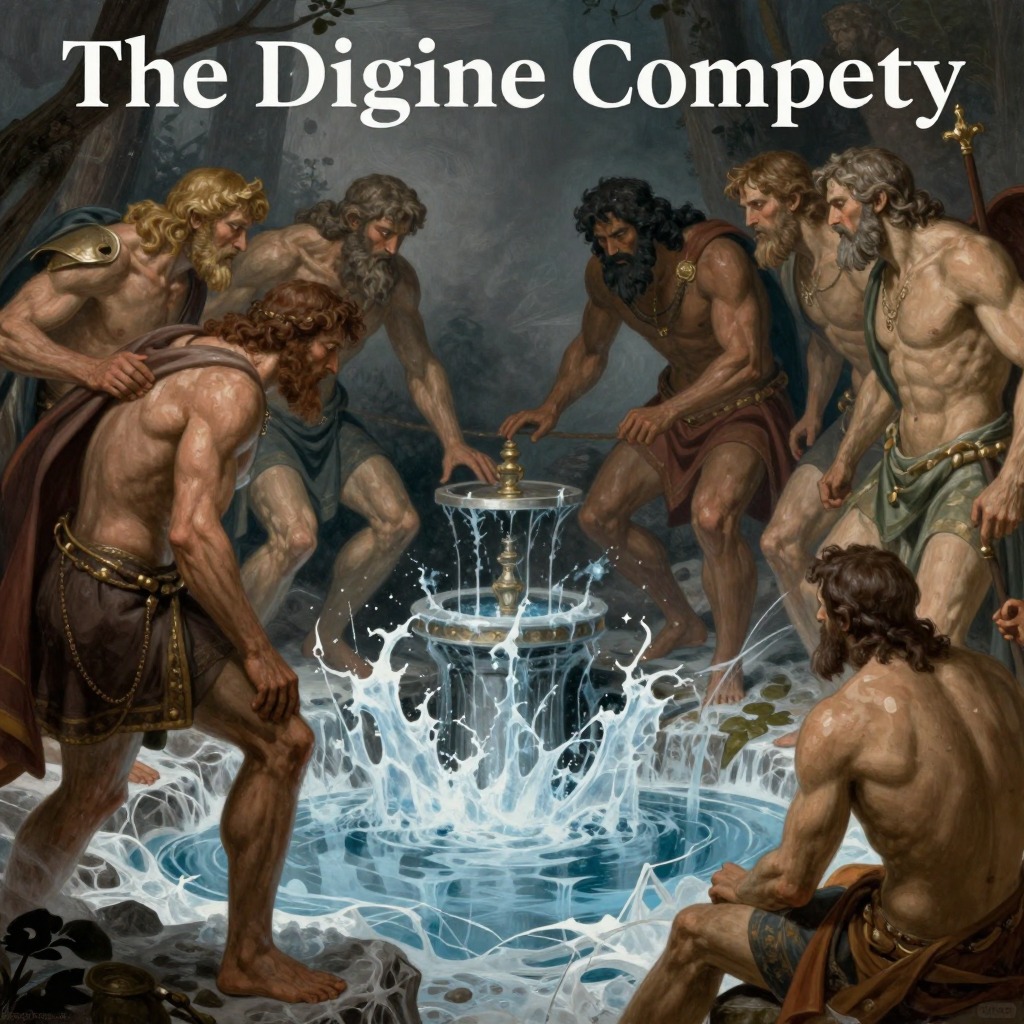
The Punishment of the Giants and the Descent to Cocytus from "The Divine Comedy". Dante's encounter with the giants who guard the well to the ninth circle, and the descent into the frozen lake.
The Punishment of the Giants and the Descent to Cocytus

Dante's encounter with the giants who guard the well to the ninth circle, and the descent into the frozen lake.

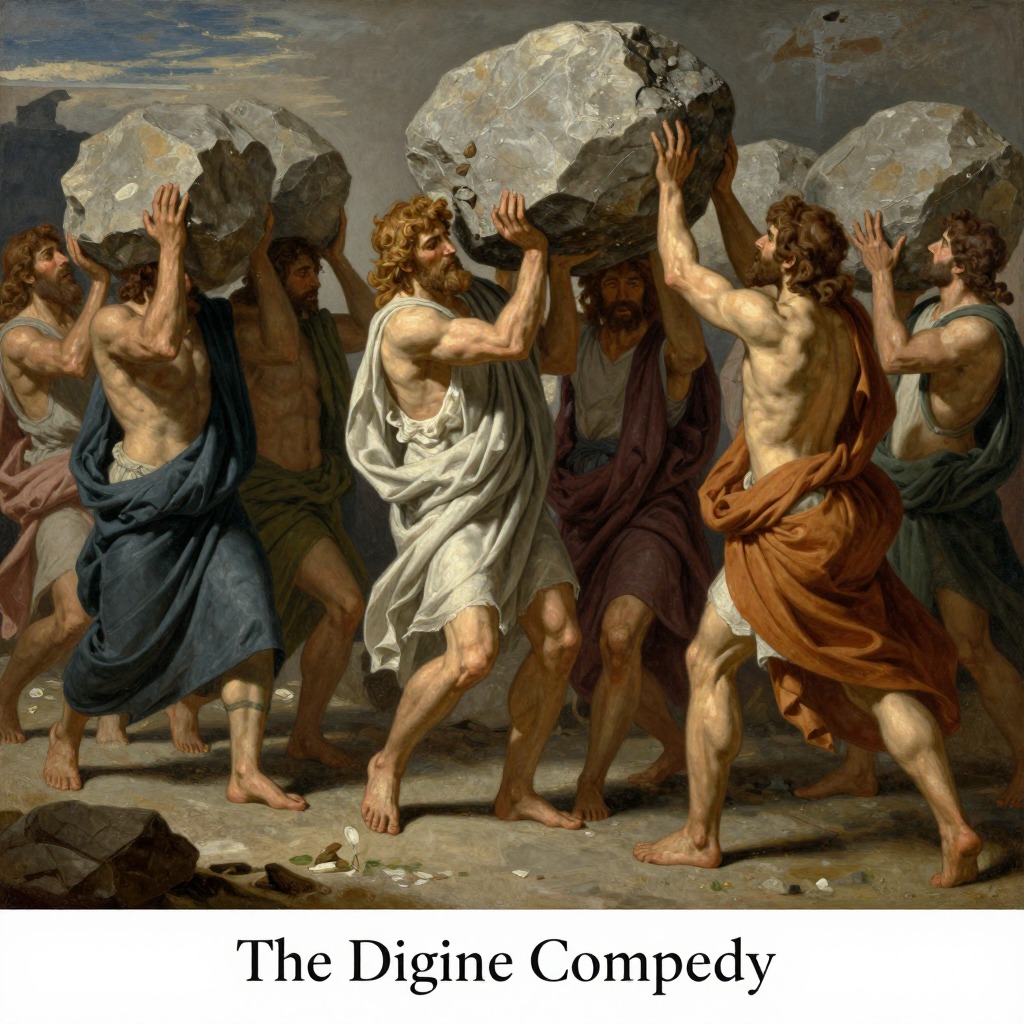
The Punishment of the Proud in Purgatory from "The Divine Comedy". The purgation of pride on the first terrace, where souls carry heavy stones and learn humility.

The Punishment of the Proud in Purgatory

The purgation of pride on the first terrace, where souls carry heavy stones and learn humility.
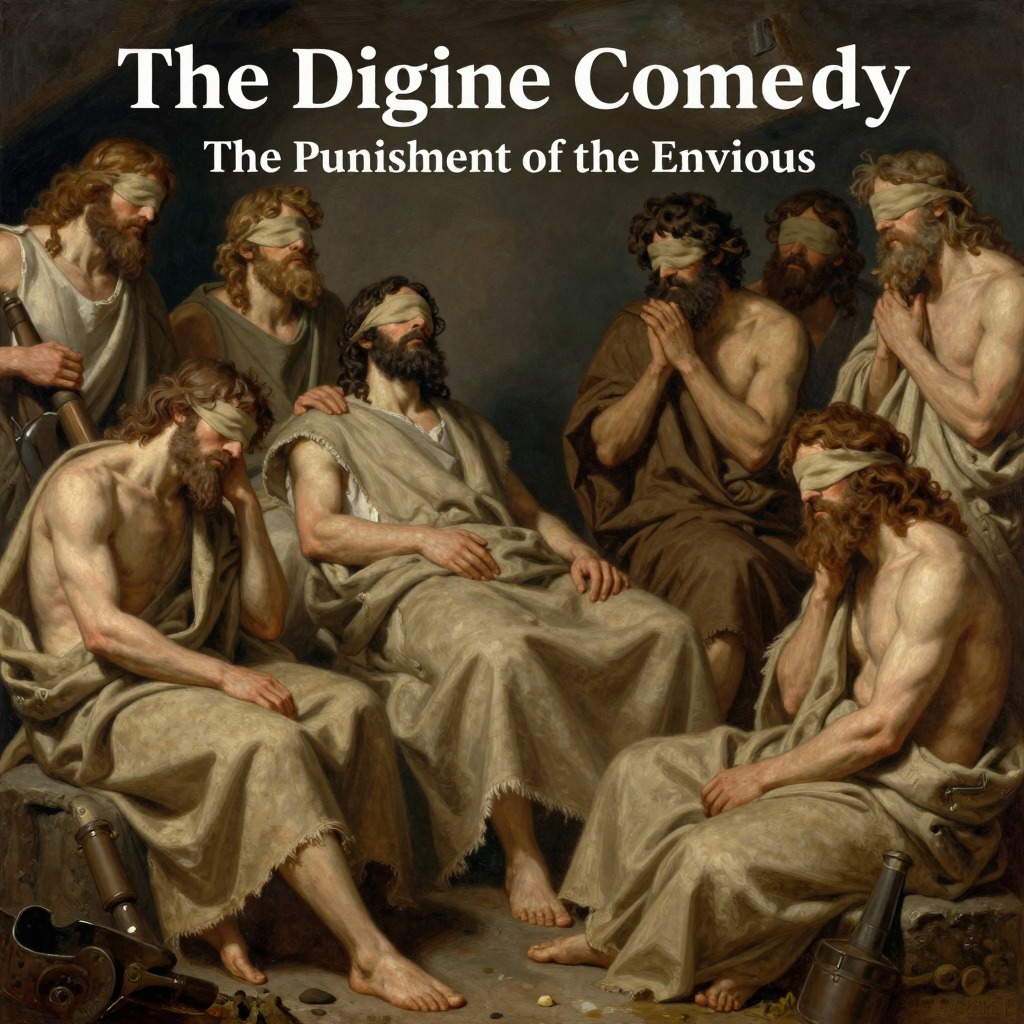
The Punishment of the Envious in Purgatory from "The Divine Comedy". The purgation of envy on the second terrace, where souls have their eyes sewn shut and wear coarse sackcloth.
The Punishment of the Envious in Purgatory

The purgation of envy on the second terrace, where souls have their eyes sewn shut and wear coarse sackcloth.

The Punishment of the Wrathful in Purgatory from "The Divine Comedy". The purgation of anger on the third terrace, where souls walk in acrid smoke, learning meekness.

The Punishment of the Wrathful in Purgatory

The purgation of anger on the third terrace, where souls walk in acrid smoke, learning meekness.
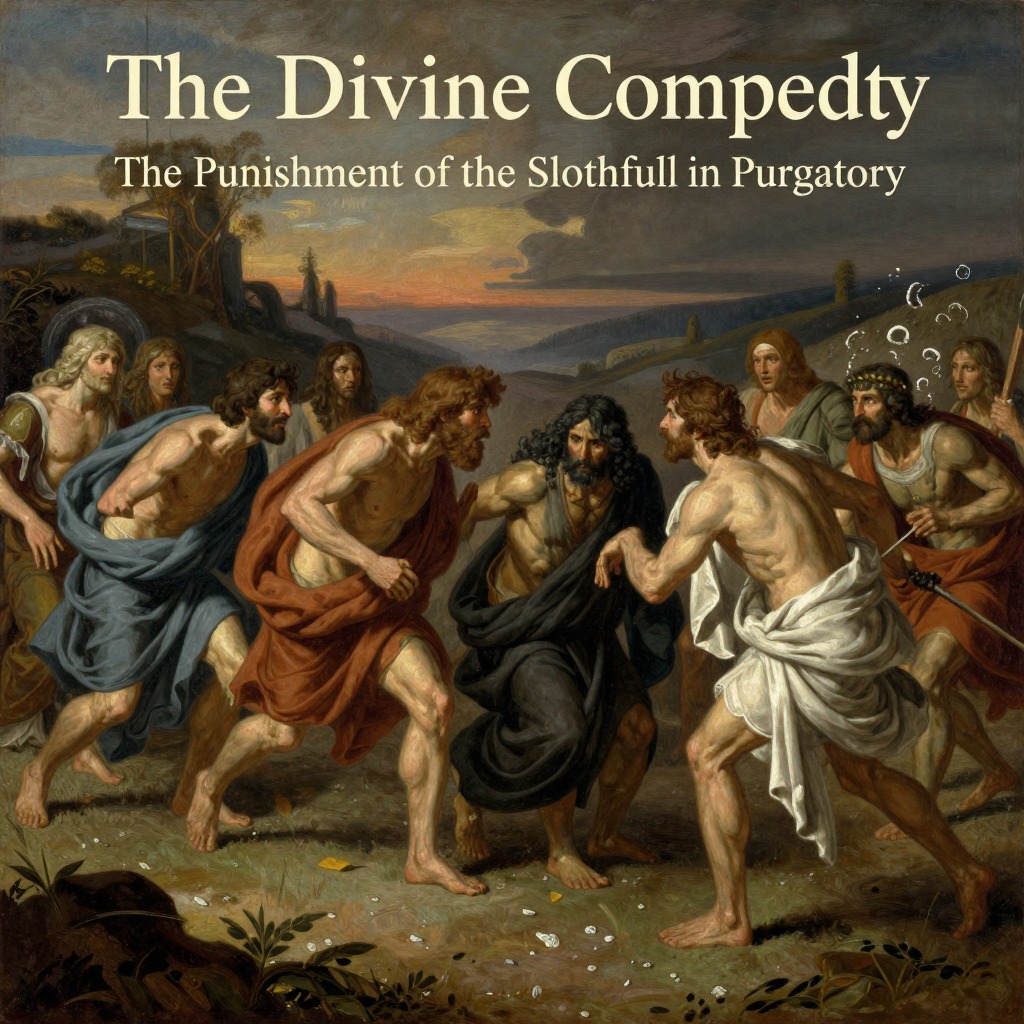
The Punishment of the Slothful in Purgatory from "The Divine Comedy". The purgation of sloth on the fourth terrace, where souls run with eager haste, making up for their earthly negligence.
The Punishment of the Slothful in Purgatory

The purgation of sloth on the fourth terrace, where souls run with eager haste, making up for their earthly negligence.

The Punishment of the Avaricious in Purgatory from "The Divine Comedy". The purgation of avarice on the fifth terrace, where souls lie prostrate on the ground, weeping and reciting examples of poverty.
The Punishment of the Avaricious in Purgatory

The purgation of avarice on the fifth terrace, where souls lie prostrate on the ground, weeping and reciting examples of poverty.

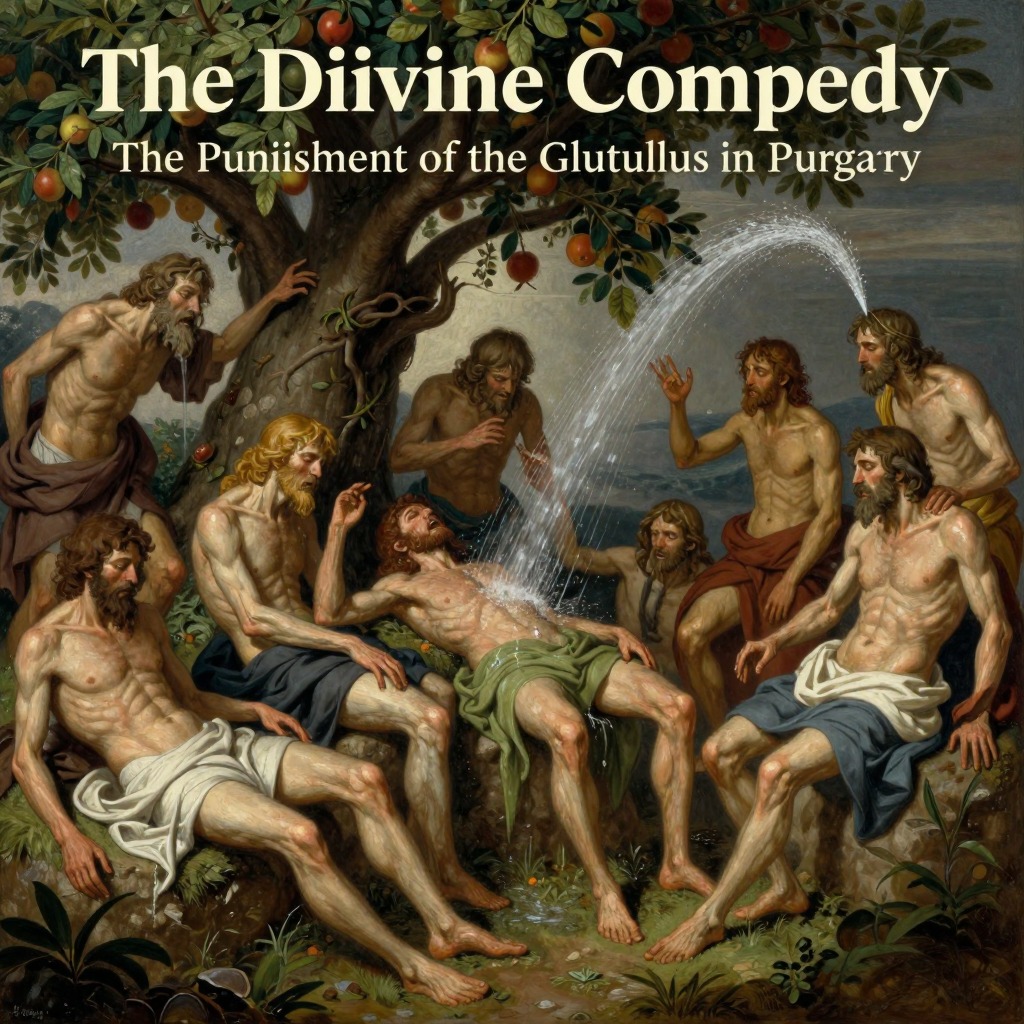
The Punishment of the Gluttonous in Purgatory from "The Divine Comedy". The purgation of gluttony on the sixth terrace, where souls are emaciated by hunger and thirst, tormented by a fruit tree and a water spray.
The Punishment of the Gluttonous in Purgatory

The purgation of gluttony on the sixth terrace, where souls are emaciated by hunger and thirst, tormented by a fruit tree and a water spray.

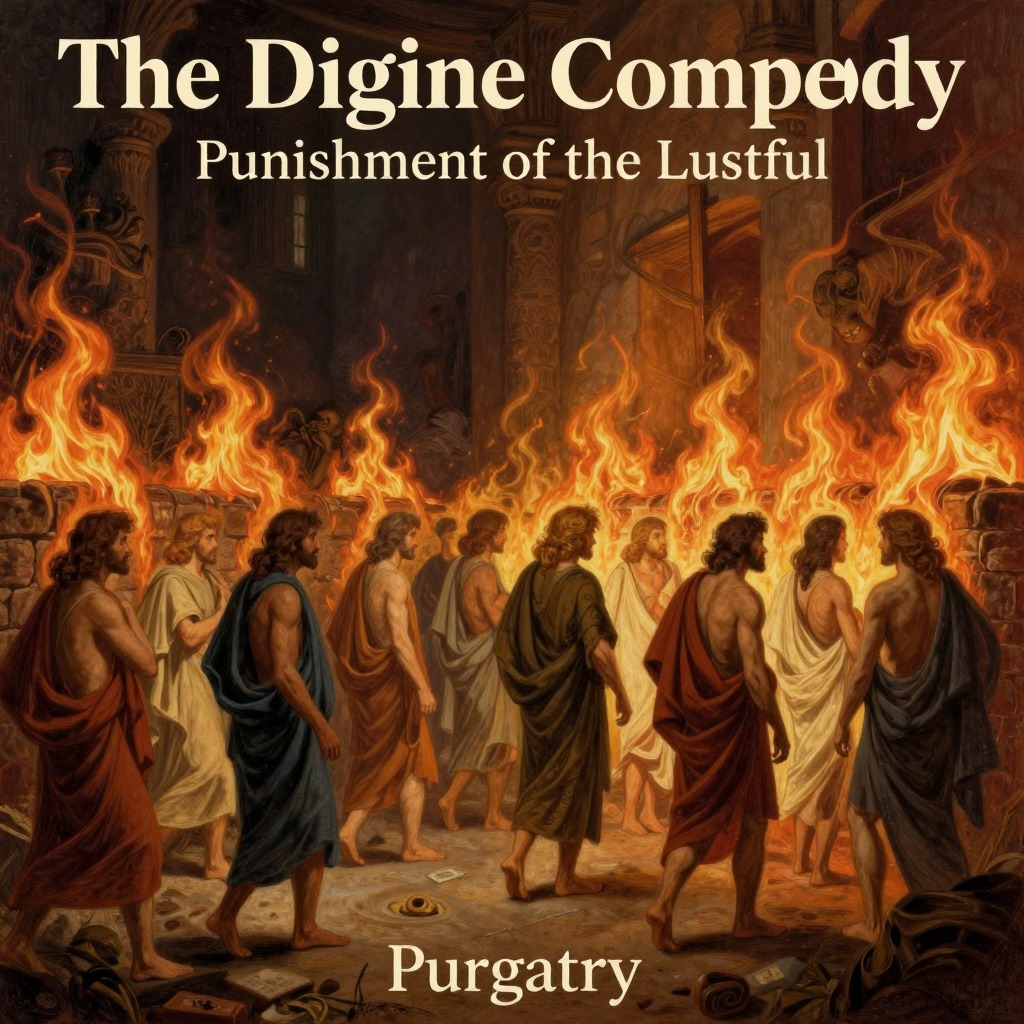
The Punishment of the Lustful in Purgatory from "The Divine Comedy". The purgation of lust on the seventh terrace, where souls walk through a wall of fire, purifying their desires.
The Punishment of the Lustful in Purgatory

The purgation of lust on the seventh terrace, where souls walk through a wall of fire, purifying their desires.

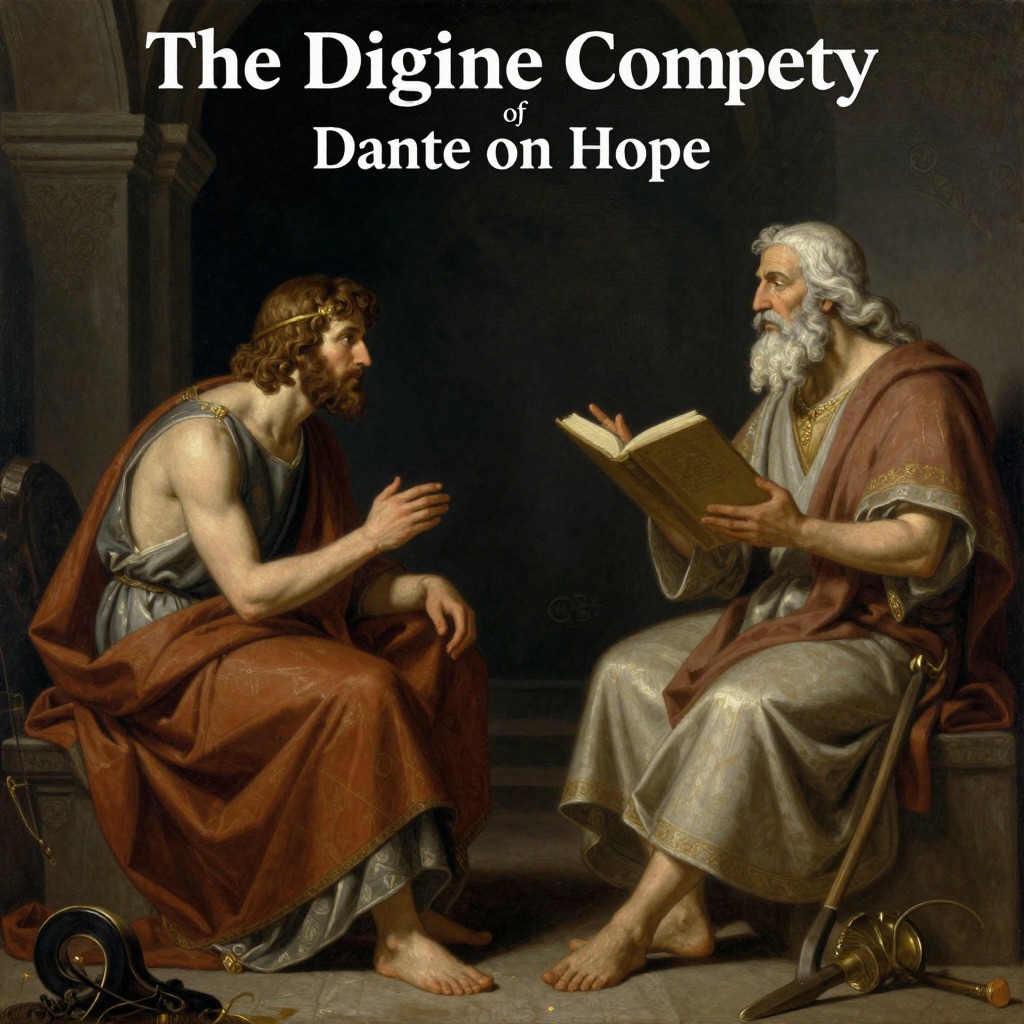
The Examination of Dante on Hope from "The Divine Comedy". Dante is examined by St. James on the virtue of hope in the Heaven of the Fixed Stars.

The Examination of Dante on Hope

Dante is examined by St. James on the virtue of hope in the Heaven of the Fixed Stars.
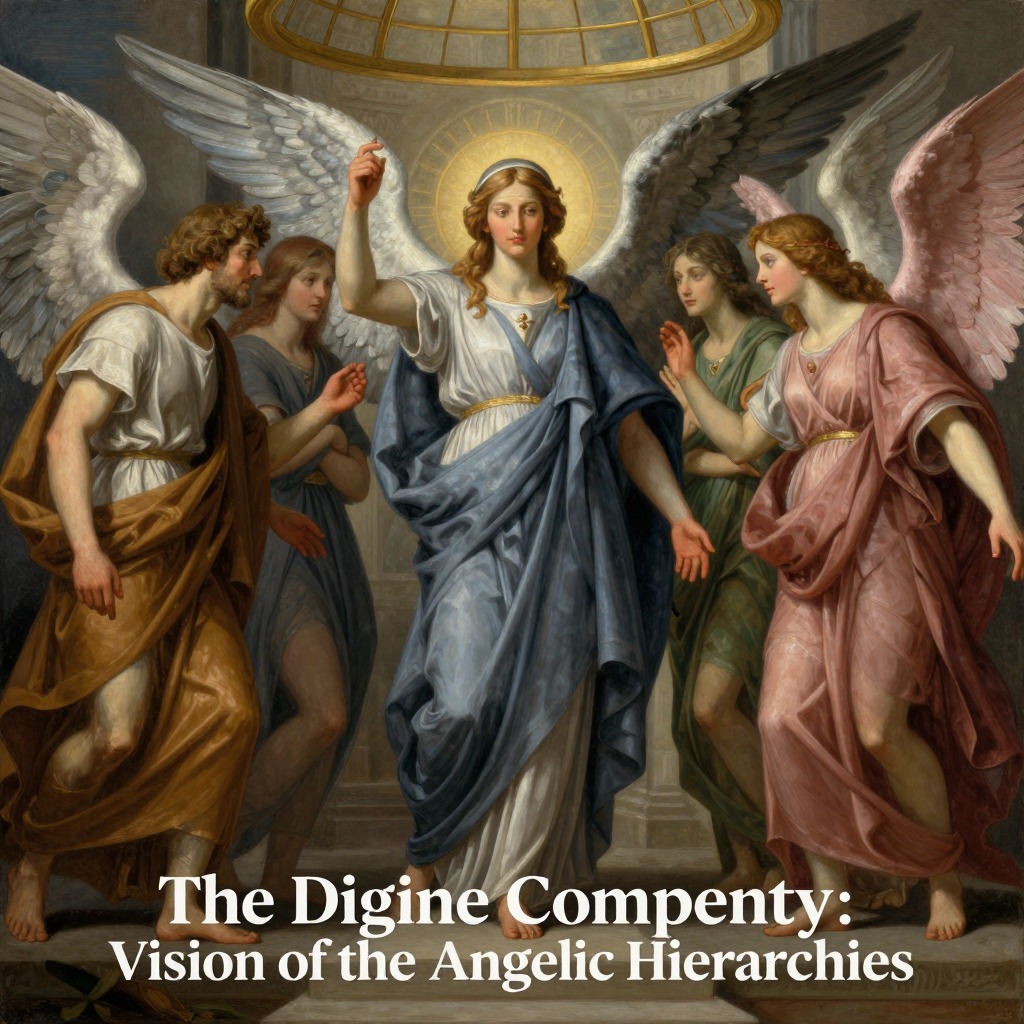
The Vision of the Angelic Hierarchies from "The Divine Comedy". Dante's vision of the nine orders of angels in the Primum Mobile, as explained by Beatrice.

The Vision of the Angelic Hierarchies

Dante's vision of the nine orders of angels in the Primum Mobile, as explained by Beatrice.
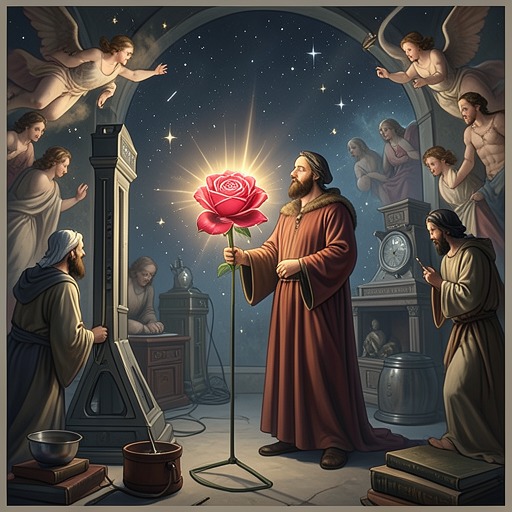
The Vision of the Empyrean and the River of Light from "The Divine Comedy". Dante's final preparation for the Beatific Vision, including the transformation of the river of light into the celestial rose.
The Vision of the Empyrean and the River of Light

Dante's final preparation for the Beatific Vision, including the transformation of the river of light into the celestial rose.

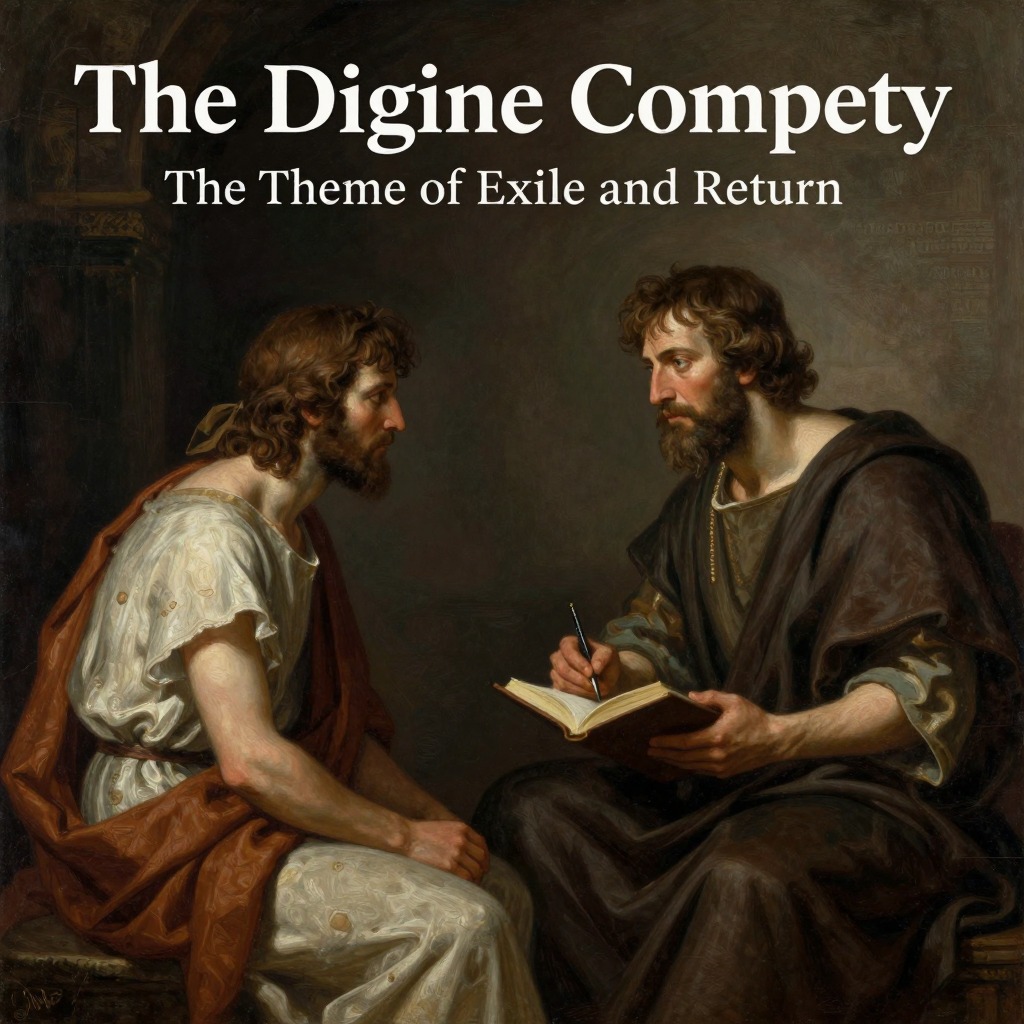
The Theme of Exile and Return from "The Divine Comedy". Dante's personal experience of exile and his hope for return, reflected in prophecies and laments throughout the poem.
The Theme of Exile and Return

Dante's personal experience of exile and his hope for return, reflected in prophecies and laments throughout the poem.

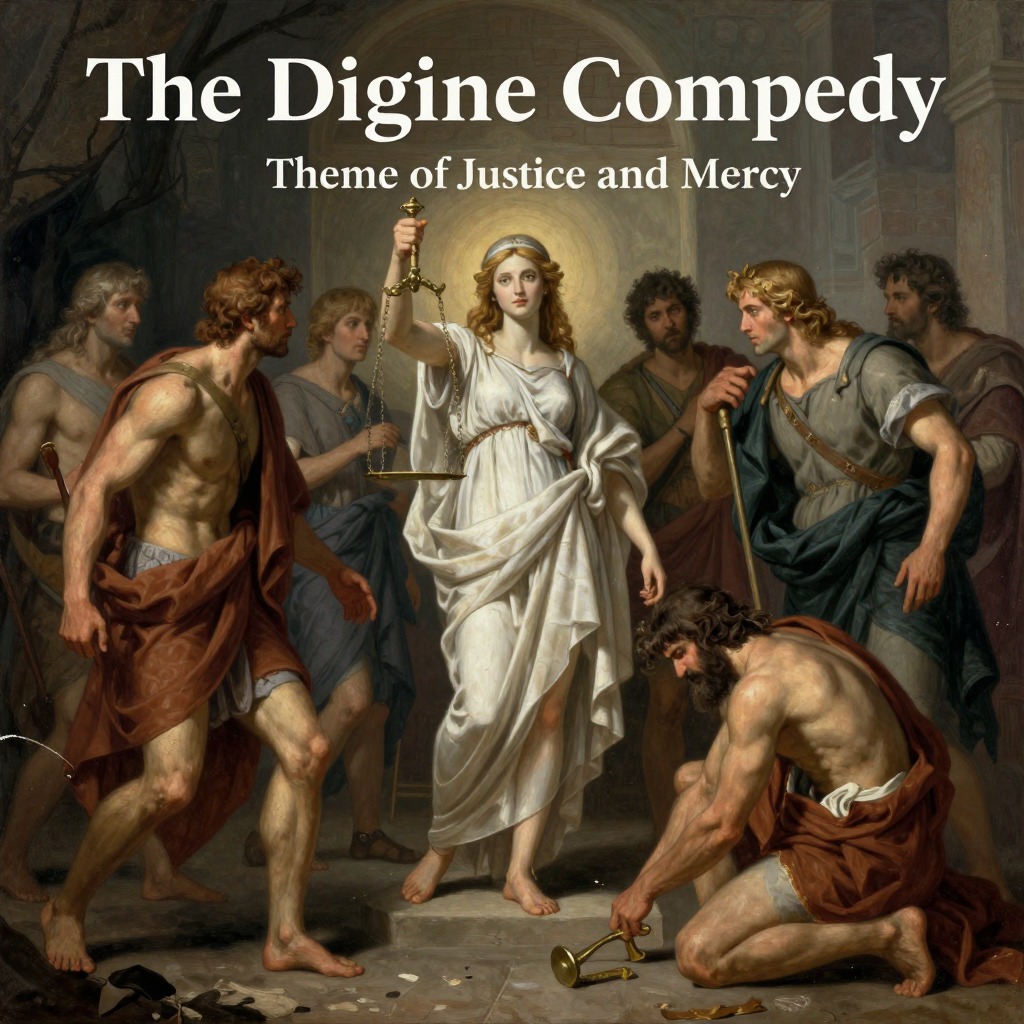
The Theme of Justice and Mercy from "The Divine Comedy". The balance between divine justice and mercy, as seen in the punishments of Hell and the purgation of Purgatory.

The Theme of Justice and Mercy

The balance between divine justice and mercy, as seen in the punishments of Hell and the purgation of Purgatory.