Elphège Sel
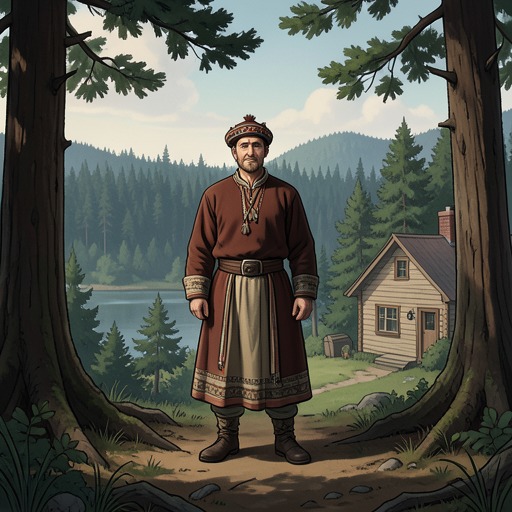
BarkskinsElphège Sel, one of Mari’s children, is an older brother shaped by displacement, family responsibility, and the shrinking space available for Mi’kmaw life. His trajectory moves between Odanak and Mi’kma’ki, and between wage work for French loggers and the family’s efforts to remain connected to their kin and homeland. In old age, half-blind and composing his death song, he grieves Theotiste and wonders whether Achille will ever be found.
Identity and Background
Elphège belongs to Mari’s family alongside Theotiste, Achille, Noë, and Zoë. The siblings are trying to find their place in a changed world that contrasts with Mari’s stories of a rich Mi’kmaw past. Their circumstances make belonging a practical as well as emotional question: where to live, how to support one another, and how to maintain a life amid settlement and logging.
For some years, Elphège and his older brother Theotiste lived at Odanak, a village of Abenaki, Mi’kmaq, and people of mixed ancestry. They fought for the French and raided New England settlements for captives taken for bounty. Former enemies had joined together as settlers encroached on their ancestral lands. Elphège’s life thus unfolds within overlapping pressures: Indigenous communities’ displacement, French and English competition, and the need to make choices within a colonial world.
The evidence also presents Elphège as a skilled worker and a literate man. He and Theotiste could read and write using the Roman alphabet, and both had worked long hours clearing forest with René. These skills placed them in contact with colonial institutions and employers, but did not mean that they accepted the assumptions those institutions brought with them.
Work and the Changing Forest
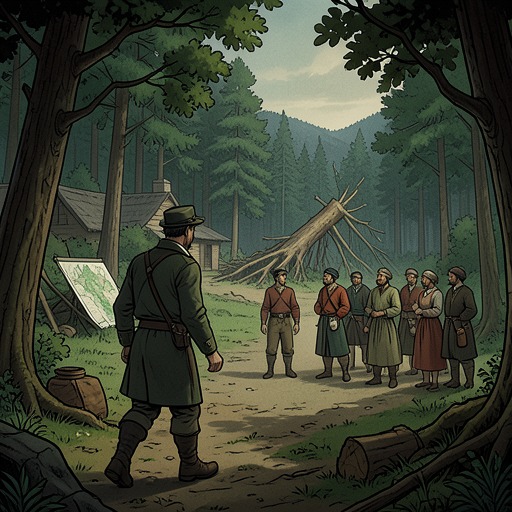
When a French logging outfit established a sawmill and began cutting trees inland, the work offered money that could be spent at the trading post. The missionary Père Crème urged people to set trapping and fishing aside temporarily in favor of logging, arguing that wages could buy salt pork and flour. Elphège, Theotiste, and Achille took work with Duquet et Fils; Rouge Emil joined them despite being less skilled. Elphège’s familiarity with the axe made him employable, even as logging marked a departure from Mi’kmaw ways of making a living.
That departure was not simply a matter of individual preference. The brothers reserved autumn and winter for trapping and hunting while taking work in the woods, on rivers, or at other jobs during part of the year. The arrangement joined wage labor to seasonal practices rather than replacing one with the other. In the scene of the family’s separation, Noë recognizes the brothers’ boots as evidence that they are going to work for the French logger: the footwear distinguishes this departure from a moose hunt and makes economic change visible in an ordinary detail.
The conflict over logging also carries a dispute over land and authority. Père Crème disapproves of the returning Sel family in part because its members speak French and the older brothers can read and write. In his letter, he condemns their refusal to farm and argues that clearing forest and building homes gives French settlers a moral title to land. Elphège’s work for a logging company therefore takes place within an ideology that treats the forest as an obstacle to improvement and Indigenous use as evidence of non-ownership. The brothers’ employment does not resolve that conflict; it shows how economic necessity draws them into the very transformation that threatens their people’s land.
Kinship and Return to Mi’kma’ki
Theotiste’s wish to reunite the siblings becomes a turning point in Elphège’s family life. He approaches Elphège while his brother is shaping a handle for a crooked knife and says he wants them to bring Achille, Noë, and Zoë together with them. The proposed move is not merely a visit to younger siblings: Theotiste wants them to live as kin in Odanak and remain united wherever they go. Elphège listens as the possibility takes shape.
Their sense of destination comes from their mother’s memories. She had called her childhood country the happy land, and Theotiste argues that it is more truly their place than Odanak, despite reports that it has changed and faces troubles. Elphège shifts toward his brother’s view and agrees that they should go first to René’s house and then to Mi’kma’ki. Their decision makes return an act of family reconstruction, not a claim that the homeland has been preserved unchanged.
When the brothers invite the younger siblings to join them, Elphège presents the invitation as a promise of care: he and Theotiste are the oldest, share the same blood, and will look after the others. Theotiste adds that Mi’kmaq still live in their mother’s land and that there may be relatives among them; he has spoken with Mi’kmaq at Odanak, some of whom may come too. Achille nods. Their plan combines the immediate obligation to gather the family with the larger hope of finding a place among their people.
Loss and Late Life
In his later years, Elphège is sixty-six winters old and half-blind. He sits outside in fair weather, while the changing leaves and the arrival of winter recall to him the colors of the woods. In winter he stays close to the fire and returns in thought to hunts and journeys. These memories are interrupted by grief for Theotiste, whose death came six years earlier.
Theotiste had become a warrior despite being fifty-nine. After the English declared Halifax a settlement in August 1749, disregarding Mi’kmaq territorial rights, Theotiste’s band attacked English tree-choppers. He escaped the rangers pursuing them but was killed the following week by an unknown assassin; a bounty hunter took his head. Elphège’s grief is bound to this colonial violence and to the loss of his brother, whose earlier effort to reunite the family had helped shape their journey toward Mi’kma’ki.
Elphège is now composing his death song. After Noë’s death, her daughter Febe has moved in to care for him. The family’s concern turns to Achille, who left for Maine years before to cut trees. Febe believes Kuntaw will find him: Kuntaw has left his wife, Malaan, and their boy, Tonny, and gone south in search of Achille. Elphège answers with uncertainty, wondering whether Achille is alive and whether Kuntaw’s headstrong nature will expose him to danger. The account closes without confirming the search’s outcome, leaving Elphège’s old age poised between care from the next generation, mourning for the dead, and hope for a brother still absent.
Narrative Role and Significance
Elphège’s story links the intimate work of keeping a family together to the larger history of land loss. He and his brothers seek paid logging work because money has become necessary, yet their seasonal hunting and trapping continue, and their return toward Mi’kma’ki is driven by the hope of kinship and belonging. The contrast between these choices and Père Crème’s claim that forest clearance establishes ownership exposes the unequal terms on which Indigenous people are pressed to adapt.
His arc is also marked by the difference between reunion and recovery. Elphège helps welcome the prospect of bringing younger siblings together and returning to their mother’s homeland, but neither movement restores the world described in her memories. The woodland around Wobik has receded, Theotiste is killed amid colonial expansion, and Achille remains missing. Elphège’s final work on a death song gathers these changes into a family history whose continuance depends on Febe’s care and Kuntaw’s search, even as its outcome remains unknown.