Elise Sel
BarkskinsElise Sel is Jinot Sel’s sister, separated from him for many years and eventually found in Boston through a letter from their half brother Francis-Outger Sel. Their reunion is an intimate return to kinship: Elise recognizes Jinot at once, embraces him, and weeps. Through her, the family’s scattered history becomes present again, even as the household she shares with Dr. Hallagher carries its own burdens and guardedness.
Identity and Background
Elise lives in Boston with Dr. Hallagher and their children. Jinot first learns where she is from Francis-Outger, who says that Elise and the doctor have a home in the city and supplies their address. The letter also describes their youngest son, Humphrey, whose muscles are turning to bone. Learned doctors visit and prescribe, but nothing appears to improve his condition; Francis-Outger fears the child may soon become solid bone. This report gives Jinot a painful, concrete glimpse of the family life he has missed before he sets out to find his sister.
The siblings’ separation belongs to a larger pattern of scattered Sel kinship. During Jinot’s visit, Elise speaks of distant Mi’kmaw relatives and of the many Sels in Nova Scotia, all descended from René Sel, whom she calls the little-known Frenchman who began their history. Her knowledge connects the immediate reunion to a family dispersed across generations and places, though Jinot himself knows none of the relatives she remembers.
The Search and Reunion
After Amboise’s loss renews Jinot’s longing for his relatives, he writes carefully to Francis-Outger, hoping his half brother can tell him where Elise and Dr. Hallagher live. Jinot doubts that a reply will come, but a letter arrives quickly. He then travels by stage to Boston on a bright April day, choosing not to write ahead because he hopes to surprise Elise. It takes him half a day of asking directions to locate the Hallaghers’ plain two-story brick house, with a clapboard addition and a sign identifying Dr. Hallagher’s medical practice.
Elise opens the red front door. Now middle-aged, with black-and-grey hair knotted up, she still has the Sel family’s familiar sparkle, curling smile, and pointed teeth. She recognizes Jinot immediately and names him as her brother. Their embrace and her tears make the long silence between them give way at once to recognition and welcome.
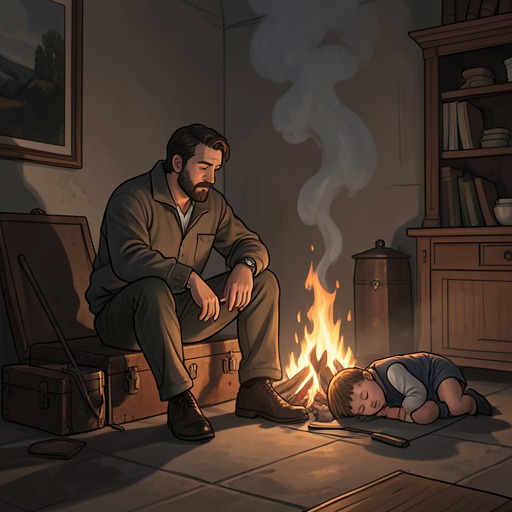
Before bringing him inside, Elise takes Jinot to a side yard and removes six loaves of wheaten bread from an old clay oven. She wraps them in muslin and carries them to the kitchen. The gesture sets the reunion in motion through ordinary domestic care: she does not begin with an account of the years apart, but with food and an invitation to tell her everything. Inside, the dim hall is hung with pictures of stags drinking from mountain pools, and a pale, listless boy lies dozing on a daybed with a closed book on his breastbone. The scene places family warmth beside the vulnerability Francis-Outger’s letter had described.
Household and Family Tensions
Dr. Hallagher reacts to Jinot’s arrival differently. He gives Jinot a brusque handshake, sits at the table blowing on his tea, and speaks as though Jinot has exposed them. His suspicion shapes the first moments of the visit: Jinot infers that the doctor expects a request for a loan and is relieved when he understands that Jinot can support his own family.
Jinot tells Elise and Dr. Hallagher about the Miramichi fire, Amboise’s death, Minnie, his children, and little Amboise’s accident. He does not mention the town jail or Amboise’s drunkenness. When he describes Albert Bone’s kindness and favors, Dr. Hallagher relaxes. The doctor’s initial reserve thus eases not through argument but through the discovery that Jinot has come as an independent relative rather than a supplicant.
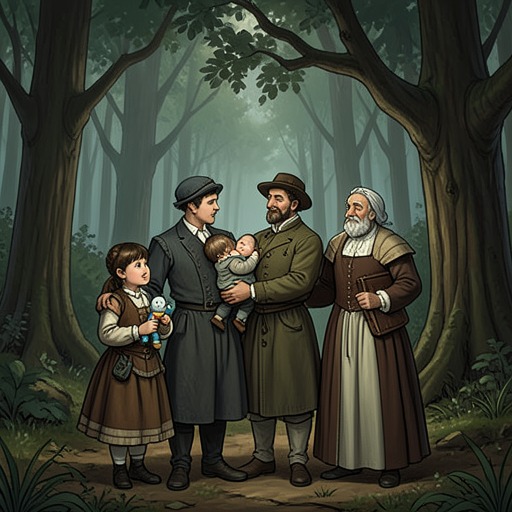
Once Dr. Hallagher returns to his surgery, the visit grows more cheerful. Elise and Jinot trade old stories and recollections, discuss a family gathering planned for the Fourth of July, and exchange gossip about their distant Mi’kmaw relations. The reunion does not erase the years of separation, but it turns them into something the siblings can begin to bridge through shared memory and renewed contact.
Kinship, Memory, and Significance
Elise’s role in the reunion is both personal and connective. Her immediate recognition affirms Jinot’s place in the family after a long absence; her readiness to hear his story makes the visit a setting in which loss can be recounted without the doctor’s initial suspicion controlling the exchange. The account also restores family news in both directions: Jinot brings news of his household and hardship, while Elise and Francis-Outger’s correspondence bring him news of kin he had been unable to locate.
Elise recalls that the family has even heard something about their grandfather Kuntaw. He returned to the old place, now occupied by English settlers except for areas known as Frenchtown and the Diggins, where the remaining Mi’kmaw people live. Elise reports that fewer than a hundred remain, and that Kuntaw married a Mi’kmaw woman and had more children. Her astonishment gives the family’s genealogy a further turn: the Sels’ history is not only a story of separation among siblings, but one that continues through migration, renewed kinship, and the survival of descendants in a transformed homeland.
The scenes do not establish what becomes of Humphrey or whether the proposed July gathering takes place. Instead, Elise’s significance lies in the opening the reunion creates: after years of silence, Jinot and his sister can exchange stories, recognize shared origins, and resume contact with relatives spread across Boston, Penobscot Bay, and Nova Scotia.