Nashley Oval
BarkskinsNashley Oval is an English artist in Auckland whose government work painting panoramic views of New Zealand brings him into contact with Lavinia Duke and Dieter Breitsprecher. He welcomes the visiting timber executives, helps organize their stay, and becomes interested in raising kauri seedlings. His proposed nursery gives the visit a second purpose: alongside the company’s acquisition of forest for future cutting, Oval’s planting project looks toward what might grow after the harvest.
Identity and Introduction
Before Lavinia and Dieter leave Chicago, Dieter arranges a rented house in Auckland and identifies Nashley Oval as their local contact. Oval is an English artist with a government contract to paint panoramic views of New Zealand. A warning from George Perkins Marsh describes Oval and his circle as people whose interests align with the visitors’, while also noting that Oval’s wife’s family keeps slaves and that the new government intends to end the practice. When Dieter relays this information, Lavinia reacts with dismay; the account introduces the social conditions surrounding the visit before Oval himself appears.
Host and Local Contact
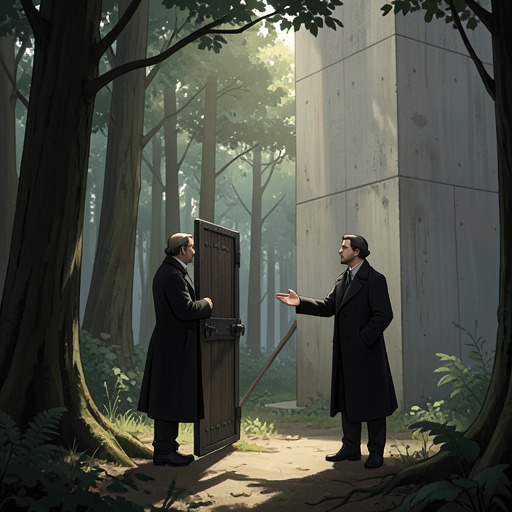
The visitors arrive in Auckland by a small ship manned by Māori sailors. Although Dieter suggests resting and meeting Oval the next day, Oval is already waiting on the dock. He greets Lavinia and Dieter, says he has arranged for them to settle into Fern House, and invites them directly to a simple dinner at his home so they can begin planning. He emphasizes that a month is too short to show them all the wonders of New Zealand, presenting himself not just as a point of introduction but as a guide whose local knowledge can shape the expedition.
Oval’s house is set in a garden of trees. The dinner takes place in a sparsely furnished room lit by candles, with a view of the harbor; the meal includes green-lipped mussels and chilled white hock. The scene establishes the hospitality through which Oval becomes part of the company’s New Zealand venture. He offers access to people and places, while the visiting executives arrive with the capital and commercial purpose to decide what the forests will become.
Kauri and the Nursery Proposal
During the visit, Oval joins conversations about kauri and its exceptionally long growth cycle. Ahorangi explains that the largest trees are thousands of years old and that replacing a mature kauri of great girth with a seedling would take a hundred human generations. Dieter answers that seedlings should be planted for the health of the world, not only for people who might live to see the trees mature. Oval responds with strong interest, saying he wishes to establish a nursery, though he is not yet sure how kauri are propagated.
Ahorangi explains that kauri seeds are carried in cones and spiral down on the wind. Oval then considers gathering them and starting them in a bed of soil. He proposes clearing his glasshouse of lettuces and green peas to collect kauri seeds in the coming February, the local autumn, and try raising young trees. Ahorangi encourages him, while Dieter advises him not to abandon his vegetables and offers to help fund a glasshouse specifically for kauri. The idea develops from Oval’s curiosity into a possible, supported nursery project.
The Timber Deal and Its Tension
After two weeks of excursions to kauri groves, Lavinia buys a large coastal grove containing both kauri and rimu. She tells Ahorangi and Oval that Duke & Breitsprecher will send workers to cut and mill the timber, once it has hired the right crew and assembled and shipped the machinery to Auckland. The process will take time, so no kauri in the purchased grove will be felled for several years.
Lavinia also tells them that the company will pay Oval to establish and maintain a kauri nursery, with seedlings to be planted after the cutting is finished. The arrangement links Oval’s plan to the company’s logging timetable: planting is not a reason to leave the grove untouched, but a promised activity to follow its harvest. Oval’s proposal thus marks a real commitment to growing kauri while also becoming part of a commercial plan that first treats the grove as timber.
Narrative Significance
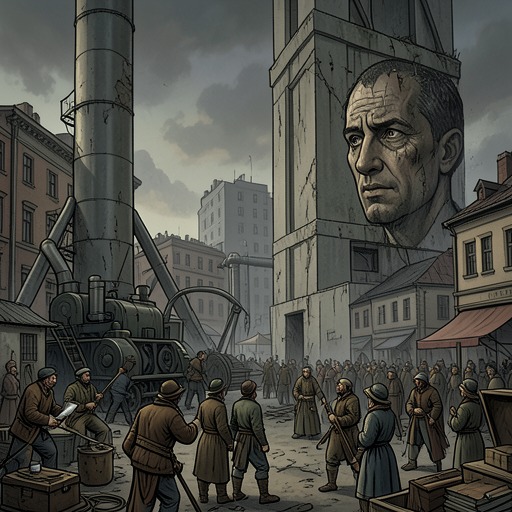
Oval’s brief appearance connects two different scales of time. Lavinia and Dieter organize a business operation around hiring workers, transporting machinery, and eventually cutting a particular coastal grove; the discussion of kauri makes clear that replacing an ancient tree takes far longer than the company’s working horizon. Oval’s nursery offers a concrete response in seedlings and cultivation, but its place in the deal also exposes the limits of that response: new trees are to be planted after the grove has been logged.
In the wider story, overseas demand and timber operations repeatedly transform forests into commodities, leaving ecological costs in the places where the trees grow. Oval’s artist’s work, his local hospitality, and his proposed nursery give him a role distinct from the company’s executives, though the evidence does not describe him opposing their purchase or cutting plans. His part is consequential precisely because it holds restoration and extraction together rather than resolving their conflict: the nursery is meant to follow the harvest, and the novel leaves the long growth of kauri in tension with the immediate commercial schedule.