Jim Sillyboy
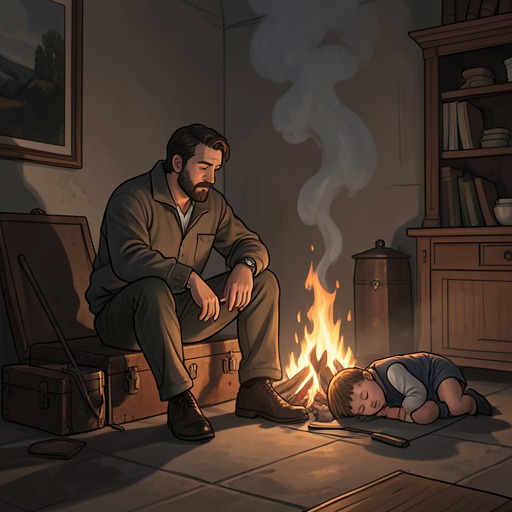
BarkskinsJim Sillyboy is a Mi’kmaq healer whose care for Jinot after the Miramichi fire turns survival into a long, painstaking process. In Indiantown near Shubenacadie, Sillyboy tends the burn injuries of displaced and injured people without charging them; his work offers Jinot a place to recover, but not a simple return to his former life. The treatment, shared with Sillyboy’s son Beeto, joins practical knowledge and patient attention to the severe limits imposed by Jinot’s scars.
Identity and Healing Work
Sillyboy introduces himself to Jinot in halting English as a man who has himself been burned. He explains that he once fell into a fire as a child and knows the pain from experience. Now he treats people brought to Indiantown from many places and communities: Mi’kmaq people, Iroquois people, and white people alike. Some recover; others die. His matter-of-fact account places healing beside its limits from the outset: burns are dangerous, and care cannot guarantee survival.
The next morning, Sillyboy proposes beginning to clean Jinot’s legs and observes that Jinot can move them. His manner is deliberate and modest; he tells the injured man to drink medicine and sleep well. The treatment is not presented as a dramatic cure but as the start of sustained care, with each step dependent on the condition of the wounds.
Indiantown and the Work of Care
Over the days that follow, Jinot learns that Sillyboy is renowned as a burn healer. People travel long distances to bring him children scalded by hot oil, people pulled from fireplaces, woodsmen trapped in burning shanties, and farmers burned in barn fires. At the time Jinot arrives, Sillyboy is treating five people injured in the Miramichi fire. His practice therefore responds not only to individual accidents but also to a disaster that has injured people across a broad region.
Sillyboy works in a wikuom, one of four special healing places there, and his son Beeto helps tend the burned patients. The account makes the care communal: Jinot is not alone with his injury, and the healer’s work is supported by family assistance and a place set aside for healing. Sillyboy’s two other sons spend much of their time searching for bee trees, because honey is essential to the burn treatment. Sillyboy is poor and takes no payment, even though his work draws patients from far away.
Jinot’s Injury and the Limits of Recovery
Sillyboy cleans honey from Jinot’s legs and rolls him onto his side to examine the damage, identifying the back of the right leg as the worst injury. He predicts that a large scar will form. Jinot initially understands scars as ordinary marks of survival: they have not killed him, and he has endured injuries before. Only as the weeks and months pass does he discover that this scar is not merely a visible record of survival. The cicatrix contracts, fixes his leg in an unnatural position, and makes walking almost impossible. He can manage only a few steps, hobbling in severe pain.
Beeto works with the stiff leg through careful massage and softening salves, gradually coaxing the scar-bound tissue into painful positions without tearing it. By September, nearly a year after the fire, Jinot can limp slowly, but the pain remains intense and the contracted scar keeps his leg under tension. The slow progress distinguishes survival from restoration: Jinot is alive, yet his injury has changed what kinds of work he can do and where he can imagine living.
The Incision and Sillyboy’s Judgment
Jinot proposes that a small cut at the thickest part of the scar might release the tension, comparing the binding scar to a rope. Sillyboy does not want to make the incision. The hesitation matters: the proposed intervention carries a risk of damaging already stiff tissue, and Jinot’s suggestion does not immediately override the healer’s caution. Beeto, however, considers Jinot’s reasoning sound, and the two agree to try it.
Beeto brings a sharp, freshly flaked piece of black obsidian and makes the cut. He applies healing salve and binds the leg with eel skin to hold it in a more open position. Within a week Jinot is hobbling around, and Sillyboy acknowledges that the incision has helped, while warning that the method does not work for everyone. Jinot answers that he is lucky. The episode shows Sillyboy’s care as attentive but not infallible or absolute: his practice includes observation, established treatment, and a willingness to recognize when a patient’s proposal has merit. Jinot’s improved mobility is real, but the story leaves intact the injury’s pain and lasting consequences.