Dud McBogle
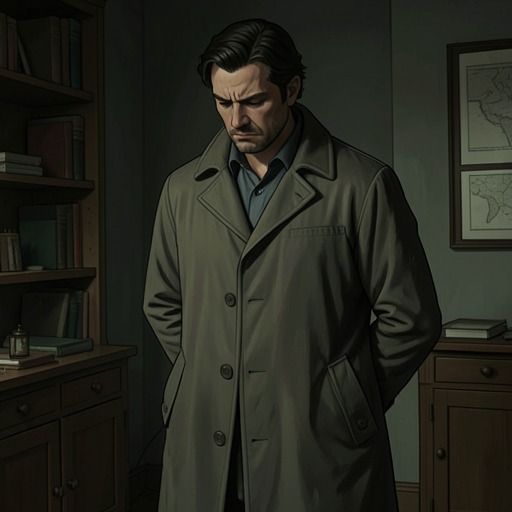
BarkskinsDud McBogle is a New England timber operator whose rivalry with Charles Duquet culminates in Duquet’s death. The conflict begins over pine claimed as Duquet’s property, but it becomes personal when Duquet injures a young worker and later burns the boy’s body. McBogle’s return to that history turns a commercial contest into a reckoning with consequences that Duquet’s pursuit of wealth cannot control.
Identity and Reputation
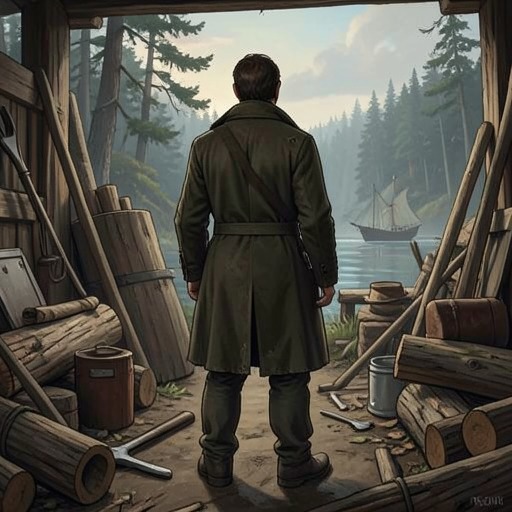
McBogle is introduced through the timberland conflict in Maine. Duquet and Forgeron find English colonists cutting trees on one of Duquet’s white-pine properties, where Duquet’s company itself claims the right to cut large trees. The trespass exposes the contradiction at the heart of the dispute: Duquet objects not to the removal of the pines as such, but to others taking them from land he considers his.
A captured worker identifies the men as being employed by a mill owner named McBogle, an agent of Elisha Cooke. Duquet has heard of Cooke, but McBogle’s name is new to him. Though furious at the cutting, Duquet quickly stores away the names as potentially useful connections. The episode establishes McBogle as part of a timber economy in which land claims, political influence, and commercial opportunity are closely entangled.
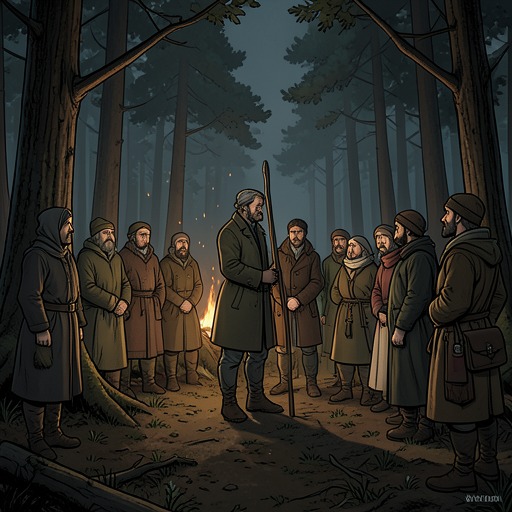
A later description presents McBogle as a member of a hard, clannish group of men of Scots lineage who had recently come from Ulster by way of Ireland. They are said to live remotely, know the forest and its waterways, endure exposure, and prize freedom. The description places McBogle and his family among people whose intimate knowledge of the country and willingness to live beyond settled boundaries make them formidable actors in the growing French-English rivalry. It is a characterizing account given by another speaker, not a neutral inventory of McBogle’s own words or actions.
Timber Business and Rivalry
McBogle’s operation is substantial. Dred-Peacock reports that he runs five or six or more sawmills on tributaries of the Penobscot and in New Hampshire, and that he has been asking about Duquet’s sawmills, ships, timber tracts, townships, and fortune. The inquiries suggest an emerging contest between two men trying to establish their positions in the timber trade. Dred-Peacock considers McBogle a serious rival and proposes partnership as an alternative to trying to buy him out: McBogle has local relationships with Cooke, the Wentworths, judges, and businessmen, while Duquet has valuable connections across the Atlantic.
The conflict is not merely prospective. Duquet’s associates report that the best trees have already been taken and that McBogle has recently shipped two large loads of masts to Spain, earning a substantial profit. He is known for tree piracy. Duquet responds by saying he will seek McBogle out and work with him, although the report that McBogle is not known for compliance undercuts the assumption that the rival can simply be brought into Duquet’s plans.
The novel sets this commercial competition against Duquet’s larger calculation about the forest. Having watched the fur trade swing between scarcity and surplus, he wants a durable fortune that can pass to his sons and attach honor to his family name. He identifies timber as a resource European markets need and imagines forest wealth as lasting and renewable. McBogle’s business is therefore not incidental to Duquet’s ambitions: it represents the established, potentially competing enterprise that Duquet must negotiate with or overcome as he turns from furs toward wood.
The Maine Confrontation
When Duquet and Forgeron find McBogle’s men cutting pines on the Maine property, Duquet challenges them and pursues the workers as they flee toward the river. He wounds a boy no older than fourteen, binds him, and demands information about the men and their employer. The boy’s account links the cutters to McBogle and Cooke. Duquet’s anger at having his timber taken is thus joined to a calculated interest in learning who stands behind the operation.
McBogle later refers to the boy as his son. At the sawmill, he tells Duquet that he went back and dug up the place where Duquet had burned the boy’s body. The revelation changes the meaning of their earlier encounter: McBogle is not just the rival mill owner whose workers trespassed on disputed timberland, but the father who has traced Duquet to answer for his son’s death.
Duquet recognizes McBogle as the red-haired man who had turned back toward the wounded boy during the escape from the Maine riverbank. The recognition is immediate, and Duquet understands that he is in mortal danger beside the moving saws. McBogle’s greeting is calm; two other men join him. Duquet tries to stop what is happening, insisting that he is not finished, but at fifty-three, with only half his fortune secured, his life and project end.
Death and Narrative Significance
McBogle’s killing of Duquet closes the rivalry through a consequence rooted in the earlier violence. Duquet had treated the forest as a source of durable wealth and regarded the men who cut his trees as competitors or potential partners. His own actions against McBogle’s son turn that business conflict into an intimate vendetta, one that commercial calculation cannot absorb or settle.
The episode also places the forest economy’s competing claims in sharp relief. Duquet objects to unauthorized cutting because he wants control of the trees, not because he rejects their removal. McBogle, meanwhile, is both a rival timber operator and a father acting on the remembered loss of his son. The sawmill, where Duquet’s plans for a fortune end, makes the business itself the setting of his defeat: the machinery and timber trade he sought to command cannot protect him from the human cost of his earlier choices.