Jinot Sel
BarkskinsJinot Sel is a Mi’kmaw woodsman whose migrations trace the human and ecological costs of the timber trade. A gifted axeman drawn into work far from his family, he survives a catastrophic fire with permanent damage to his leg, then travels to New Zealand, where a work injury and blood poisoning end his life. His story joins intimate histories of kinship and friendship to the changing forests he is hired to cut, and its ending makes his body, his estate, and the question of where he belongs matters of family concern.
Identity and Background
Jinot is the son of Tonny Sel and grandson of Kuntaw Sel. Tonny brings him and his siblings Elise and Amboise to Kuntaw and asks him to help the children. Jinot is not yet five, and Beatrix Duquet lifts him onto a chair and gives him food. The scene establishes him first as one of a family seeking shelter and care, long before he appears as a working woodsman.
As the children grow, several leave home for lumber work. Jinot watches the logs pass downriver and envies the rivermen, while his brother Amboise returns from camp with stories and money. Eventually Jinot tells Kuntaw he is old enough to go to the forest camps and cut trees. Kuntaw recognizes his wish to begin an adult life but also raises the possibility that Jinot might stay among the people around him and become a father. Jinot denies that the girls who talk with him are anything more than friends. Kuntaw responds that Mi’kmaw people would not condemn a man with a double spirit, though white people and churchmen might. This conversation frames Jinot’s identity through a contrast between Mi’kmaw acceptance and the judgments he may encounter beyond his community.
At seventeen, Jinot has a smiling, full-cheeked face, heavy-lidded eyes, and thick, springy hair. The narration describes him as quick in movement, like Kuntaw, and notes that girls and women seek his company as do mature men. His presence is presented as socially magnetic, even as the conversation with his grandfather hints at the difference between his community’s understanding of him and the wider society’s.
From Camp Work to the Miramichi Fire
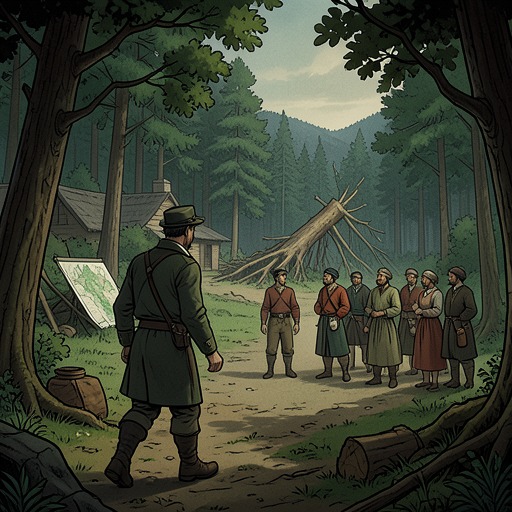
Jinot first works for a year as a swamper-limber in a worn-down Penobscot camp. He then hires on as a chopper and riverman with Simon Marchand, a subcontractor attempting to reach exceptionally large trees on a difficult, gullied ridge. The work requires a long approach and a carefully made ice road. Jinot’s skill places him within the hazardous systems by which timber is felled and moved, where the success of a crew depends on reading the jam and acting at the right moment.
That danger becomes personal when Franceway and James Ketchum try to free a log jam. A crooked key log holds the mass in place. As the crew works to cut it loose, the log breaks and the jam releases. Jinot, in a bateau above the jam, sees a large log fall and strike Franceway. The death marks a decisive break in Jinot’s youth: the work he had wanted to join is not merely strenuous or adventurous but capable of taking a co-worker’s life in an instant.
Years later, Jinot is cutting for Lew Green on the Miramichi with Joe Wax and Swanee. A stump left smoldering after a pipe is lit catches in a sudden gust; the fire spreads rapidly, and a ridge erupts into flame. Jinot and the crew take refuge in the river. When the immediate danger passes, he finds Joe Wax dead and sees the devastation around the pool. He and Victor Goochey leave the river with the teamster, intending to walk to Fredericton, but Jinot soon realizes that his legs have been burned and collapses. His escape from the fire therefore becomes the beginning of a long disability rather than a return to his former life.
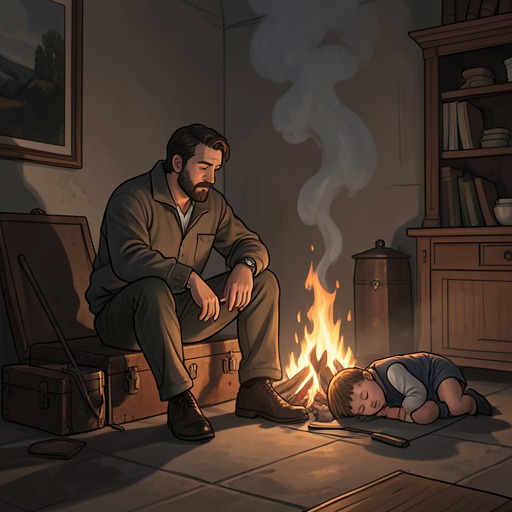
Jinot is taken to Shubenacadie, where Jim Sillyboy treats people injured by burns. Sillyboy explains that Jinot’s legs are badly burned and that he expects him to walk again, though not soon. Later Vic Goochey visits and explains that he and Lew Green brought Jinot there by wagon because Sillyboy had helped other fire victims. Goochey also recalls that Jinot had run to warn him, prompting him to leave the shanty and survive. Jinot’s own rescue thus depends on a chain of help: his warning saves Goochey, and Goochey helps get him to a healer.
Family, Work, and Distance
The fire does not end Jinot’s connection to logging, but it changes what that work costs him. Later, when he is living and working in New Zealand, he tells Arana Palmer about the Miramichi fire, which nearly caught him and burned Amboise. Jinot values the chance to talk with Arana, and the conversation is a relief after a long period without the pleasure of friendship. His recollection links a distant New Zealand camp to his earlier family and work life in New Brunswick.
Jinot’s family remains a central concern even as he moves farther away. When Albert Bone proposes a trip to New Zealand to inspect the kauri forests, Jinot hesitates because he has promised to keep his son Aaron close until Aaron reaches manhood. He describes Aaron as all he has left. Bone tells him that the journey is arranged and that Joseph Dogg will manage the factory in their absence. Jinot’s reluctance makes plain that the expedition is not simply a professional opportunity: it asks him to choose between an unusual journey and his responsibility to his son.
In New Zealand, Jinot and Arana share work and a thatched tent. They also exchange knowledge rooted in their respective communities. Over a meal of eels, Jinot describes Mi’kmaq stone weirs, while Arana explains how brush and ferns can strengthen a fence of manuka stakes and speaks of the care owed to the eel-trap net. Their friendship makes room for practical conversation and cultural knowledge alongside their work in the timber camps.
Kauri Work, Injury, and Death
Jinot initially doubts that New Zealand has trees, imagining it as a place of desert and salt flats. Albert Bone tells him of the kauri, describing them as immense, high-quality trees, and explains that he intends to inspect the forests himself before making a decision about a new trade in axes. Bone says Jinot must accompany him; the passage is arranged for two weeks later, while Joseph Dogg is to manage the factory. The offer carries Jinot across the world toward a forest he has never seen, though his promise to Aaron weighs against leaving.
The work among the kauri is slow and demanding. Jinot’s first large tree requires him to clear a great deal of debris and spend three days cutting an opening into its trunk so he can climb inside and swing his axe. The pain in his scarred leg grows severe. As he attempts to climb down for tea, his knee gives way; he falls, and the mattock wounds him. Arana helps him back to the bunkhouse with a forked sapling for a crutch. Leaning against the damaged tree, Jinot acknowledges that this time it has defeated him.
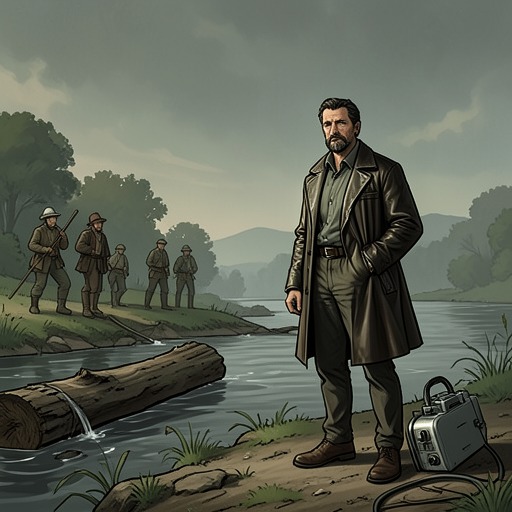
There is no doctor at the camp. Orion Palmer examines Jinot and recognizes the seriousness of the knee injury, then obtains laudanum and Dover’s powder. Jinot spends a week drifting in and out of fever and narcotic dreams as the wound becomes infected. Arana and Shuttercock bury him near the river beside the hay field. Rain begins before the grave is fully covered; a storm sends water, soil, logs, and debris down the slope, and the flood disinters Jinot and carries his remains into the Pacific. The burial intended to place him in the ground is undone by the landscape itself, leaving his body beyond the grave his companions made.
Memory, Kinship, and the Forest
News of Jinot’s death reaches Joseph Dogg, who clarifies that Jinot was not merely Albert Bone’s servant but Bone’s friend and business associate. Bone has left his works and possessions, including the Massachusetts axe factory, to Jinot. If Jinot is also dead, Dogg believes those holdings may pass into Jinot’s estate and ultimately to Aaron. This disclosure gives Jinot’s journey an unexpected material consequence: the man who left home for forest work has become the possible heir to a substantial business, though his death makes the inheritance dependent on his son and on the recovery of reliable details about his end.
Etienne Sel, Jinot’s uncle, accompanies Dogg in seeking him and says the family wants Jinot’s bones returned to his home country. The wish is more than a search for a grave: it asserts kinship and the importance of bringing a relative back to the land from which he began. Arana leads the visitors to the huge kauri stump where Jinot had been working and shows them the axe marks on its outer rings. The old cuts are the remaining physical evidence that Jinot worked there. Arana says Jinot wanted to return to his family but had no money, and that he had not wanted to come to New Zealand or cut kauri. Jinot regarded the trees as trees of power, a view Arana says his own people shared.
Jinot’s skill with the axe makes him useful to the trade, but the account of his life resists reducing him to that usefulness. He is a son worried about Aaron, a brother whose history with Amboise remains part of his own, a grandson whose identity Kuntaw understands differently from white society, and a friend whose conversations with Arana restore a valued human connection. His story also exposes the contradiction of industrial logging: the work that rewards his expertise brings him into danger and separates him from home, while the great trees he is hired to fell possess a meaning beyond their commercial value. The kauri stump preserves his axe marks; his lost grave and the family’s search make the limits of what can be recovered equally visible.