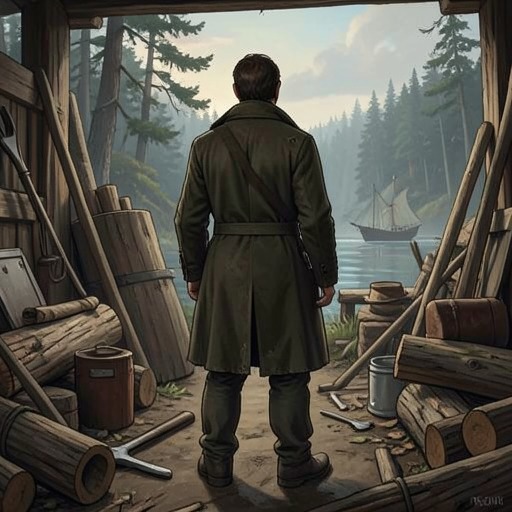
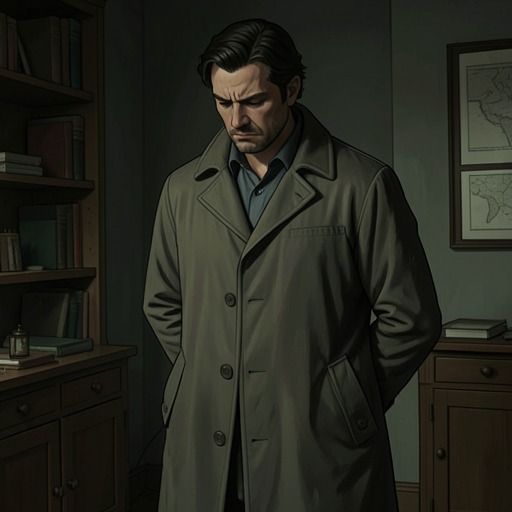
Forgeron
BarkskinsForgeron is a Dutch-born surveyor and experienced woodsman whose knowledge helps Charles Duquet identify forests as the foundation of lasting wealth. He understands both the practical and ecological consequences of timber extraction, but his work also enables it: the man who deplores waste surveys land for Duquet et Fils and helps the company acquire and exploit timberlands. His career makes him a figure of expertise and contradiction, linking intimate knowledge of the woods to the commercial machinery that transforms them into property and commodity.
Identity and Early Work
Forgeron’s varied working life includes sailing, fishing, surveying when employment is available, and voyageuring when it is not. A Dutchman turned French by accident, he is sinewy and unusually long-legged for the cramped work of a canoe. He tells Duquet that the coureur de bois life offers little route to wealth: Indigenous trappers and voyageurs bear the danger while companies take the money. He also describes an unsettled fur trade, increasingly mediated by specialists and strained by the displacement of Indigenous traders and declining beaver numbers. His account gives Duquet an early lesson in the instability of a business dependent on animals, markets, and dangerous labor.
Forgeron nevertheless speaks of the forest as a vast source of wealth. He imagines fortunes to be made if logs can be moved to buyers, and Duquet begins to look at trees more acquisitively. Forgeron’s insight does not arrive as an abstract business theory: it grows out of his movement between river routes, surveying work, and woods. His expertise gives Duquet a way to imagine timber as a different kind of resource from fur, though the scale of that imagined opportunity carries its own costs.
From Voyageur to Timber Surveyor
When the physical demands of canoe travel become difficult for him, Forgeron leaves the voyageur life to seek surveying work. Duquet leaves with him and persuades the Trépagny brothers to come along. Within a month, Forgeron has secured work laying out property lines east of Ville-Marie. Their parting is not a severance: Forgeron expects their paths to cross again, though not in a canoe, and their later business partnership gives that prediction a concrete form.
Years later, Duquet encounters Forgeron in La Rochelle, where the surveyor describes the white pine of the Maine woods and the timber opportunities there. Forgeron has been in London discussing a mast contract on Crown lands in Maine with an Englishman, but the prospective employer’s earlier cargo of masts had rotted in the West Indies, leaving him unable to pay the cutting contract and embroiled in court proceedings. Forgeron is wary of taking the work. Duquet instead proposes that they renew their friendship as business partners: while Duquet is away on his final journey to China, Forgeron can survey Maine timberlands and buy townships for Duquet et Fils.
The partnership develops into a sustained working relationship. As Duquet’s sons grow, he writes them detailed business letters each Sunday, while Forgeron scouts the best timberland and helps acquire tracts in Maine. Duquet learns from Forgeron how a woods looker judges the forest. Forgeron’s measuring chains are part of his professional identity, and he can wield one as a weapon; the narrative also links the chain to a violent past from which he fled to New France. Duquet knows of that history but treats it as belonging to the past, even as the two men become partners and perhaps friends.
Land, Property, and Conflict
Forgeron’s surveying work makes timberland legible as acreage, boundary, and purchase. One October, he and Duquet land on the shore of a Maine river beside a new white-pine property: twenty thousand acres bought for twelve cents an acre. Hearing chopping, they approach cautiously and find English colonists cutting the company’s pines, squaring logs, and apparently operating a pit sawmill nearby. Duquet is furious at being subjected to the same kind of taking that his own company practices. Forgeron’s role in locating and measuring the property makes clear that the conflict is not simply over trees: it is over who can claim, control, and profit from them.
Later, after a crew cuts trees on one of Duke’s pine-heavy townships, Forgeron arrives in Boston with the news that the best trees have already been taken, their stumps still fresh. The company plans to confront the cutter, McBogle, and Forgeron is ordered to join the expedition alongside Dred-Peacock. This episode shows the surveyor continuing to defend the boundaries and commercial claims that his work helps establish. His knowledge is valuable both in finding timber and in identifying its unauthorized removal.
Ecological Contradiction and Legacy
Forgeron’s views on forests are not limited to their commercial potential. He deplores wholesale cutting that takes only trunks and burns the remainder, and he is remembered as a man with a frugal mind. In a later conversation about him, Bernard Duke recalls Forgeron’s belief that people confronted with abundance feel compelled to take everything and destroy what they cannot use. Yet the same discussion recognizes that Forgeron himself did more than almost anyone to drive down forests and Indigenous peoples. His opposition to waste does not place him outside extraction; he profits from it and helps make it possible.
Forgeron’s funeral in Boston brings his commercial achievement into view. A dozen elderly men attend to remember the surveyor who made them fortunes with timberland. The three Duke brothers carry his polished clear-pine casket, an object that joins the material of the forest to the career built from measuring it. The company’s youngest brother, Outger, does not attend, refusing to leave the house on Penobscot Bay and the great pine table he regards as necessary to his work. The scene sets Forgeron’s public legacy of timber wealth against the unresolved meanings of the trees and objects the company has taken.
Forgeron’s importance lies in the gap between what he understands and what his labor serves. He recognizes the extravagance of taking whole forests and wasting what cannot be sold, yet his surveys, land purchases, and timber judgments help expand Duquet’s enterprise. The novel’s later concern with forest maintenance, planting, and long-term responsibility sharpens that earlier contradiction: knowing how a forest works does not by itself prevent its destruction, particularly when expertise is employed to convert it into a commercial asset.