Franceway
BarkskinsFranceway is a Montagnais logger whose voice and river skills briefly make him a defining presence in Jinot Sel’s life. His songs turn the camp’s work, humor, and dangers into shared memory, while his death in a log drive becomes a lasting measure of the costs borne by those who move timber through the rivers.
Identity and Life in the Camps
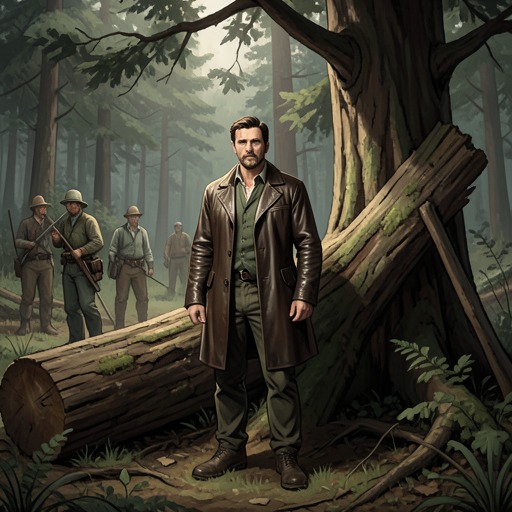
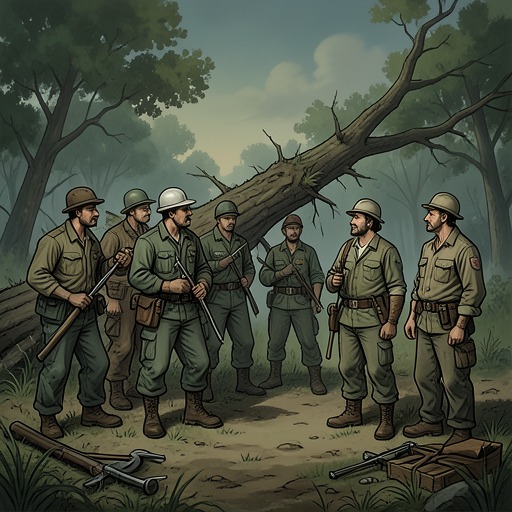
Franceway is introduced among the men in Simon Marchand’s lumber camp, a mixed workforce drawn from northern and coastal communities. The logging life is organized around exhausting work and meager shelter: the men rise before daylight, carry sharpened axes to the cut, and return to crowded shanties where they sleep on the floor under a shared blanket. Franceway belongs to this brotherhood of axmen, but the narrative distinguishes him by his small, wiry build, his river-working agility, and his singing.
He and Jinot Sel have been together since the first day they met. Their companionship gives Franceway a place in Jinot’s life beyond the changing crews and camps: when the men settle around the evening fire, the stories and songs that circulate among them make their separate histories audible to one another. Franceway’s presence is both part of that communal world and a particular bond Jinot carries forward.
Singer and Storyteller
Franceway has a true-pitched, mournful voice and knows songs unfamiliar to most of the crew. His version of “Roy’s Wife” adds a twist that brings out lechery and wounded pride; his repertoire also includes “The Randy Shanty Boy.” The contrast between his light, flexible manner and the song’s melancholy helps make singing a form of camp life rather than mere diversion: the men who cannot sing well listen, and the songs give shape to feelings otherwise kept within the hard routines of work.
He sings while he works, drawing on old songs and making new ones of his own. Their subjects are the loggers’ immediate world: river heroics, accidents, and even the cook’s inventive dishes, including cherry pie made from dried prunes. His songs preserve details that the work’s pace might otherwise swallow. They also let the crew laugh at its privations without disguising how dangerous the work is.
That role becomes clearest when a logger named Sash is killed after his foot is caught among logs rolling into the river. The men recover his body the following day and use two flour barrels for burial. Byers makes a joke about Sash’s appetite for biscuits, and Franceway answers the loss with a grieving song. The narrative presents his voice as mourning not only Sash but the whole camp: one worker’s death becomes a song for men whose work repeatedly places their lives at risk.
River Work and Death
River driving is described as the most dangerous logging work, with wooden crosses marking deaths along the banks. The camp’s allocation of this work is unequal: its boss assigns it to Indigenous workers, treating them as if they were naturally suited to violent water. Franceway nevertheless takes an active role when a jam threatens to block the drive. As logs pile up, Marchand orders men to roll them in from above without recognizing that a crooked key log is holding the mass in place.
Franceway sees the obstruction, puts down his pike pole, takes up his ax, and runs onto the ledge. He calls out the problem and beckons James Ketchum to help him cut down to the jam’s crooked, cross-braced key. When Byers alerts Marchand, other men join the effort. Franceway and Ketchum chop into the bend; as the jam begins to give, Ketchum calls for them to run. Franceway instead delivers the final blow. The log breaks, the jam releases, and a large log strikes Franceway as the pile surges into motion. Jinot witnesses the accident from his bateau and is unable to scream. The episode marks the end of Jinot’s childhood.
The sequence places Franceway’s death within the physical and social structure of the logging economy. Timber must be moved by water to reach the mills, and the river drive is treated as an unavoidable expense by those responsible for getting logs to the sawmill. But the drive’s necessity does not make its costs abstract: its risks fall on workers, including Indigenous men assigned to the water, while the timber continues toward processing and sale. Franceway’s intervention helps resolve the jam, but it is followed immediately by his death.
Memory and Significance
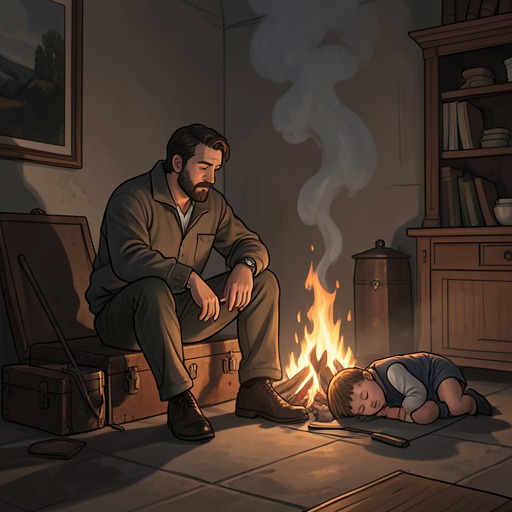
Franceway remains present in Jinot’s later life through memory rather than further action. Years afterward, Jinot returns to Marchand’s camp by chance, this time cutting some of the best remaining white pine in the Allagash watershed. He sleeps beneath a bateau and thinks of Franceway from their younger days, wondering what their lives might have been like had they both reached nearly thirty winters. The thought comes before Francis-Outger wakes him; Jinot has been dreaming of Franceway, but the man beside him is his half brother, not his dead friend.
The boat beneath which Jinot sleeps thus joins two periods of his life: the young logger’s companionship with Franceway and the later return to a rough camp where old memories surface. Franceway’s death is not simply a tragic incident in the work’s hazards; it becomes an enduring absence through which Jinot understands his own passage from childhood into adult life. His songs, meanwhile, hold together what the camps repeatedly threaten to scatter: workers’ stories, shared humor, grief, and knowledge of the dangers built into the movement of timber.