Orion Palmer
BarkskinsOrion Palmer is a trader from Maine established in New Zealand, where he becomes a central figure in the kauri logging economy and in the final chapter of Jinot Sel’s life. He employs Jinot and befriends him through the shared language of Maine; later, after Jinot’s death, he tells Jinot’s relatives what happened and gives them directions to the camp. Palmer’s roles as employer, improvised doctor, witness, and promoter of timber extraction make him a point of contact between individual lives and a rapidly expanding industry.
Identity and Background
Palmer is a Maine expatriate and trader whose son Arana Palmer works in the kauri. Arana explains to Jinot that Orion came to New Zealand years earlier after sealing, when there were relatively few Pākehā, and that he sometimes goes down to the ships hoping to find someone from Maine with whom to talk. Arana describes his father as a man who can keep a fellow countryman talking late into the night. The inherited Maine accent in Arana’s speech and the familiar expression Jinot recognizes give the men a shared regional connection before they meet.
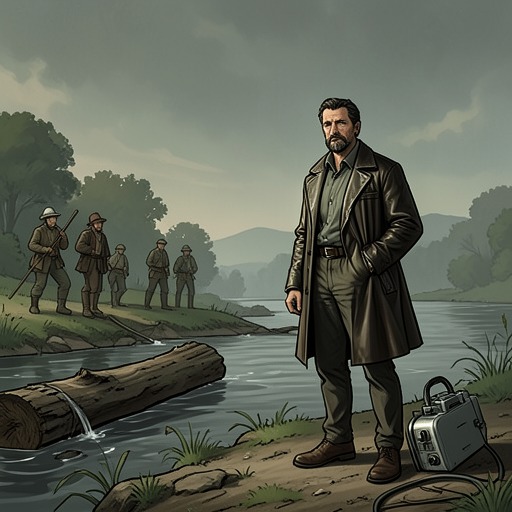
When Jinot and Etienne Sel later find Palmer at his counter, his appearance is distinctive: auburn hair crests above narrow temples, his blue eyes are prominent, and his lower face is broad and fleshy down to a thick neck. He says he has more than a dozen sons, most living with their mother’s people, and initially cannot say where each is. The detail places Arana within a large family network that Palmer does not closely track, even as his son serves as an important link between the trader and Jinot.
Jinot Sel and the Logging Camp
Jinot meets Arana while working in the kauri. Arana, not yet twenty, says he has worked among the trees since boyhood. He and Jinot agree to work together and share a thatched tent; Arana shows him how to stuff a sack with bracken for a mattress and recommends wool fleece as a more comfortable substitute. Their work partnership becomes a friendship. Jinot welcomes the chance to speak with someone he likes after a long period without the pleasure of friendship, and he tells Arana how the Miramichi fire nearly caught him and burned his brother Amboise.
Arana takes Jinot to meet his father. Palmer responds to Jinot’s Maine background with a long account of his own early life there and why he cannot return, a story involving the killing of a rich man’s horse. The narrative gives the episode as a connection built through recollection rather than through shared work alone: Palmer’s memories of Maine and Jinot’s familiarity with the region briefly make the logging camp feel less remote.
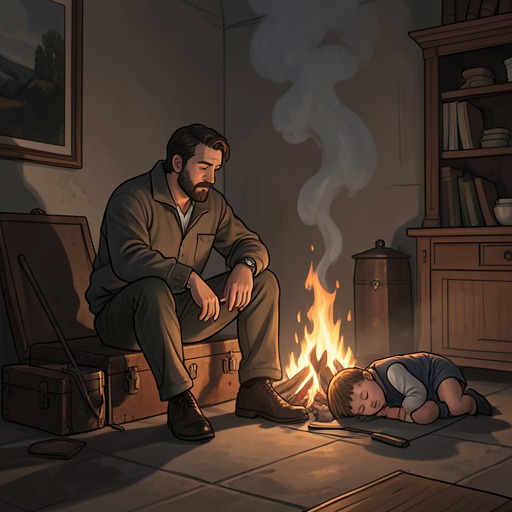
That fellowship does not make the work suitable for Jinot. His old injury leaves his scarred leg increasingly painful through the day, and he recognizes that he is too old for the job. When a logging accident further injures his knee, Arana helps him back to the bunkhouse and attends to him. There is no doctor at the camp; Palmer undertakes whatever doctoring or burial is needed. He examines Jinot, recognizes the seriousness of the condition, and tells him to rest. He obtains Sydenham’s laudanum and Dover’s powder from the store, while Arana stays with Jinot and urges him to rest. Jinot dies after the wound becomes infected. Arana and another worker, Shuttercock, bury him near the river, but a storm washes away the grave and carries his remains toward the Pacific.
The Timber Business
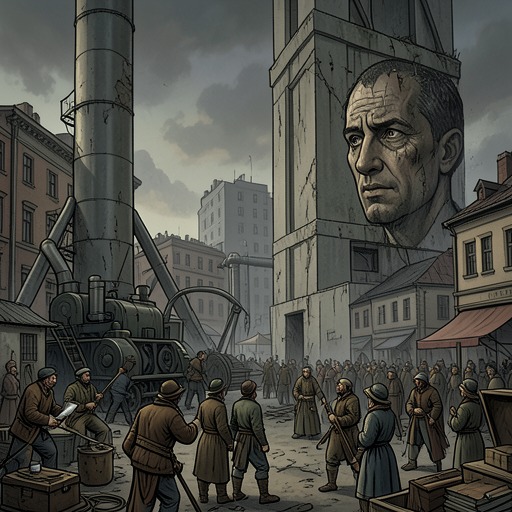
Palmer’s commercial world is organized around the enormous labor required to turn kauri into timber. Bringing down a single giant tree can take weeks: workers cut around the trunk, build platforms above the debris, and struggle to finish the work with axes and saws. Palmer orders ten-foot felling saws fitted with double-tooth rakers every fourth tooth. Once they arrive, the pace changes, and kauri begin to fall by the hundreds. On the shore, his steam-powered sawmill, specially equipped for kauri, turns the logs into valuable lumber day after day.
The mill depends on Māori labor as well as machinery. Hundreds of Māori haul the vast logs from ravines and down steep slopes toward the mills; even their work cannot supply timber as quickly as Palmer wants. He considers importing bullocks from Queensland to speed the hauling. His decisions therefore link the forest, the logging crews, transport down the slopes, mechanized milling, and the market for lumber. The contrast between weeks spent felling one tree and the subsequent pace of hundreds coming down makes the acceleration of extraction concrete.
Palmer’s account of the industry’s modernization also has a personal edge. When he later tells Etienne and Joseph Dogg about Jinot, he says the older, lame man was not young or strong enough for kauri felling, although he knew how to handle an axe. Palmer adds that a missionary had put Jinot to the work so he could earn his passage home. His assessment is frank about the mismatch between Jinot’s body and the demands of the job, but his explanation also places Jinot’s labor within a system where work offered a route to return home.
Jinot’s Death and the Searchers
When Etienne and Joseph arrive asking after Jinot, Palmer initially answers their question about his son by saying he has many sons and does not know each one’s whereabouts. Once they specify Arana, Palmer confirms that Arana knew Jinot and recalls that Jinot died from an infected wound. Palmer says that there had been no white doctor at the camp and that he did not undertake amputations. He also explains that he thought Jinot was too old and lame for the work, though capable with an axe. The account confirms Jinot’s death for his relatives and identifies both the injury’s course and the limits of the camp’s medical care.
Palmer gives the visitors a route to continue their search: take a steamer two harbors north, then follow the track indicated on a map he sketches on a broken packing-case slat to Big Yam camp, where the choppers and sawyers are working. He warns them that the Vigor will leave for Port Jackson the following week, but Etienne replies that they have only just arrived and want to see something of the country before leaving. Palmer’s directions serve the search even as his practical advice presses them toward a quick departure.
Narrative Significance
Palmer’s character gathers several strands of the novel’s environmental and human history into one setting. The logging operation is not an abstract industry: it is a workplace where an injured Mi’kmaq man seeks wages and a possible passage home, where Māori workers move giant logs, and where a trader’s investment in saws and a steam-powered mill changes the rate at which trees are felled. Palmer’s desire to increase output—from ordering specialized saws to considering imported bullocks—shows how commercial ingenuity can intensify the transformation of a forest into lumber.
At the same time, Palmer is more than a symbol of extraction. He is Arana’s father, an employer who tries to care for Jinot when no doctor is available, and an informant who helps Jinot’s relatives find their way to the camp. The narrative keeps those functions together without resolving the tension between them: Palmer can offer practical aid within a logging system whose demands exceed Jinot’s strength and whose output increasingly exceeds the workers’ ability to haul it. Through him, the novel places companionship and responsibility inside, rather than outside, the machinery of resource exploitation.