Tom Paulin
BarkskinsTom Paulin is a forestry specialist and former Afghanistan veteran whose movement from isolation toward ecological restoration makes him a human counterpart to the forests the novel follows across generations. At the Breitsprecher Tree Project, he brings expertise in wildfires and deforestation, introduces young Mi’kmaq trainees to ecological questions, and describes a form of absence that helps name both extinction and grief. His work matters not as a simple cure for loss, but as a practice through which damaged landscapes and damaged lives may find renewed connections.
Identity and Introduction
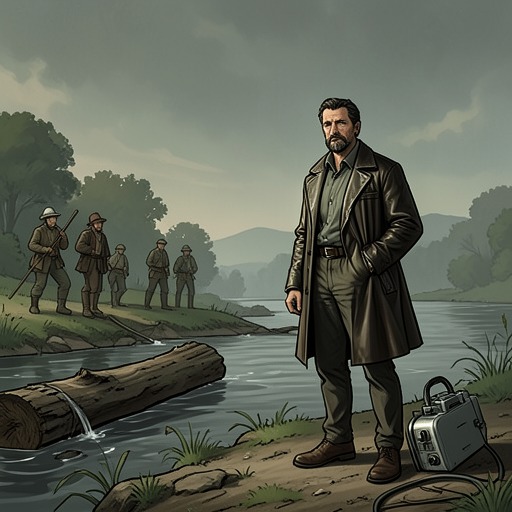
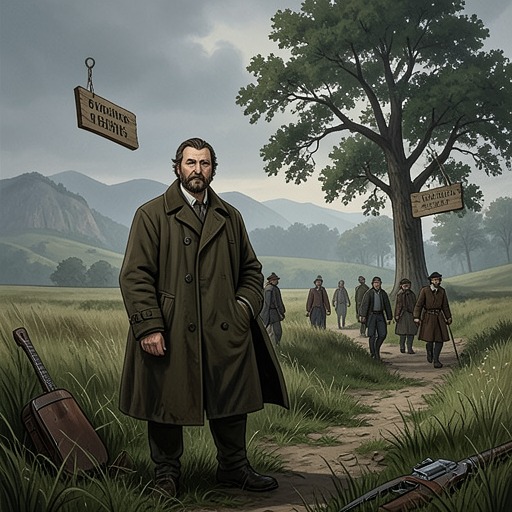
Tom joins Sapatisia Sel, Jeanne Sel, Felix Sel, Hugdis Sigurdsson, and Charlene Lopez around a table cluttered with project papers, laptops, almond milk, and takeout food. Sapatisia introduces him as part of the six-person work group. He is older than the others, tall and thin, and has a scar that leaves his mouth crooked. His straight-backed posture and reserved manner make him seem tense and remote; even while the group discusses its work, he appears at a distance from the conversation.
That reserve is not indifference. Sapatisia knows that Tom has lived through deadly experiences in Afghanistan and that trees somehow helped save him after he returned. When he drifts away during the meeting, she quietly calls him back. He responds with a small, effortful smile and resumes listening. The scene presents his connection with the group as tentative: participation is possible, but it does not erase the inward separation he carries.
Work in the Breitsprecher Tree Project
Tom works with the Breitsprecher Tree Project, a replanting effort connected to as many as thirty conservation groups. Its teams plant trees and monitor test plots over periods extending to ten years, recording how seedlings fare across different conditions. The Nova Scotia work includes cutover and burned-over plots, where the group plans to plant spruce, birch, fir, maples, and hemlock. One plot has shown substantial chlorosis, and Sapatisia explains that the project investigates variables affecting growth, including the presence of mycorrhizal fungi in burned soil, which helps seedlings take in nutrients and minerals.
Tom’s role combines field knowledge with teaching. He is the person the trainees are directed to consult about fires and soils, and he accompanies the team as it studies the province’s varied ecoregions. The work is deliberately attentive to local conditions: highlands cannot be understood apart from lowlands, bogs, and marshes, and the project asks its members to consider how animals and smaller organisms fit into forest life. Sapatisia urges the group to approach questions from the forest’s point of view, placing Tom’s expertise within a broader effort to understand ecological relations rather than treat trees as isolated commodities.
The trainees’ work is practical as well as intellectual. For a three-month session they will stay in Nova Scotia, with later opportunities possibly taking them to tropical rain forests. The project provides room and board, travel, equipment, and tools; the team shares cooking and cleanup and may live in tents, hotels, or host homes. Tom’s presence helps make this demanding field program a meeting place for specialized experience and new learners. He is identified with wildfire and deforestation, while Charlene Lopez is the group’s planting specialist.
Dark Diversity and Ecological Thought
In a discussion of Amazonian forests, Tom turns attention from dominant tree species to rare and extinct ones. He introduces “dark diversity” by comparing it to dark matter: an absence that can still shape what remains. His example is a rare plant whose influence extends to nearby plants and trees. If changing conditions drive it extinct, its absence can continue to affect the surviving community. Extinction, in this account, is not merely the removal of a visible organism; it can alter the relationships and possibilities of the ecosystem around it.
Jeanne asks whether a species absent after extinction might return if conditions changed again. Tom does not turn the question into a settled answer. Instead, he invites her to continue the discussion the following day, offering to work through dark diversity and dark matter with her in the van. The exchange marks a shift in his manner: he has loosened somewhat since dinner and responds to Jeanne’s curiosity with interest. The ecological concept also resonates with the novel’s larger treatment of forest loss. A cleared or altered landscape is not simply an empty space awaiting replacement; what has disappeared may continue to register in the life of what remains.
Afghanistan, Grief, and Restoration
Away from the group, Tom remembers Afghanistan and the comrades he lost there. The men had been bound together by experiences outsiders could not understand, and after returning to civilian life he found ordinary belonging painfully difficult. He felt that he belonged nowhere except among the broken group that remained in memory, connected to one another even though its members were gone. The novel frames this isolation through the same logic of absence he later describes scientifically: a missing presence can continue to shape a life.
Tom’s path toward restoration began at Seeley Lake, where, while fleeing suicidal despair, he joined a work crew in an old-growth larch forest. Earlier Indigenous burning had encouraged grassy meadows for deer, but in the preceding century Douglas fir thickets had crowded out larch seedlings. The crew burned accumulated fuel around the old larches; the following year, seedlings appeared in their thousands. Tom touched a young tree and imagined one of his lost friends within it. The thought did not undo his grief, but the anxiety of mourning began to soften.
He carried that experience with him as he moved on to work in other forests. In each young tree he planted, he saw the brothers he had lost; planting more seedlings became a way of bringing them back in imagination. This is not presented as literal recovery of the dead, but as an ongoing act through which grief changes form. Restoration gives Tom a task that joins memory to the future: the lost remain consequential, while the living work to make conditions in which new trees can grow.
Narrative Role and Significance
Tom’s arc connects the novel’s ecological history to its account of human bereavement. Across generations, forests are treated as inexhaustible supplies for timber and trade; in New Zealand, logging operations move from one area to the next, leaving cut timber and burned forest behind. The Breitsprecher Tree Project offers a contrasting practice: planting, monitoring, and learning how particular soils and ecosystems respond over time. Tom’s knowledge of wildfire and deforestation makes him a guide within that contrast, while his own story prevents restoration from becoming a merely technical answer to destruction.
His teaching also changes the scale of attention. The project observes individual plots for years, considers soil and fungi alongside trees, and asks trainees to see the forest from within its web of life. Tom’s account of dark diversity gives language to the costs of losing what may no longer be seen; his memories show the related cost of losses carried by people. Through him, ecological restoration and personal recovery remain distinct but adjacent forms of work: neither reverses the past, yet both can create relations with what remains and responsibility toward what may come.