Sapatisia Sel
BarkskinsSapatisia Sel is the daughter of Egga Sel and Bren Sel, a Mi’kmaw woman whose intense attention to plants and forests becomes both a vocation and a source of moral urgency. Her trajectory—from an unusually strong-willed child, through academic study and personal crisis, to forest restoration work—connects questions of identity and inherited knowledge with the long labor of repairing ecological damage. She does not treat restoration as a substitute for understanding the crisis: its work is necessary, difficult, and exposed to resistance, but she continues because the forests themselves are still trying to grow back.
Identity and Early Life
Sapatisia was named for Egga’s maternal grandmother. From childhood she approached people and interests with an intensity that left little room for moderation. When Egga was late returning from the water, she watched the window until he appeared on the gravel path, then clung to his leg when he entered. Her parents recognized her forcefulness as part of the bold future they wanted for their daughters, rather than a reason to make her compliant.
Bren wanted her daughters to combine whiteman, Wôpanâak, and Mi’kmaw inheritances in their ideas, careers, and ways of seeing the world. She and Egga had painful memories of the residential school system, and Egga imagined that his spirited family would resist the punitive school environment he remembered. The parents made education a practical priority: Bren worked the night shift at a fish plant and put nearly all her pay into an education account so the girls could attend university. Sapatisia’s later academic and ecological work thus grows within a family effort to make choices and opportunities available across generations.
Study, Crisis, and the Search for Belonging
In her first year of college, Sapatisia fixed her attention first on plants and then on a married ecology professor. Their affair ended when he tried to disengage. She went to his home carrying a hunting knife and lunged at him; he held her until police arrived. The next day Egga came to the jail and took her home. The episode shows how her characteristic intensity could become dangerous when attachment and rejection converged, but it is not the end of her academic or ecological interests.
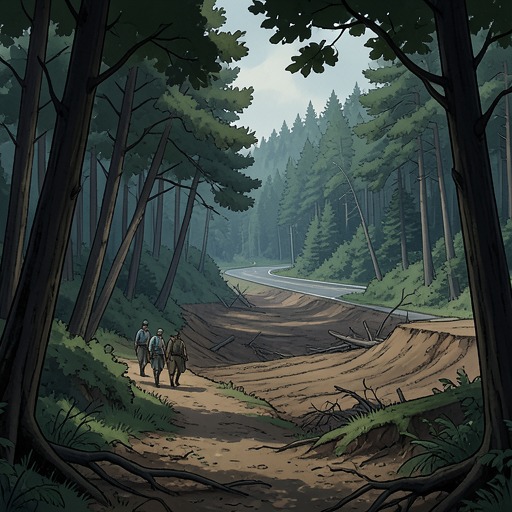
Her parents had heard about her burning interest in plants and forests, not about the professor. Sapatisia seemed to feel personal guilt over eroded slopes and polluted rivers; even the sky could appear to her as a landscape damaged by aircraft. At another point she told her family she wanted to go to Shubenacadie, see the Sel people, and find out who she was. The wish ties ecological attention to a search for ancestry: knowledge of plants and forests is not simply an academic subject for her, but part of a larger inquiry into identity and belonging.
That connection becomes visible when a family sees an article about Sapatisia. Alice recognizes her as Egga’s daughter and a relative from the United States, and associates her with knowledge of old-time medicinal plants. The recognition gives Sapatisia a place in a wider family network, while also showing how her reputation for plant knowledge travels beyond her immediate household.
From Academic Career to Restoration Work
Sapatisia eventually leaves university teaching and lecturing. She says she has learned enough to understand that the world people have made is desperate for help, and that the help will not simply arrive from elsewhere. Rather than continue a conventional academic career, she works on a project with others, concentrating on overlapping ecosystems and the difficulty of understanding the natural world as an interwoven whole. Her refusal to offer a narrow discussion of medicinal-plant genomes marks the range of her concern: she is interested in the ecological fabric those plants belong to, not only in isolated specimens or research topics.
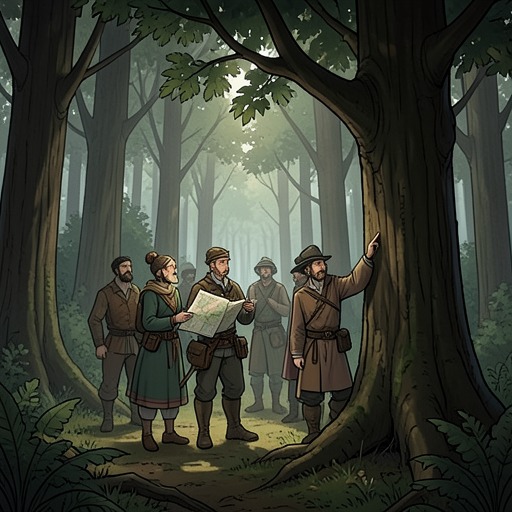
The Breitsprecher Tree Project makes that outlook practical. Sapatisia describes a small working group of six, although she would prefer ten, and says the team is the only one working in Nova Scotia that season. It cooperates with as many as thirty conservation groups and often works within their programs. The team plants trees and monitors test plots established three years earlier, keeping detailed records of their progress for as long as ten years. One plot showed extensive chlorosis the previous year. At a site she particularly values, the workers examine how mycorrhizal fungi affect seedling growth: burned soil may lack these fungi, and seedlings without them do poorly because the fungi help them take up nutrients and minerals.
The project’s methods reflect the time scale of restoration. In an earlier generation, Conrad had concluded that logging companies would need to plant seedlings among the stumps if they wanted trees to cut in the future, and that relying on a few surviving wild trees produced poor regeneration. Site preparation was essential, so his company offered it as a service. Sapatisia’s project carries the work into careful planting, monitoring, and testing rather than treating a planted tree as proof that a forest has recovered. Its years of observation and attention to soil conditions stand against an extractive industry accustomed to immediate returns.
Knowledge, Community, and Environmental Risk
Sapatisia places the project within a network extending well beyond Mi’kmaw people or Nova Scotia. Its workers include Mi’kmaw participants as well as people from Iceland, Mexico, and the American South. She points to Indigenous people and their descendants around the world—among them people in Brazil, Peru, Colombia, Cambodia, Sumatra, Vietnam, and the western United States—as leaders in repairing forests and damaged rivers. Her account links dispossession from forest homelands to a particular capacity for repair: people with long histories of living in forests may understand how to heal them. Restoration, in this view, is not merely technical labor; it also raises the question of whose knowledge is recognized and who is left to bear the consequences of destruction.
Sapatisia knows that this work faces more than ecological obstacles. Before speaking to prospective participants, she worries about the dangers she has not yet explained: restoration workers can be attacked and killed, and efforts that interrupt profitable destruction can provoke reprisals. Propaganda and lies may overwhelm the work, while fires consume peat-rich boreal forests and burn with a severity that affects the earth’s albedo. She plans to tell them about these dangers the following morning. Her pause is not evidence that the threat is minor; it shows her weighing the burden of full knowledge before asking others to join the project.
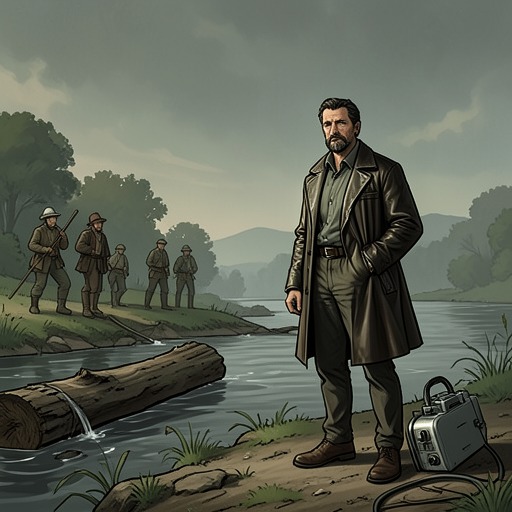
Her environmental understanding also includes a critique of technological responses that mistake control for care. Dr. Onehube explains that spruce budworm once followed natural cycles, but that after the Second World War the demand for wood pulp and paper and the availability of surplus military aircraft led the Forest Service to spray DDT across the boreal forests. The chemical killed small aquatic organisms that fed salmon, turning the Miramichi River into what he calls a death river. This history gives concrete form to Sapatisia’s concern with overlapping ecosystems: an intervention aimed at forests can devastate life in rivers, and the damage travels through relationships that a single-industry view fails to see.
Greenland and the Expanding Scale of Her Work
After her marriage to Alfred Onehube breaks down, Sapatisia goes to Greenland with ice scientists. On the glaciers she experiences a decisive change in understanding. She had long heard that slight changes in temperature could alter the prospects of species, but had dismissed such warnings as environmental determinism. She had assumed polar ice was permanent. The evidence of the glaciers overturns that assumption: historical records and close attention to contemporary change reveal a world far more sensitive than she had understood, and she recognizes the violence of the melting ice.
The Greenland experience widens the scale of her environmental attention from damaged local slopes, forests, and rivers to a changing planetary system. It does not resolve her personal losses. She and Alfred endure ten painful days of confession and grief after their relationship fails, and the knowledge of another loss—the threatened disappearance of a world she once believed immutable—makes the personal rupture feel smaller without making it unreal. The two crises coexist: she has to reckon with what has ended in her intimate life and with the possibility of ecological changes that cannot be reversed on a human timetable.
Sapatisia remains at the work despite uncertainty about whether it will be enough. She asks herself whether the effort may be futile or already too late, then rejects giving up. Her faith is not confidence that restoration will certainly succeed; it is a decision to persist alongside others who are trying to repair damage and alongside forests attempting to regrow. Her arc makes that persistence the answer she can offer to a crisis whose full outcome remains unknown: study, collective work, and continued effort, undertaken even when neither success nor a living witness to the result is guaranteed.