Renardette
BarkskinsRenardette, first named Léonardette, enters the story as the ten-year-old daughter of a widowed settler and becomes a resourceful worker in the brewing house at the Trépagny settlement. Her small birthmark, initially treated by townspeople as evidence of something demonic, is reinterpreted by Monsieur Trépagny as a fox and gives her the name she is known by. Years later, she proposes marriage to René Sel and is refused. Her brief arc links the vulnerability of a child marked by bereavement with the practical labor and limited choices available to a young woman in the settlement.
Identity and arrival
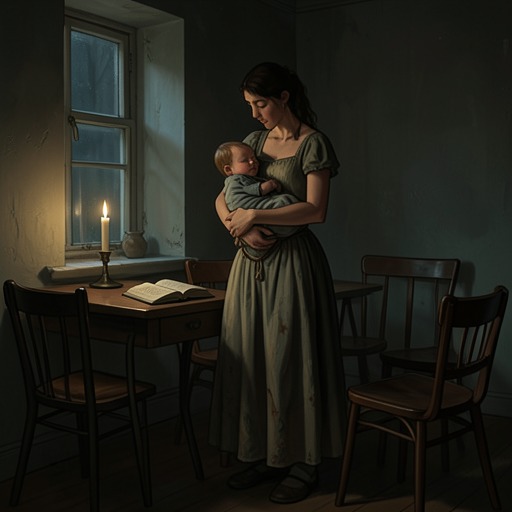
Renardette is introduced through the losses in her family. Her father is described as a good man who continued clearing the forest on his land during a recent cold spell; his wife had died in childbirth the previous summer, leaving Renardette, their only living child, at ten years old. While clearing, he was injured when his axe glanced off a frozen tree and struck his left leg. The account establishes a household already affected by bereavement and hardship before the girl comes to the Trépagny household.
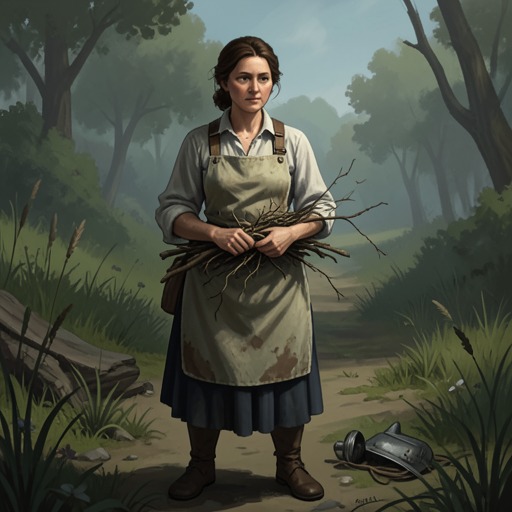
She arrives slowly up the snowy hill from the river, thin, with lank hair and dark circles beneath her brown eyes. Her posture is guarded, as though she anticipates being struck. Yet the narrative also notes her slender, dexterous fingers, a detail that anticipates the skilled work she will take up. Mari responds to her arrival in practical terms: she pats Renardette’s shoulder twice, gives her a wooden spoon, and sets her to stirring mush.
The birthmark and the name
Monsieur Trépagny examines the mark at the nape of Renardette’s neck, which townspeople have interpreted as demonic. He sees a small red triangle, about the size of a thumbnail, with two tiny triangles at its top, each no taller than a mosquito. Rather than accept the fearful explanation, he dismisses it and identifies the shape as a fox, naming her Renardette. The change is immediate and consequential: a mark that has made her the object of suspicion becomes the basis for a new identity within the household.
That renaming does not erase the vulnerability conveyed by her guarded arrival. Instead, it shifts the meaning assigned to her body from an omen imposed by the town to an everyday name chosen by the man of the house. The account offers no indication that Renardette herself controls this interpretation, but it places her among the people of the settlement under the name Monsieur Trépagny gives her.
Work in the brewing house
Despite her withdrawn manner, Renardette proves capable at brewing. She begins by scouring the brew house and its stone brewing jars, then asks for hop seeds and plants them among the stumps. Once the hops ripen, she gathers them herself and makes very good beer. Her work extends beyond a single assigned chore: she prepares the brewing space, initiates the planting, harvests the crop, and produces the finished drink.
The household’s drink preferences and means give this labor a practical context. René Sel continues to prefer imported red wine, but it is too costly. Cider remains a hoped-for pleasure, dependent on the settlers’ apple orchards beginning to bear. Renardette’s beer, by contrast, is already available, and she drinks more of it than anyone else. Her competence gives her a recognizable role in the settlement’s domestic economy, even as the narrative keeps her work within the household sphere.
Proposal to René Sel
A week after the episode in which she proposes marriage, Renardette tells René that it is fitting that they should marry. She is described as barely an adult. René does not accept: he shakes his head, picks up his axe, and walks out to the woodlot. The contrast between her direct proposal and his departure makes the refusal clear without any extended exchange.
By this point, Renardette is described as beer-swollen, imperious, and hot-tempered, and as frequently feeling injured by perceived insults. She does not forget this rejection. The account connects her forceful manner to the incident through the fact that she remembers it, but does not specify what she later does in response. Her arc therefore ends on an unresolved injury: she has made an explicit claim on a possible future with René, and his refusal leaves that claim unanswered.
Narrative significance
Renardette’s episodes are brief but distinct in emphasis: first a child arriving under the shadow of family loss and local superstition, then a skilled brewer who helps turn planted hops into a useful product, and finally a young woman whose marriage proposal is refused. The progression gives her more than a single defining trait. Her guardedness coexists with dexterity and initiative; her work is effective, while her attempt to determine her future meets a firm rejection.
Her brewing also sits within the book’s wider attention to forests, cultivation, and the uses people make of cleared land. Renardette plants hops among the stumps, making productive use of a landscape shaped by clearing. The evidence does not make her a forestry figure or assign her a broader ecological program, but the concrete detail places domestic labor inside the same changing environment that frames the novel’s larger history.