Toussaint Trépagny
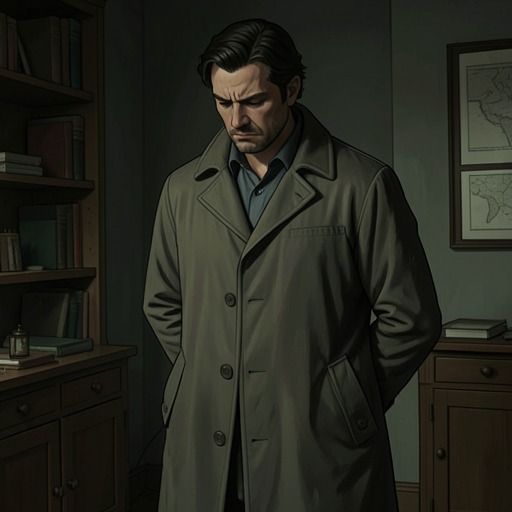
BarkskinsToussaint Trépagny, the bearded voyageur brother of Claude Trépagny, moves through the story as a fur trader shaped by the waterways and wary of the costs of settlement and war. His reunions with René Sel, Claude, and Charles Duquet reveal a life of hard travel and shifting alliances; his final separation from Duquet turns on a bitterly negotiated division of furs and incompatible ideas of what trade should become.
Identity and Introduction
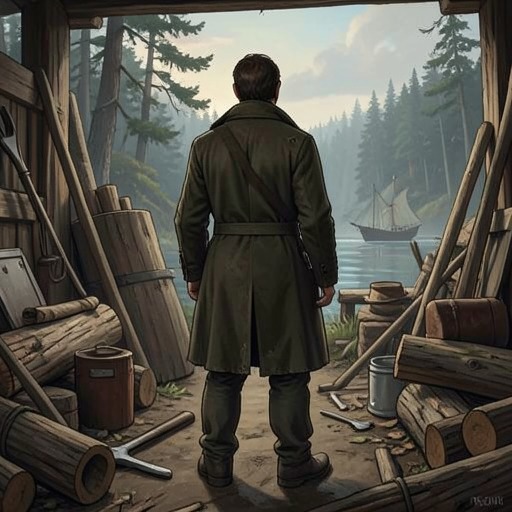
Toussaint appears with Fernand Trépagny among the boatmen camped at Wobik, arriving to attend Claude’s wedding. His beard flows down his breast, and he and Fernand wear the clothing of voyageur fur traders: deerskin leggings, breechclouts, wool shirts, and brilliant sashes. They carry bottles of spirits, drink as they travel, and meet René Sel on the trail after following his blazes. Their rough, boisterous entrance makes them seem at home in the woods, but they are not simply wanderers: they have come for a family occasion and expect their companions to join the celebration.
The brothers make a show of their road-hardened identities through songs and boasts. Toussaint claims a repertoire of more than forty songs; Fernand claims more than fifty, though he stops his performance of “Petit Rocher” after seven verses. Fernand’s declaration that they live hard, love hard, sleep hard, and eat moose nose gives their life a deliberately extravagant public face. Their talk presents physical endurance and appetite as marks of belonging to the voyageur world.
Family Reunion and the Clearing
The reunion with Claude and their uncle Chama is emotional and unruly: the men weep, embrace, curse, drink whiskey, slap one another on the back, and talk. Yet the affection of the reunion does not erase disagreement. The brothers disapprove of the clearing around Claude’s settlement. They contrast their own passage through the waterways with the scars left by land clearance: their canoes leave a wake that quickly disappears, while the forests, in their account, remain as they were. Their objection is not an abstract argument about land use but a judgment grounded in the difference between moving through a landscape and cutting it open for settlement.
Toussaint and Fernand urge Chama to return with them to the high country and revive their former good times. Chama cannot resume their hard life: a spinal deformity increasingly twists his body and prevents him from enduring the voyageur’s physical demands. Rather than accept that limit, the brothers answer with stories of extraordinary paddling feats and waterway heroes. Their reminiscences include the brutal account of a friend whose broken leg protruded through swollen flesh and whom they left to die neck-deep in icy water. The appeal to shared adventure thus carries both grief and a chilling measure of the hardship they regard as part of the life.
Warning Claude and the Flight from Wobik
When Claude’s pursuit of Duquet becomes imminent, Toussaint breaks with his brother’s demand for revenge. He tells Claude that he would do well to leave Duquet alone because Duquet is a dangerous man. Claude responds by ordering Elphège to saddle his horse and declaring that he will take Duquet’s dog’s skull and make him serve out his three years. Toussaint’s warning is a rare direct challenge to Claude’s authority and temper; it names the danger without pretending that the dispute can be settled by the family bond.
While Claude makes an excuse to his new wife for leaving, Toussaint and Fernand run to the river, take Claude’s canoe, and paddle downstream toward Wobik at forty-five strokes a minute. Their speed leaves Claude’s horse behind. By the time he arrives late in the afternoon, the brothers and Duquet have gone. The canoe is left ashore with a marten pelt draped over its thwart, Duquet’s mocking signature. Claude, exhausted and furious, swears out a warrant for Duquet’s capture and return. Toussaint’s warning has therefore helped enable Duquet’s escape, even as the empty canoe and pelt turn that escape into a provocation for Claude.
War, Travel, and a Changing Partnership
Later, Duquet finds Toussaint and Fernand tearing out a beaver dam near their old hut on the Rivière des Fourres. They are in fair health, though Toussaint’s beard now has white streaks, and Fernand groans as he straightens. The meeting takes place in the unsettled context of Queen Anne’s War. Toussaint describes the conflict as a continuation of older hostilities and complains of shifting Indigenous alliances: groups may be enemies one day, allies the next, or stand apart from battle. Duquet, by contrast, says his allegiance is to gathering furs rather than fighting either the English or Indigenous people. Their exchange establishes a difference between Toussaint’s engagement with the contested political landscape and Duquet’s effort to treat it chiefly as an obstacle to commerce.
Toussaint also reveals that the brothers have traveled far beyond the local waterways. He tells Duquet that they have already experienced coffee in Ville-Marie and have spent several years traveling on the Mississippi with Pierre LeMoyne, whose father rose from indentured service to wealth in New France. The brothers went in search of the river’s true mouth through a maze of swamps and dark waterways. While LeMoyne explored by canoe with an Indigenous companion and soldiers, Toussaint and Fernand stayed in an Indigenous village near the old La Salle fort. There they encountered visitors from a western people who hunted bison and traded furs obtained through contact with northern peoples near the icy world. Toussaint displays eight sea otter pelts and four arctic fox furs, material evidence of the long routes and far-reaching exchanges behind their travels.
The brothers’ experiences expose the limits of Duquet’s assumptions about them. He has explained his small payment for the furs by telling a story of pirate capture and lost profits, then presents himself as the worldly source of tea and luxury goods. Toussaint answers dryly that he and Fernand already know coffee and have seen the world too. Their return from the Mississippi and their knowledge of distant trade routes make them more than local partners waiting for Duquet to direct them. At the same time, their accounts of forts and fighting suggest that they do not share his narrow preference for profit above political allegiance.
Separation from Duquet
The old partnership deteriorates as the men travel and trade together. Duquet grows restless with the brothers’ repeated stories and limited vocabulary, while the brothers keep their evening fire apart from his and speak mainly to one another during the day. A tiger skin becomes a visible point of tension: Toussaint pulls it away from Fernand and rolls it up, and Duquet recognizes that the brothers will not readily surrender it. He also senses that the former ease between them has disappeared, alongside his own attachment to New France.
When Duquet is ready to return to La Rochelle and China, Toussaint insists that he and Fernand will keep their share of the furs unless Duquet pays a high price for them immediately. They need ready money and do not want to wait years for his return, which might again be interrupted by pirates. Fernand explains that they hope to rejoin Pierre LeMoyne, who is preparing an expedition to the Caribbean. After two days of negotiation, with Toussaint speaking for both brothers, Duquet secures what he regards as a remarkably favorable bargain, but the brothers keep the tiger skin and white fox furs. Their decision sets a clear limit on his control of the trade and preserves particular valuable pelts from his purchase.
Their final exchange makes the break unmistakable. Duquet sarcastically invokes Caribbean adventures; Toussaint counters that the Dutch West Indies offer a lucrative lumber market nearer than France or China. Duquet guesses that the brothers are waiting for him to offer a timber-trading partnership so they can refuse him, and he says nothing. The unmade offer becomes a decision in itself: their interests have diverged, and the former fur-trading relationship cannot be restored simply by extending it into another business. Duquet slips away near midnight and takes the tiger skin, fox, and otter furs. Fernand curses the loss but acknowledges that they have at least obtained some hard money. Toussaint proposes a toast to the man whose sugary manner hides a heart choked with gall; the brothers drink jenever to being rid of him. His earlier, dry joke about coffee returns in Fernand’s mocking answer that it is too bitter for someone as backward as he is. The joke closes their dealings with Duquet by turning the trade in imported luxuries into a measure of mutual contempt.
Narrative Significance
Toussaint’s scenes place two conceptions of the forest beside one another. The brothers describe travel that leaves waterways and woods apparently unchanged, while settlement and clearing leave visible scars; their own mobility is not presented as free of hardship or violence, as Chama’s disability and the account of the abandoned injured friend make plain. The contrast is therefore not a simple opposition between a harmless past and a destructive present. It shows how the brothers’ way of life depends on physical endurance and long-distance exchange, even as they criticize land clearance and refuse to follow Duquet into a timber venture.
His changing relationship with Duquet also traces a shift from shared trading to wary bargaining and final separation. Toussaint’s warning to Claude helps Duquet escape immediate capture; later, his knowledge and independent experience keep Duquet from treating him as a subordinate partner. When the fur trade ends, Toussaint and Fernand retain the pelts they value and choose the prospect of another expedition over Duquet’s control of their future. Their parting leaves Toussaint neither wholly outside commerce nor absorbed into Duquet’s accumulating ambitions, but firmly committed to a mobile life and to decisions made on the brothers’ own terms.