Nicolaus Duke
BarkskinsNicolaus Duke, an adopted son of Charles Duquet and a senior figure in Duke & Sons, combines commercial skill with a preference for secrecy and control. Fluent in several languages and experienced in overseas trade, he helps turn the family’s forest holdings into an international enterprise; later, he and Jan urge the company to keep a low profile, avoid entanglements, and preserve family control. His role links the firm’s expanding reach to its fear of exposure and competition.
Identity and Formation
In 1713, Charles Duquet adopted Jan and Nicolaus, both nine years old, from an Amsterdam orphanage. Nicolaus and his brother began schooling and instruction in manners, with Cornelia Roos hoping that proper conduct might rub off on their adoptive father. The adoption made Nicolaus part of a family whose business would span continents, and his education prepared him for its commercial work.
As an adult, Nicolaus spoke Dutch, French, and English, with some German, Frisian, and Portuguese. He and Jan were assigned to deal with merchants, contracts, and shipping; Bernard, another brother, was to oversee naval-store production. Nicolaus and Bernard had also sailed several times to China aboard ships belonging to Piet Roos. Their commercial roles were part of a deliberate division of labor: Nicolaus worked the company’s trading and shipping connections while his brothers handled other parts of its timber and naval-stores business.
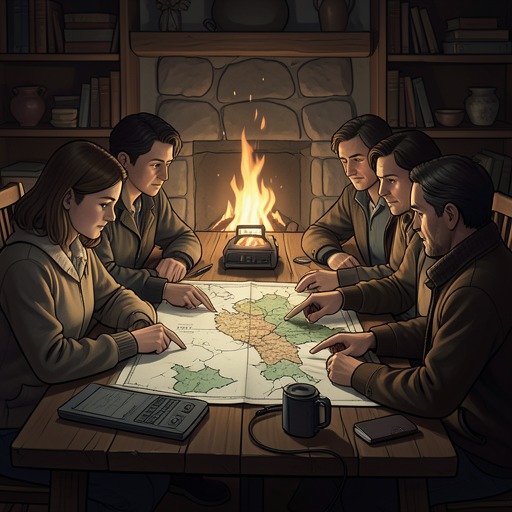
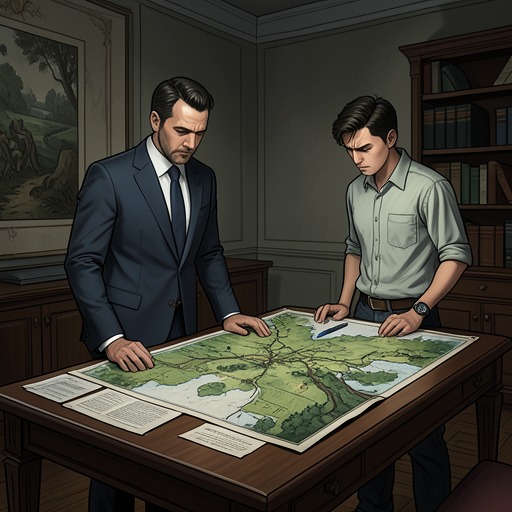
Charles Duke lodged his sons in Boston, but they returned monthly to the family house on Penobscot Bay for business meetings. There, the brothers spread papers and books across the great pine table. The recurring meeting place joined the company’s far-reaching commercial plans to a domestic center founded on the very timber it sold.
Merchant and Negotiator
Nicolaus’s strength lay not only in languages and maritime experience but also in handling people. At a funeral gathering, he invited the company bookkeeper Henk Steen to join the brothers afterward, drawing him into the family’s farewell to Forgeron. The gesture reflects Nicolaus’s reputation as the brothers’ best diplomat. He had learned persuasion from his grandfather Piet Roos, whose voyages to China and Japan had acquainted him with the world of overseas commerce.
His commercial environment was competitive. Cornelia warned that a man had been making inquiries about Charles Duke’s sawmills, ships, timber tracts, townships, and fortune. The man already operated several sawmills along Penobscot tributaries and in New Hampshire and appeared to be a serious rival. The episode illustrates the scrutiny that accompanied the company’s growth: knowledge of its holdings could become a competitor’s advantage, and commercial success required attention to what others knew as well as to what the company owned.
Nicolaus also lived through a widening divide in colonial political loyalties. Reacting to Benjamin Franklin’s proposal for a united colonial snake, he rejected the prospect of colonial unity, arguing that many colonists remained English in allegiance and that the tobacco colonies differed sharply from the fishing and forest colonies. His response reveals the company’s inherited political position: Duke & Sons had long balanced French ties against the ambitions of a new generation born in America, and Nicolaus saw those differences becoming harder to contain. He also argued that the colonies’ experience of self-government made the handling of the political situation a serious error, and that removing Andros had not repaired it.
Family Control and Company Policy
After Bernard’s death, Nicolaus found a ship departing for Amsterdam within days and sent its captain a message to Jan, Piet, and George Pickering Duke announcing the death and demanding their immediate return. The urgency of the message and the expense of the hurried journey remained in the family’s memory. In the subsequent reorganization, the Carolina plantation was sold, Piet was assigned the New England logging contractors, and the company’s Québec holdings were reduced. Jan managed the remaining forestlands, while Nicolaus served as president at the Boston headquarters.
Nicolaus and Jan eventually allowed Piet and George a greater voice in business decisions, but they continued to supervise from the sidelines. Their caution became explicit during a meeting about a possible logging arrangement with the Wentworth faction. Sedley feared that outsiders with access to the forests could falsify accounts, conceal stolen timber, manipulate the law, or seize Duke lands. Before Piet could agree, the two older brothers arrived, and Nicolaus set out the policy he and Jan favored.
Nicolaus argued that Duke & Sons should cultivate a quiet presence, conduct operations discreetly, avoid partnership entanglements, keep business within the family where possible, and use intermediaries for land purchases. He believed that remaining inconspicuous would give the company advantages over competitors. The policy was not only commercial: the brothers also feared that details of Birgit’s death might enter Boston gossip if the Duke women moved freely in social drawing rooms. Secrecy therefore protected both the company’s holdings and the family’s private reputation.
Forest Wealth and Long-Term Consequences
The company’s strategic outlook belongs to a broader conviction that forests offered seemingly inexhaustible wealth. Charles Duquet had rejected animals and other commodities as unreliable, returning instead to the idea that timber could supply ships, houses, and fuel indefinitely. Nicolaus inherited and helped manage the enterprise built around that premise. The later description of Duke & Sons’ acquisitive hunger makes the consequence plain: the firm’s expansion could turn the pursuit of forest resources from one element of its business into its driving force.
The costs of that approach appear in the account of logging in New Zealand, where camps and trading posts moved on after taking the most valuable timber, leaving smoldering stumps and deep waste. Kauri and kahikatea forests were cut heavily and then burned to clear the land. This destruction is not presented as Nicolaus’s individual act, but it illuminates the wider business tradition in which he held authority: forests were treated as available for extraction, while ecological loss accumulated beyond the immediate calculations of profit.
The contrast with later forestry reform is equally significant. Dieter Breitsprecher sought to keep cutover pine lands from speculators and manage them for replanting, establishing a conservation element within the company’s public reputation. His faith in planting seeds whose maturity would come after the planter’s lifetime offered a different measure of responsibility from the company’s earlier emphasis on control and rapid commercial advantage. Later, Conrad’s forestry studies led him to recognize that planting among stumps was not enough: site preparation mattered, and companies had to see practical value in paying for it. The company’s eventual offer of site preparation as a service marks a further turn from simply acquiring and cutting forests toward addressing regeneration.
Nicolaus’s own story is therefore set within a multigenerational tension rather than resolved by a single change of heart. He helped make Duke & Sons a disciplined trading and logging power, and defended its secrecy, family control, and competitive position. The company’s later conservation measures and forestry services register a changed understanding of what forest business required, while also underscoring the long delay between extraction and repair. In that contrast, Nicolaus represents an earlier corporate order whose confidence in timber wealth helped create the conditions later generations had to manage.