Arana Palmer
BarkskinsArana Palmer is a young, strong Māori man of mixed Māori and Maine settler ancestry, and a kauri logger in New Zealand. His friendship with Jinot Sel turns a distant logging camp into a place of companionship and shared knowledge: they work together, exchange eel-fishing practices, and speak across the different histories carried into the forest. When Jinot dies after an injury, Arana helps bury him and later guides his relatives to the stump where he had been working, making himself a witness to both Jinot’s final years and the displacements that shaped his family.
Identity and Background
Arana is Orion Palmer’s son; his mother is Māori. He is described as handsome and strongly built, with powerful legs, long untidy hair, and little visible resemblance to his father beyond a slightly oversized jaw. His own account of his ancestry joins New Zealand to Maine: Orion came from Maine years earlier, and Arana understands himself as partly Maine through his father. The inherited accent matters to Jinot, who recognizes in Arana’s speech a familiar Maine expression he has not heard for years.
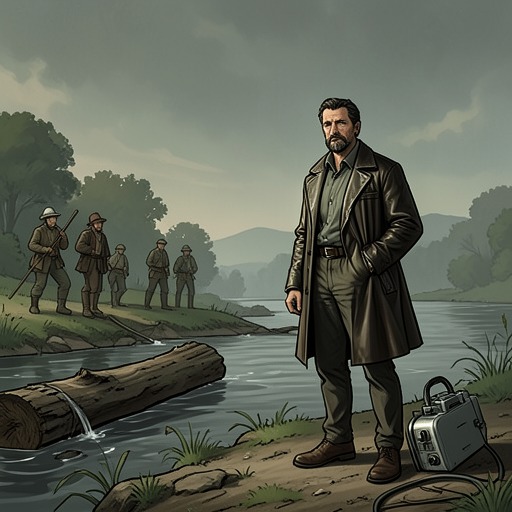
Arana’s Māori identity is not merely a detail of ancestry. When Etienne Sel and Joseph Dogg arrive searching for Jinot, the trader directs them to Arana, explaining that his Māori mother can help them avoid sacred places that should not be disturbed. Arana then leads them through the logged-over ground to the kauri stump. His local knowledge gives him a role as guide, while his relationship with Jinot gives him a more personal authority to explain what the tree and the place meant to his friend.
Friendship with Jinot Sel
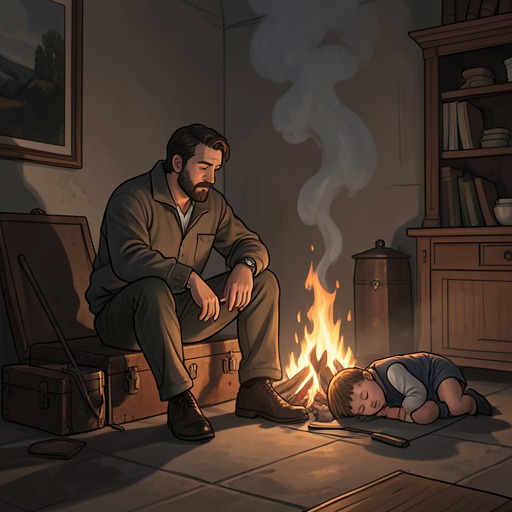
Arana and Jinot meet as kauri workers and agree to work together and share a thatched tent. Their friendship grows through small, useful exchanges rather than grand declarations. Arana shows Jinot how to stuff a large sack with bracken fern for a mattress and recommends a wool fleece as more comfortable. The conversation and familiar Maine speech offer Jinot a welcome connection to home, while Arana’s company gives him a friendship he has missed for a long time.
They also trade knowledge about eels. Arana returns one Sunday with eels roasted in green flax leaves and tells Jinot that they have been repairing their eel weirs after settlers removed the manuka stakes that guided eels into the traps. Jinot describes Mi’kmaq stone weirs, explaining that the shifting river requires continual attention; Arana in turn explains how to weave brush and ferns among the stakes and emphasizes the care given to a strong, well-made hinaki net. The exchange presents ecological knowledge as something learned through work and shared across communities, not as an abstract store of information. The two men’s methods differ, but their conversation recognizes a common practice of attentive relationship with rivers and fish.
Work, Injury, and Jinot’s Death
The immense kauri forest also exposes the costs of the labor that brings the trees down. Jinot is older than he was when he last chopped trees, and his scarred leg grows increasingly painful over the course of a working day. When he tries to cut a large kauri, he has first to clear extensive debris and spend three days chopping a chamber into the tree large enough to work inside. The strain aggravates his damaged leg; when his knee gives way, he falls and is injured by the mattock. Arana sees him, makes a forked-sapling crutch, and helps him back to the bunkhouse.
There is no doctor at the camp. Orion Palmer provides what treatment he can, while Arana stays close to Jinot and urges him to rest. Jinot spends a week in and out of narcotic dreams as the wound becomes infected. Arana and Shuttercock bury him near the river at the edge of a hay field. A severe storm then erodes the slope and carries away the burial ground, disinterring Jinot and sweeping his body out to the Pacific. The river and storm undo the burial, leaving no settled resting place; the loss makes the later visit to the kauri stump especially important as a surviving material trace of Jinot’s presence.
Witness to Jinot’s Story
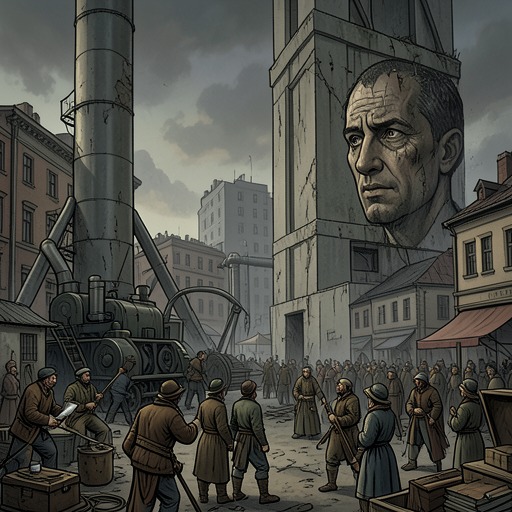
When Etienne and Joseph ask about Jinot, Arana leads them to the immense stump and points out the axe marks in its outer rings. Etienne touches the greying wood, the remaining evidence that Jinot had been there. Arana explains that Jinot wanted to return to his relatives but had no money and few alternatives: he could not become a trader because Orion would not permit it, and he might have worked as a cook. What he could do was use an axe. Arana recalls Jinot’s skill, including a chair he made with his axe on a Sunday, and says that he seemed lonely, with few people to talk to beyond Arana and some of the other choppers.
Arana also conveys Jinot’s reluctance to fell kauri. Jinot had said that he never meant to come to New Zealand, that Mr. Bone had made him go, and that he did not want to cut the trees because he regarded them as powerful. Arana says that his own people shared that belief. This account places Jinot’s work inside a conflict he could not resolve: he depended on the axe to survive, yet disliked the destruction it enabled. The stump bears the marks of his skill and labor, but also records the loss of the living tree he had not wished to cut.
Family Displacement and Narrative Role
Arana’s account to Etienne connects Jinot’s story to a longer family history of movement under settler pressure. He explains that Jinot could not have known him as a relative: Arana’s grandfather, Kuntaw, had left Penobscot and returned to his Mi’kmaw people near the Sipekne’katik River; after taking two wives, including Arana’s mother, Kuntaw led his family to K’taqmkuk, or Newfoundland, when settlers displaced them and destroyed their eel weirs and wikuoms. The family chose a place with eel rivers, fish, and Mi’kmaw people, where settlers were less present in the more remote country. Arana also tells Etienne that Aaron had been there for two years before going to Boston, but that the family had been unable to find him.
In the novel’s account, Arana is both Jinot’s companion and the person who can connect a solitary death in a foreign logging camp to a history of kinship and displacement. His recollection does not restore the family reunion Jinot wanted: it clarifies why Jinot remained far from home and gives his relatives a fuller understanding of the life he made there. By guiding them to the stump, Arana makes the damaged tree a meeting place for shared memory, while his work and conversations with Jinot show how Indigenous knowledge and friendship endure within a landscape being transformed by commercial logging.